Week 2: The Greek necessities… toilet brushes and water guns
The beginning of my European vacation could be described as “not your mother’s European vacation”, although unfortunately for her, my mother has joined me.
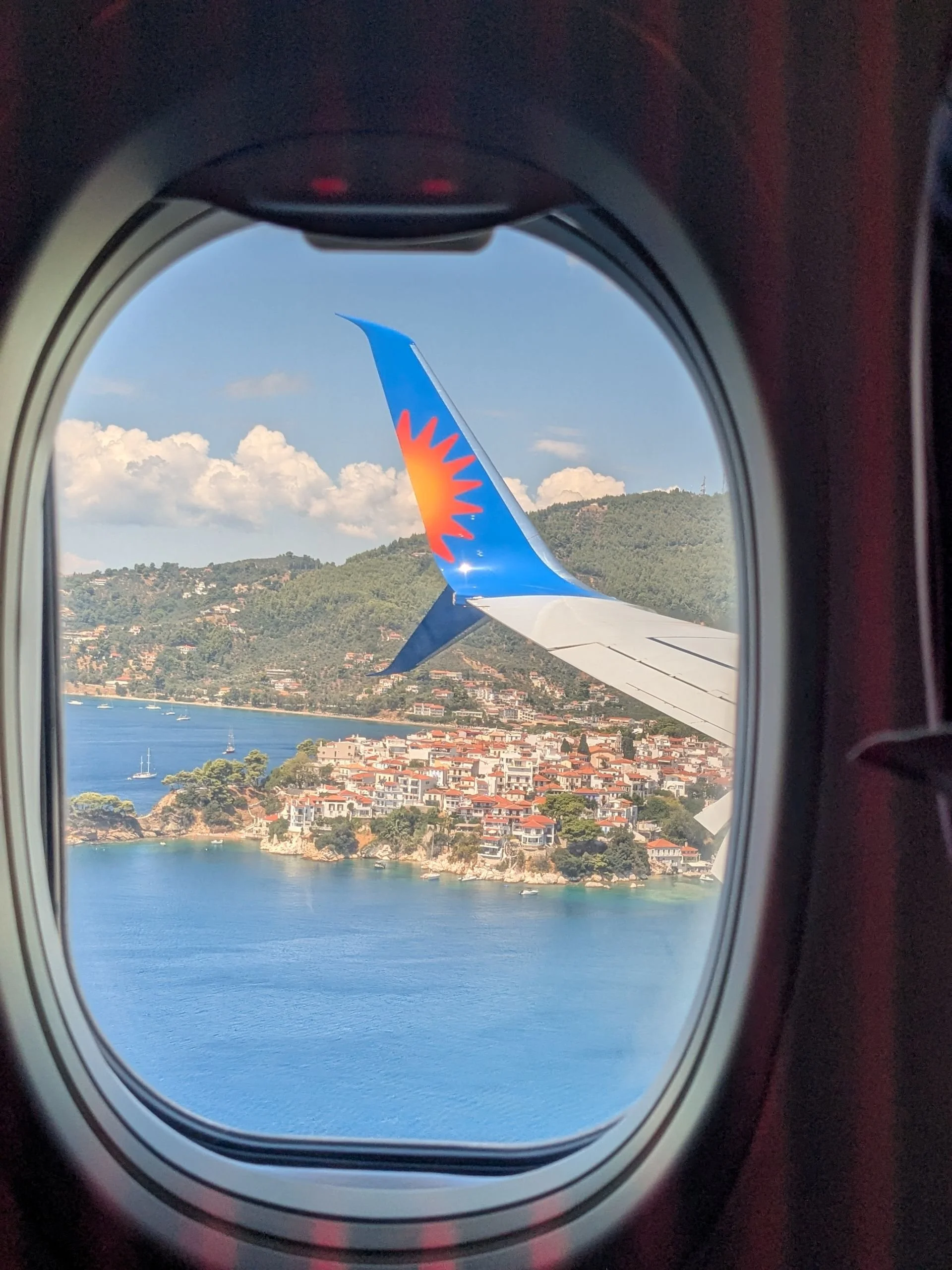
View above Skiathos Island
While I was having my own journey getting to Greece, my mom flew from Toronto to Athens and then from Athens in a small plane to Skiathos. I met her at the airport and we exchanged our travel nightmare stories. Given that we were very tired and hot, we barely registered the cab and ferry ride we took to get to our final destination: Skopelos Island. The quiet port of Loutraki sat below the mountainous village of Glossa and was lined with fishing boats.
My mom watched half-horrified, half-amused, as a couple fought over whether the young boy driving his motorbike could fit his girlfriend, her medium-sized suitcase, and her large-sized suitcase on his bike with him. She sat behind him with the large suitcase between them while he attempted to hold the medium suitcase, but ultimately she was right: it was not working. And no, there was not a helmet in sight.
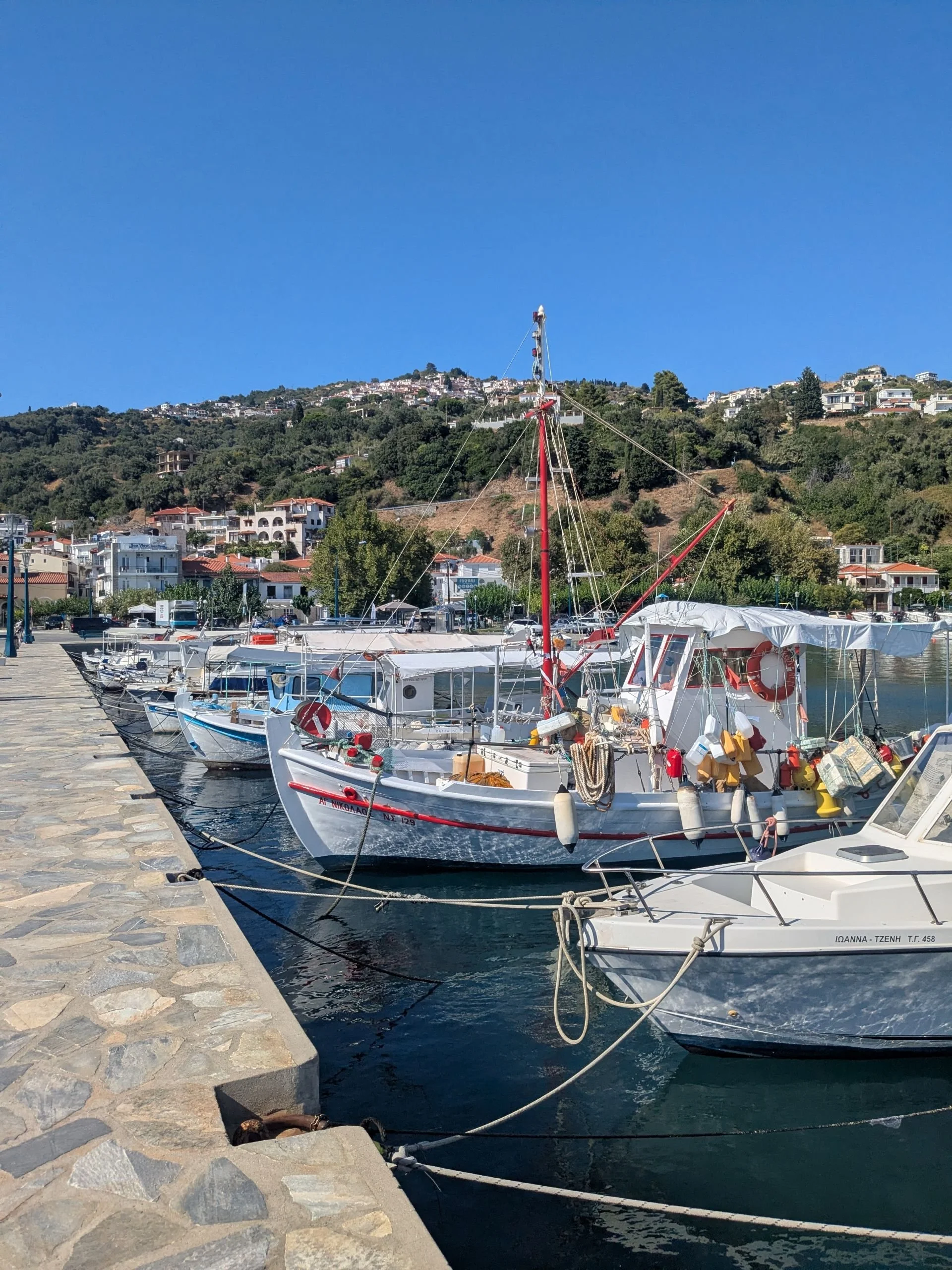
Loutraki Port, Skopelos
Because Glossa is ~1.5km from the port, I had thought it would be an easy walk. My first lesson about Greece: 1.5km straight uphill in 40 degrees heat is not easy. Life moves slowly here, and there is a reason for that. So instead, we opted to bus. A local teenage boy explained the bus system to us while we waited, pointing out the fact that buses will come early or late, and you just have to be prepared. As we were about to board our bus, we heard him say, “oh that bus driver is crazy”.
My mom gripped the handles on the back of the seat in front of her as the bus snaked around tight bends, chugging its way up the hill, the driver letting out honks seemingly to both warn oncoming vehicles and to greet friends. There are no street names in the village, so we relied on finding our Airbnb by looking at pictures the host sent me. She might as well have given us one instruction: go up. When we were so close to the Airbnb that we could almost see it, we reached a set of stairs. My mom glared at me. 67. We counted. 67 steps. But it was all worth it for the view from our place.
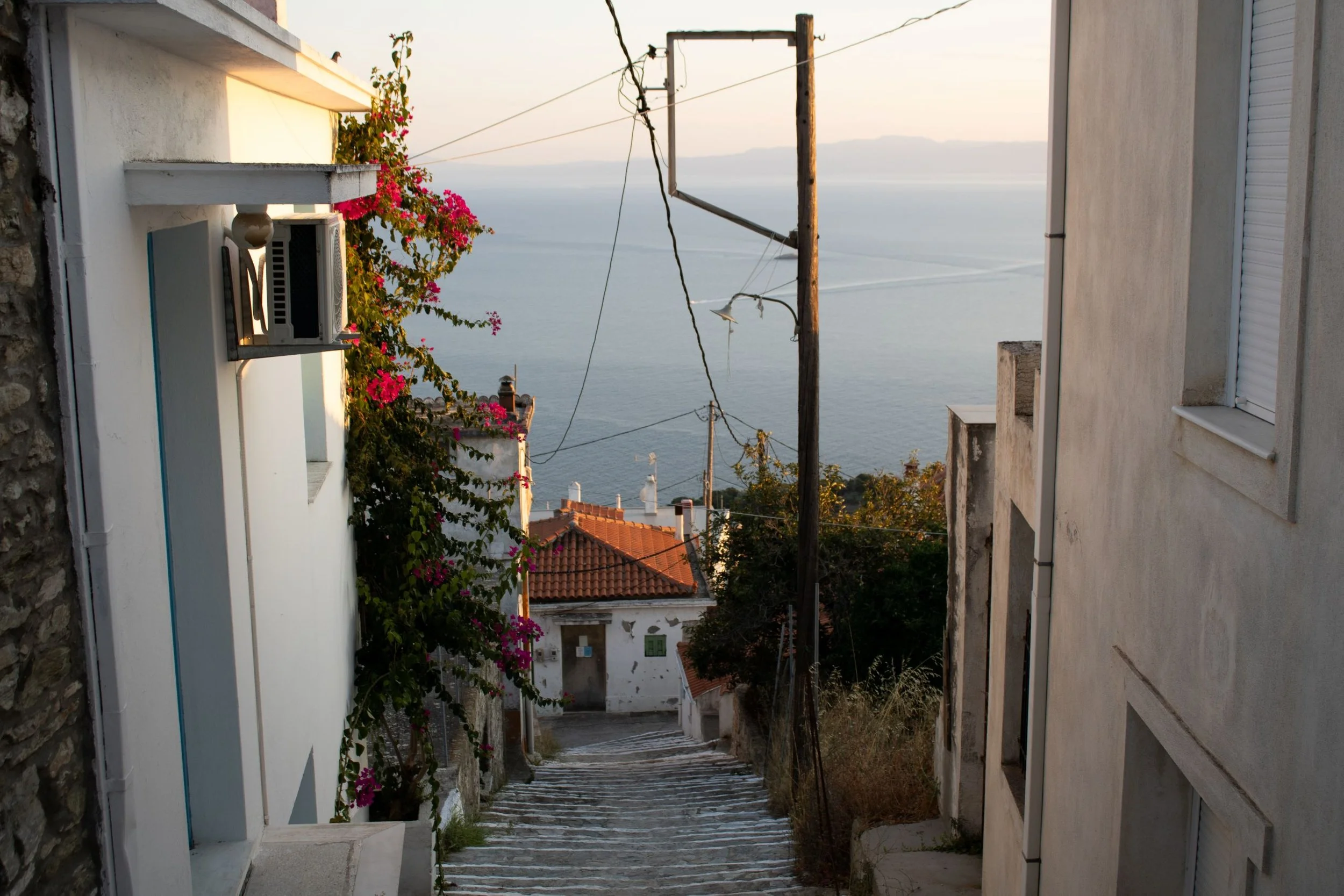
The 67 stairs up to our Airbnb
After dropping our bags, we walked to the closest cafe- a little place called Rouga. “Sit anywhere,” the waiter said, nodding to one of the many empty tables that lined the cobblestone street. It was ~7pm (an early dinner time in Greece). When the waiter returned, he looked somewhat apologetic, “I’m sorry, that table is reserved for locals… There is music at 10:00”. We didn’t have the energy to explain that we would not be having a three hour dinner, so we moved our touristy selves to a different table.
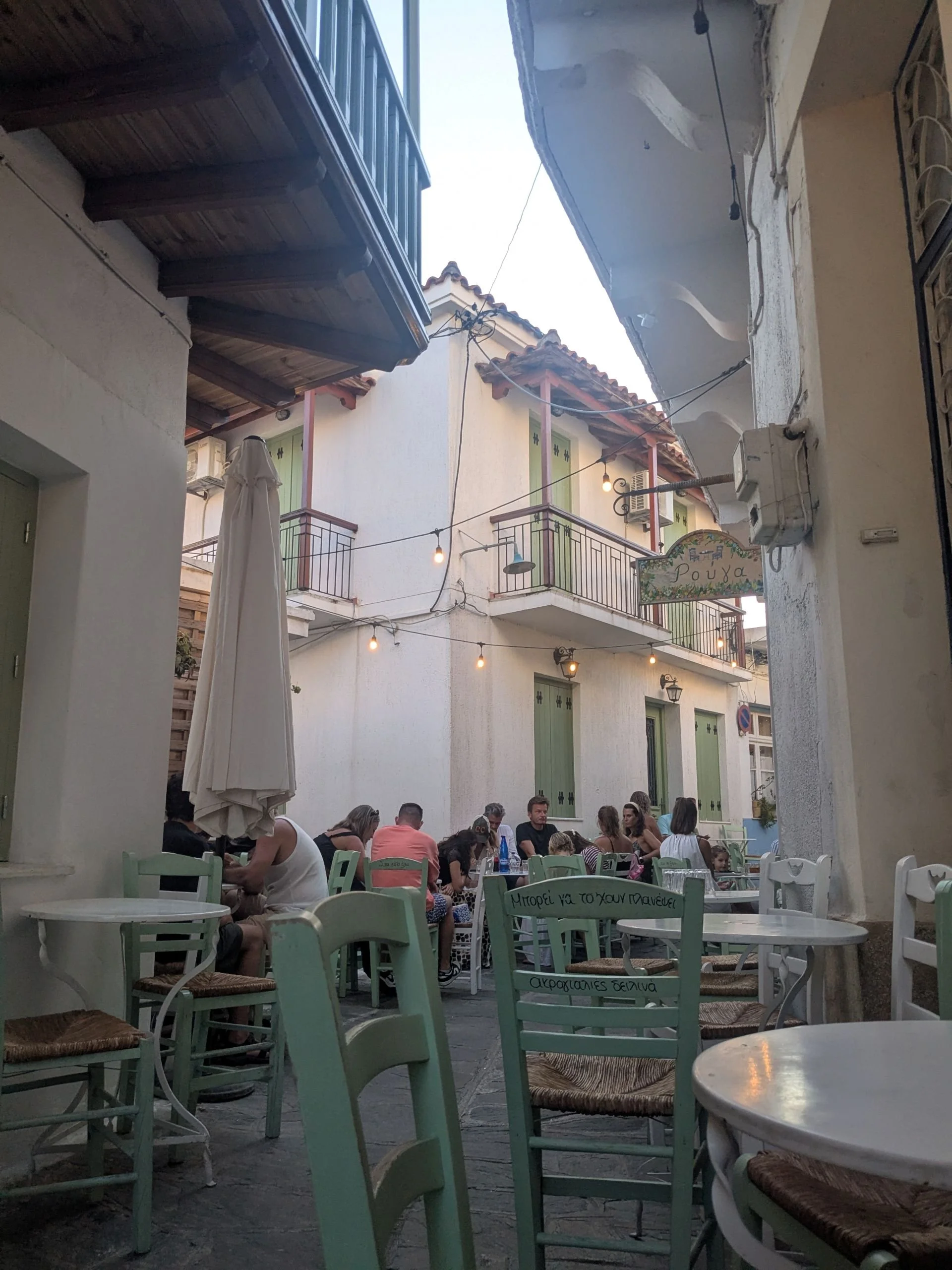
Rouga Cafe
We ordered roasted peppers, baked feta, and the most incredible chicken we’d ever tasted. Unfortunately, we weren’t the only ones interested in the chicken. It started with one cat. Like something out of a cartoon, the smell of the chicken seemed to lure it to our table. Then another cat. Then ANOTHER! A few other people eating their early, tourist dinners began to stare. The cats jumped up on the table and got closer and closer to the chicken. We tried to shoo them away, but they were persistent. The waiter apologized. He picked up one of the cats and walked it down the street, swearing as it scratched him. Of course, the cat returned, and this dance continued for a while. Eventually, the waiter revealed his secret weapon. He chased the cats down the street with a water gun, and we were left alone with our chicken at last.
If you’ve never been to Greece, you may not know that its pretty common to see cats all around. They are quite adapted to living around humans, spending their days sleeping in shady spots and hunting or looking for scraps when the temperatures are cooler in the evenings. You may expect them to be seen as a nuisance, but people seem to have a soft spot for them. Water dishes and tiny outdoor shelters could be seen around the village. And hey- I’ve seen two dead mice in my time here, none alive.
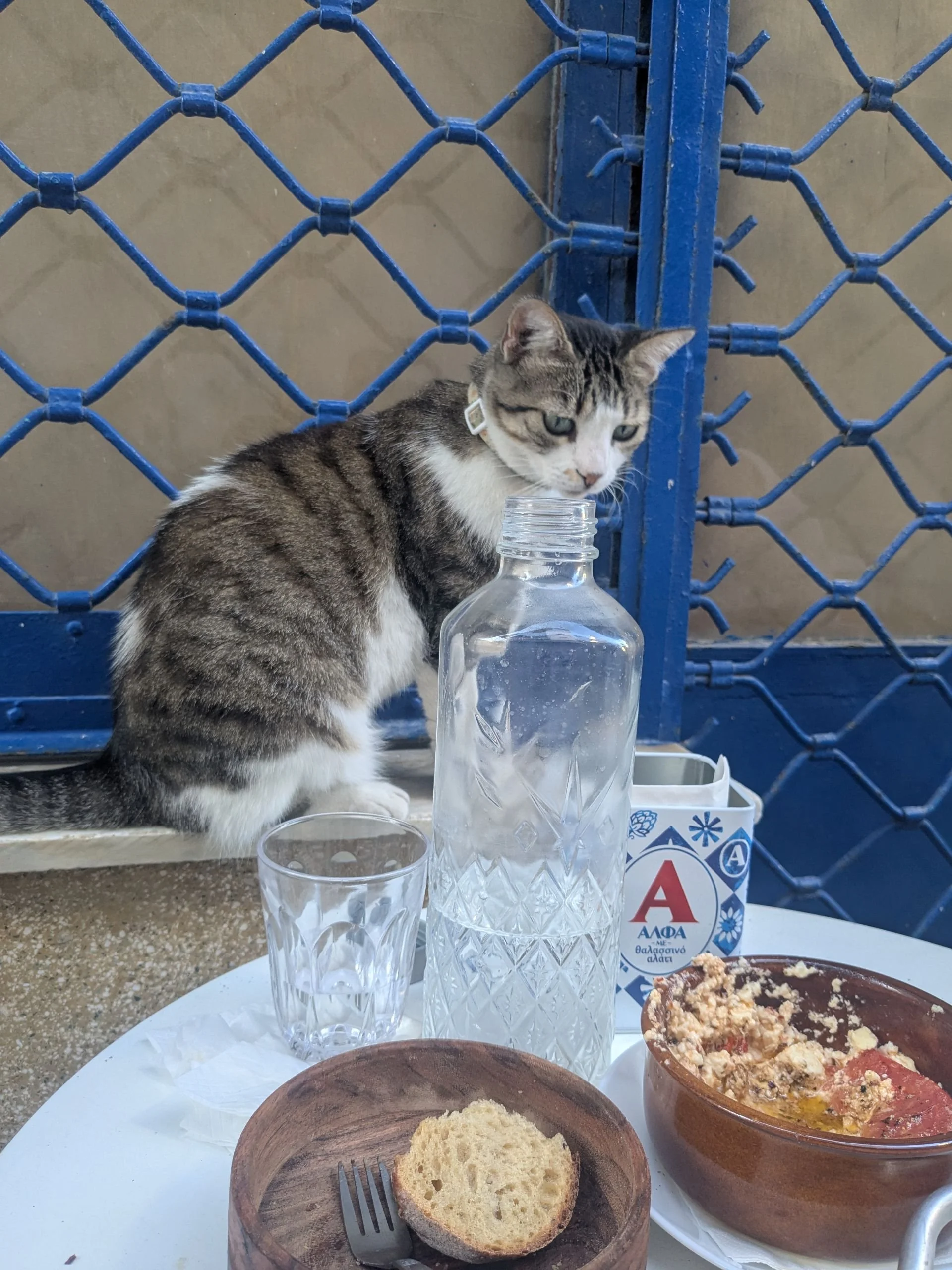
Rouga’s famous cat
Right before bed, we learned maybe the most important lesson about Greece. Without going into specifics, one of us learned the difficult way that you absolutely do. not. throw. toilet. paper. in. the. toilet. Because the sewage systems use older and smaller pipes, you have to throw toilet paper in the garbage inside houses and public places. Let’s just say that the first thing we bought at the grocery store the next day was a new toilet brush.
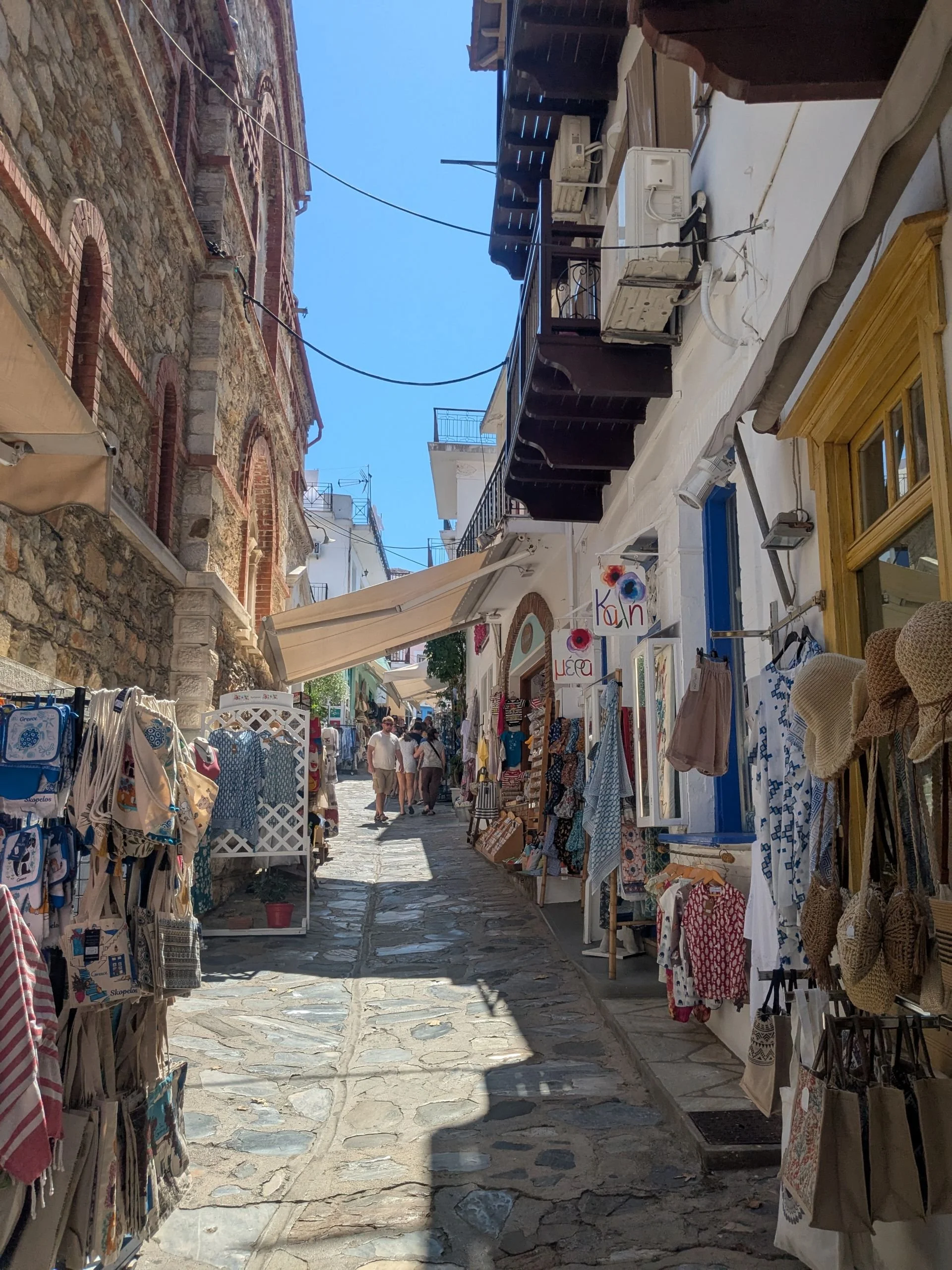
The next day, we took the bus into Skopelos Town, which is the main town on the island, or the “Chora” in Greece. Because it was on the other side of the island, we got to see so much of the island on the hour-long bus ride: the steep hills covered in lush vegetation, the sparkling Aegean sea, grazing goats, and beachside villages. The town was made up of narrow cobblestone streets, colourful homes and storefronts draped in flowers, and restaurants facing the busy port.
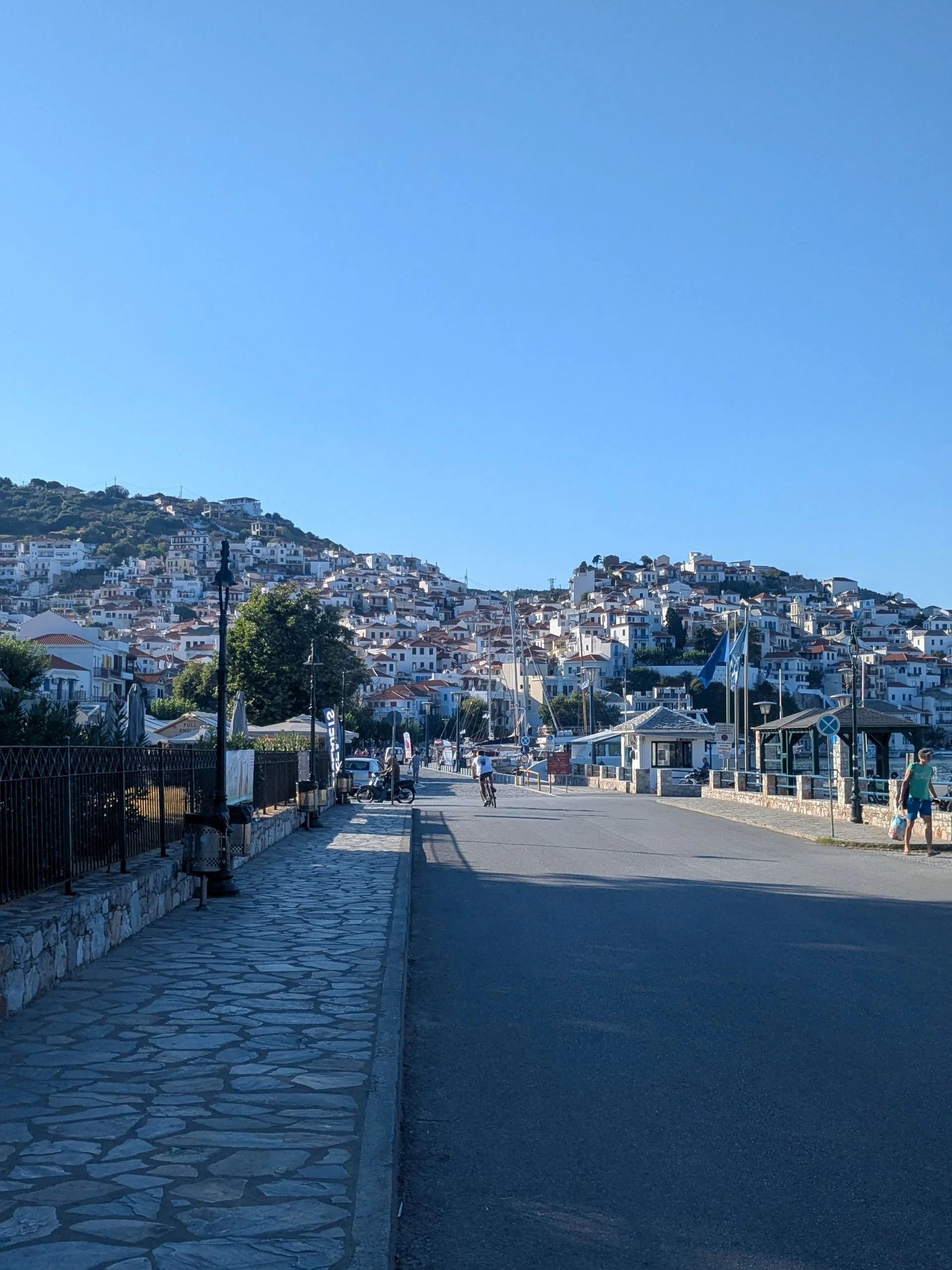
Skopelos Town
As we walked down one of the narrow streets, my mom shrieked and stumbled, “I just felt something under my foot, I almost slipped, what was that???”
“What are you talking about?” I asked.
“There!” She exclaimed.
A lone lemon was rolling down the steep street we walked down and continued to roll under tables and chairs and past storefronts for a comedically long time. Lemon trees can be found all over the island, but we had no idea where this devious lemon came from or how it almost took out my clumsy, fragile mother.
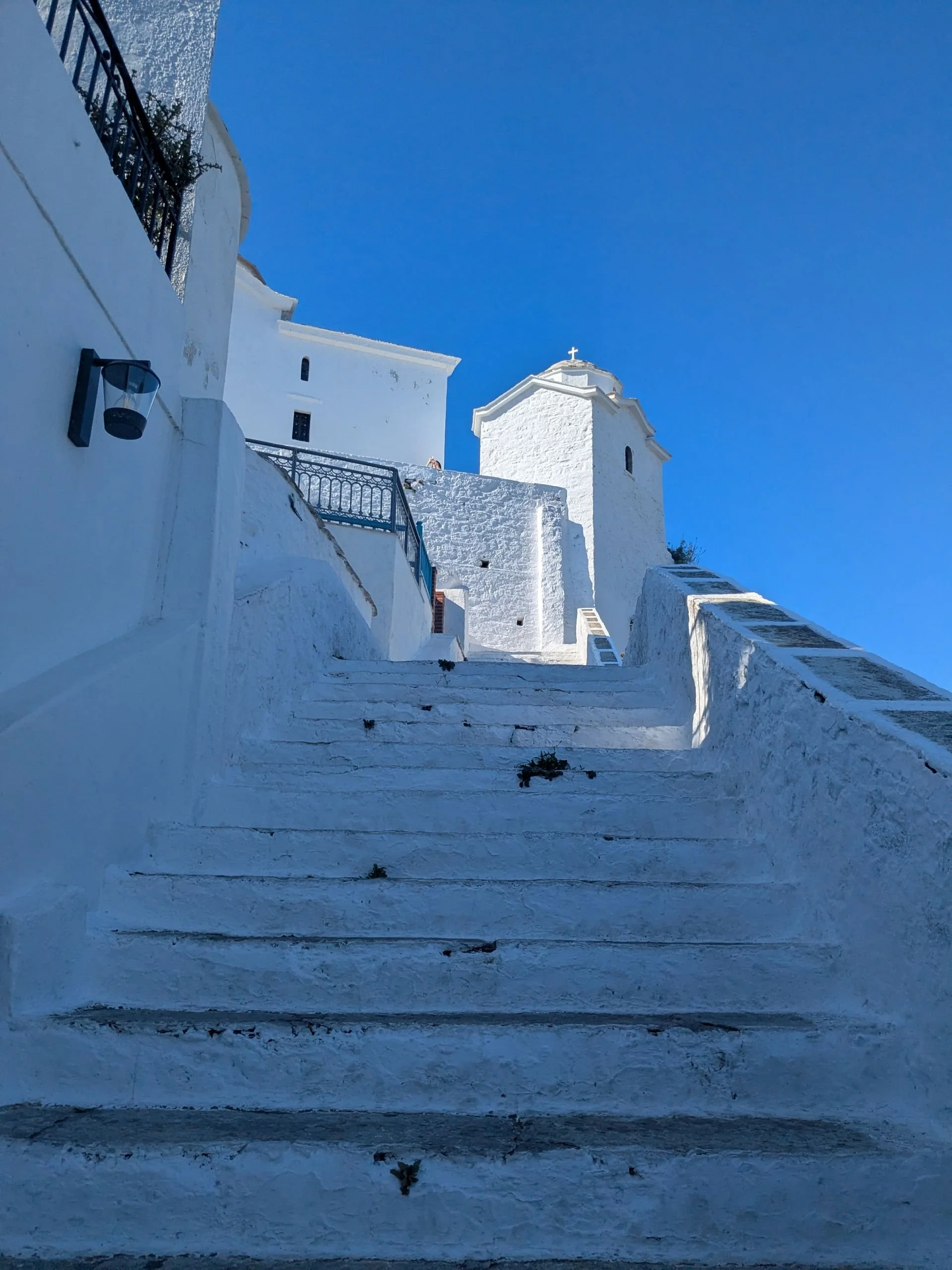
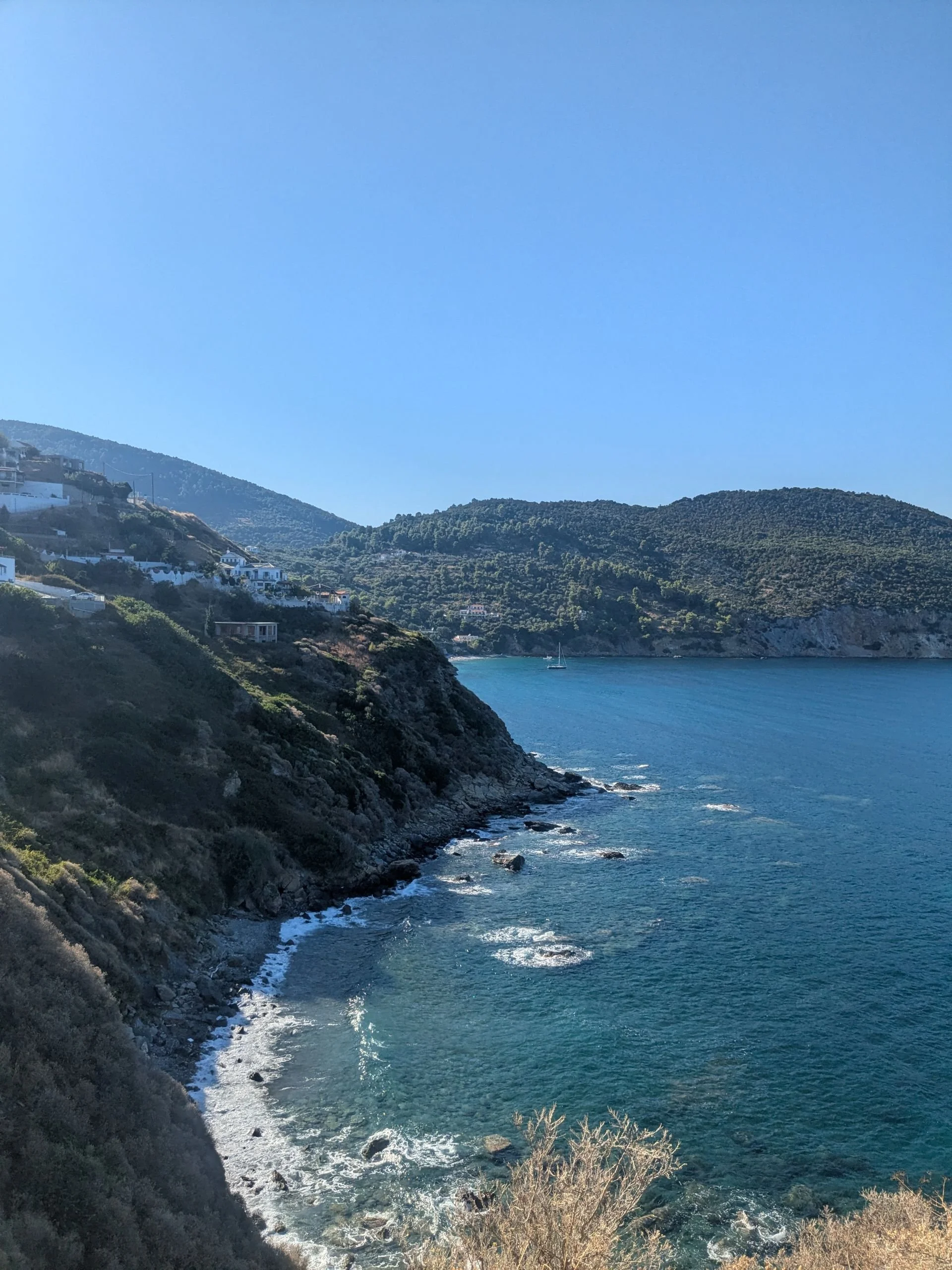
At the edge of the town, I climbed up a set of steep stairs, past numerous buildings with steeples that were too small to be churches, up to a Venetian castle, overlooking the sea. I found a quaint cocktail bar at the top with a view of the coastline: steep cliffs dotted with villas and waves crashing onto a strip of rocky beach.
Now let’s talk food: a highlight of breakfast was fresh orange juice and thick, Greek yogurt, with local honey. While we were in the town, we tried to track down a ‘Greek poutine’ my Greek friend from university had told me about. A waiter said that he could bring us fries and baked feta with olive oil to make our own, but he seemed morally opposed to preparing such a dish for us. Of course, it was delicious, and my mom joked, “will you add this to your menu?” He just laughed.
In the evening, we went to Rouga at a locally acceptable time: 11pm. Locals filled the small tables in the streets and perched on pillows laid out on a set of stairs outside Rouga, listening to live, traditional Greek music. We got the last available table. We heard only Greek, no English. People tossed lighters from one table to another. The crowd was a mix of people of all ages, and everyone seemed to know each other. No one could walk by a table without stopping and greeting the people sitting there. People drank, smoked, chatted, and best of all, when certain songs came on, they all joined in singing.
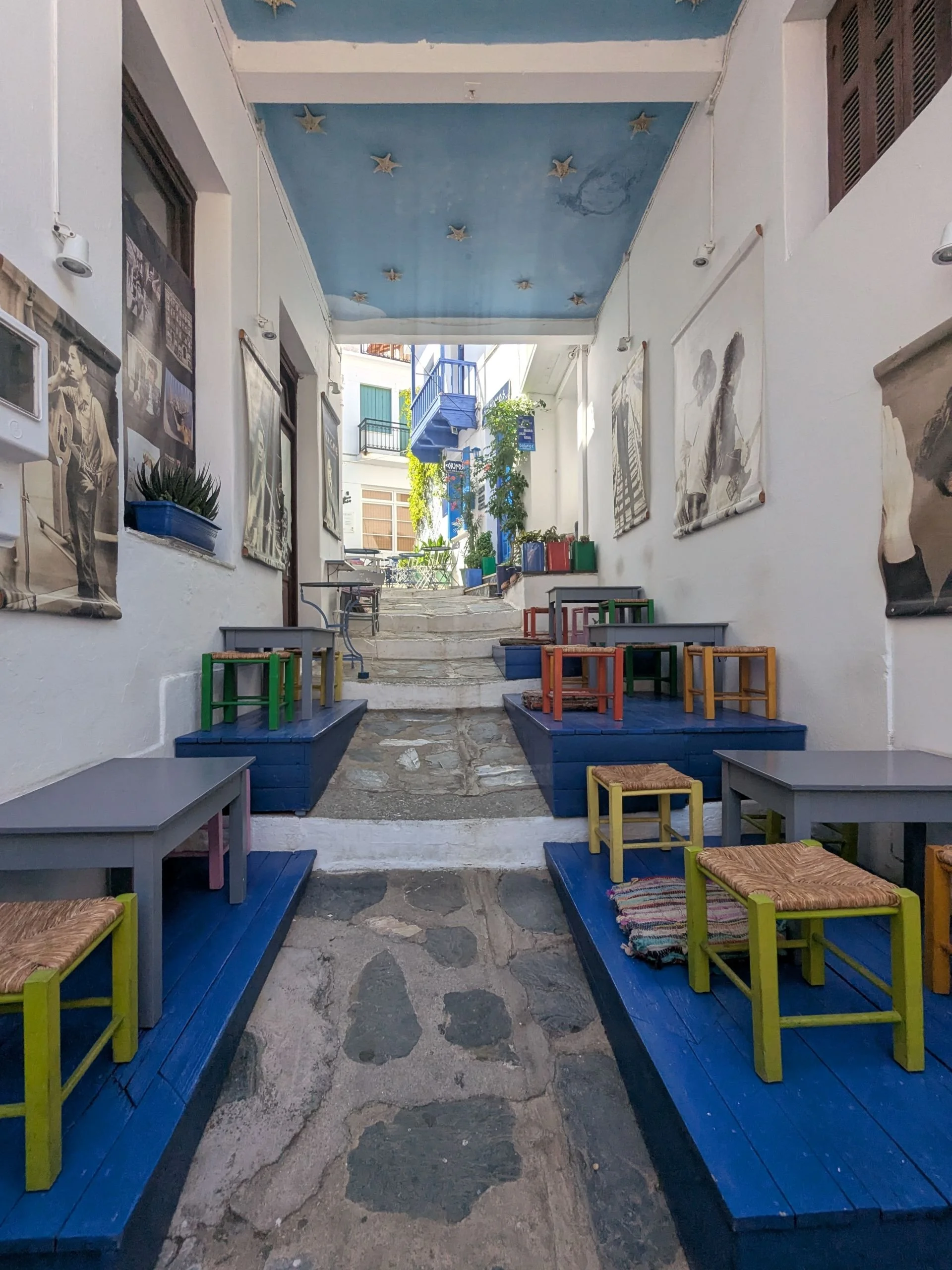
Our waiter recognized us. He said, “if you are going to drink, you drink like the Greeks, or don’t drink at all”. He brought us ouzo. And we couldn’t tell if this was to give us a local experience or so that he wouldn’t have to serve us for the rest of the night. All the waiters had matching shirts that read “I don’t work here”. Given that most customers probably spoke Greek, it doesn’t take a genius to figure out that the shirts are kind of a middle finger to tourists. Our first impression was that people in this little village weren’t overly keen to interact with outsiders, but we soon learned that this was anything but true. Greeks are known to be famous for their hospitality, and I would later find out that they really are the most welcoming and generous people.
