A baa’d forecast
“If there is a God of weather, it's an arsehole,” remarked Xavier.
Searching for dead sheep!
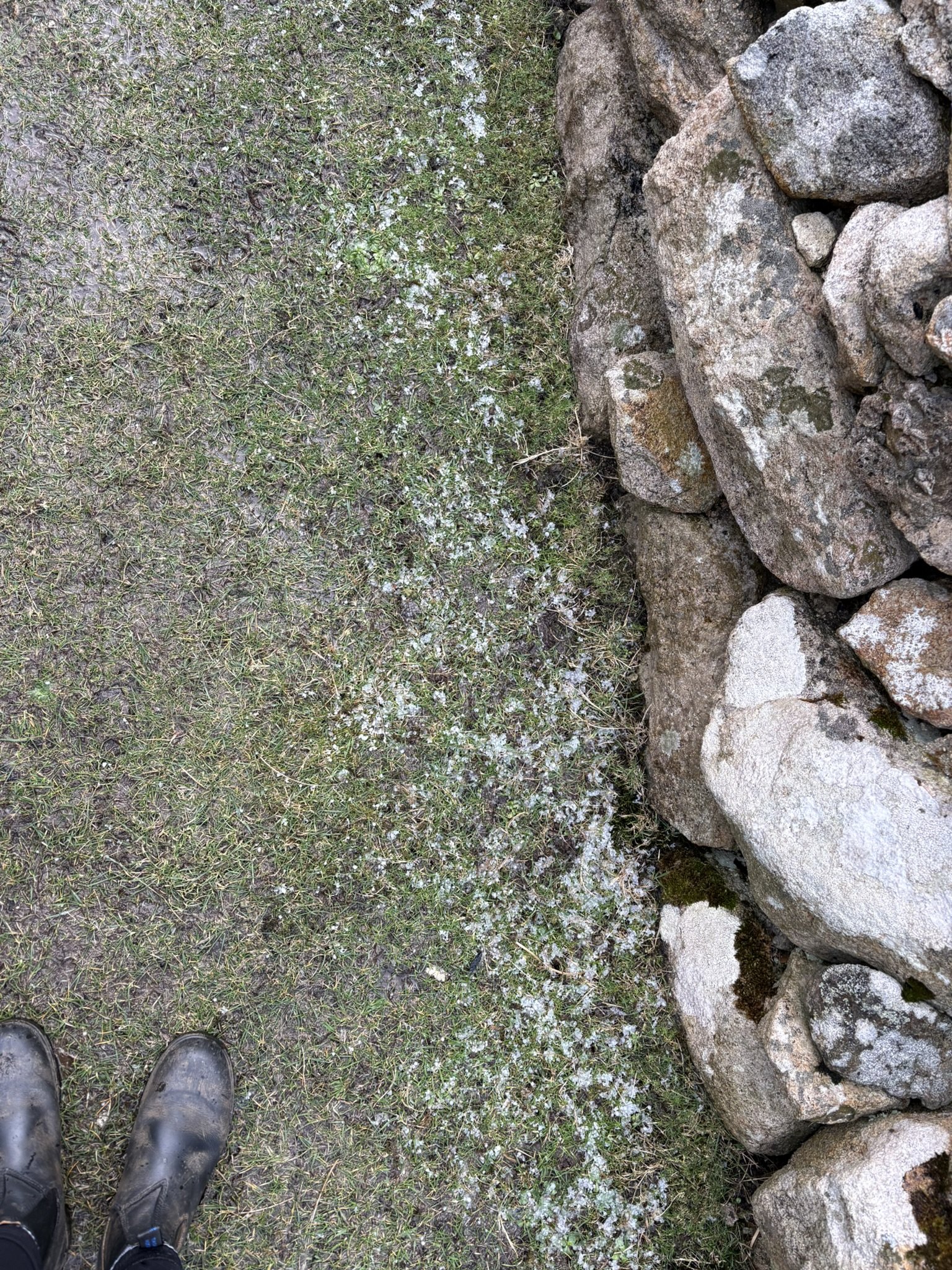
It turns out that there is a limit to how waterproof things can be. It’s late March now, and our goal is to census the population on 10 separate days before lambing begins. We managed to do one on each of the first three days here, but for the past four days, the wind, hail (see photo below), rain, and even some snow, have made it nearly impossible to do anything outside. Even sleeping has been a bit of a struggle. I jammed a door mat under the door so it would sound less like someone was trying to break into the cabin all night. But it didn’t help. The winds reached 100km/h. “It’s like sticking your head out of the window on the motorway,” Xavier noted helpfully.
We have a rotation for cooking and cleaning responsibilities, except for Sundays, which are a ‘free for all’ to break up the monotony. It's nice to only have to be responsible once every few nights. On my night to cook, I searched the pantries, freezers, fridges, and even the storage in the roof above the kitchen cabin (accessed via a trap door and a ladder). I decided to cook chilli and tea biscuits. Lucky me, I didn’t have to worry about overheating while cooking because the draft from the window is so strong it rocked the tea towels back and forth on the line above the kitchen sink. We sat around the dinner table chatting while the wind thundered outside. Our conversations trailed off as the howls grew louder, demanding attention. We looked around wide-eyed and giggled nervously.
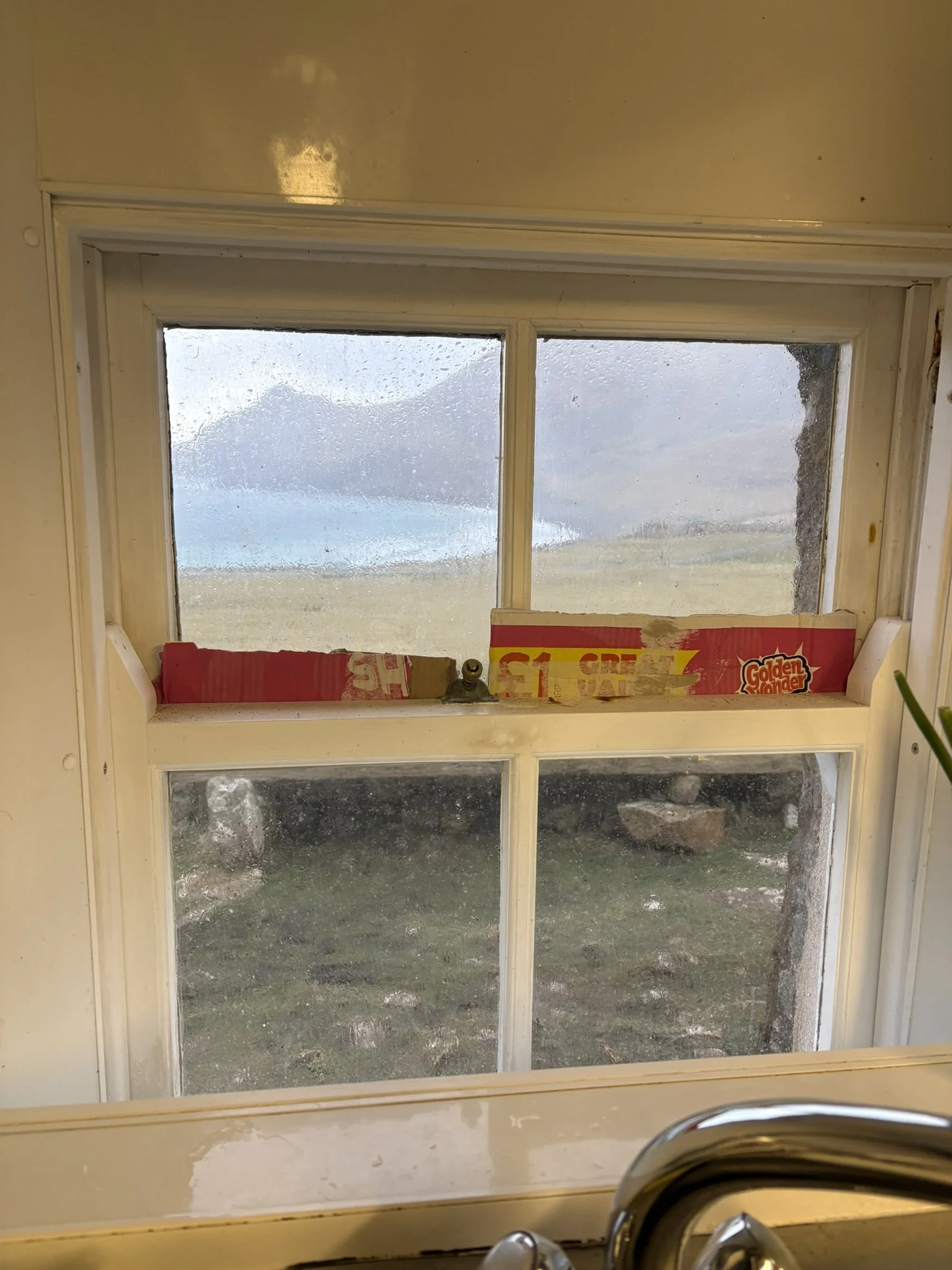
The motto here is “cut off the mould”. Nothing goes to waste. This includes empty flour bags as well, which we shove into the windows with cardboard to try to mitigate the draft (see above photo). What do you think the shelf life is on spices? I wonder if I was in elementary school when the jar of chilli flakes was purchased, given that they expired in 2017. Nothing goes to waste. Especially considering how bad weather can delay supply deliveries.
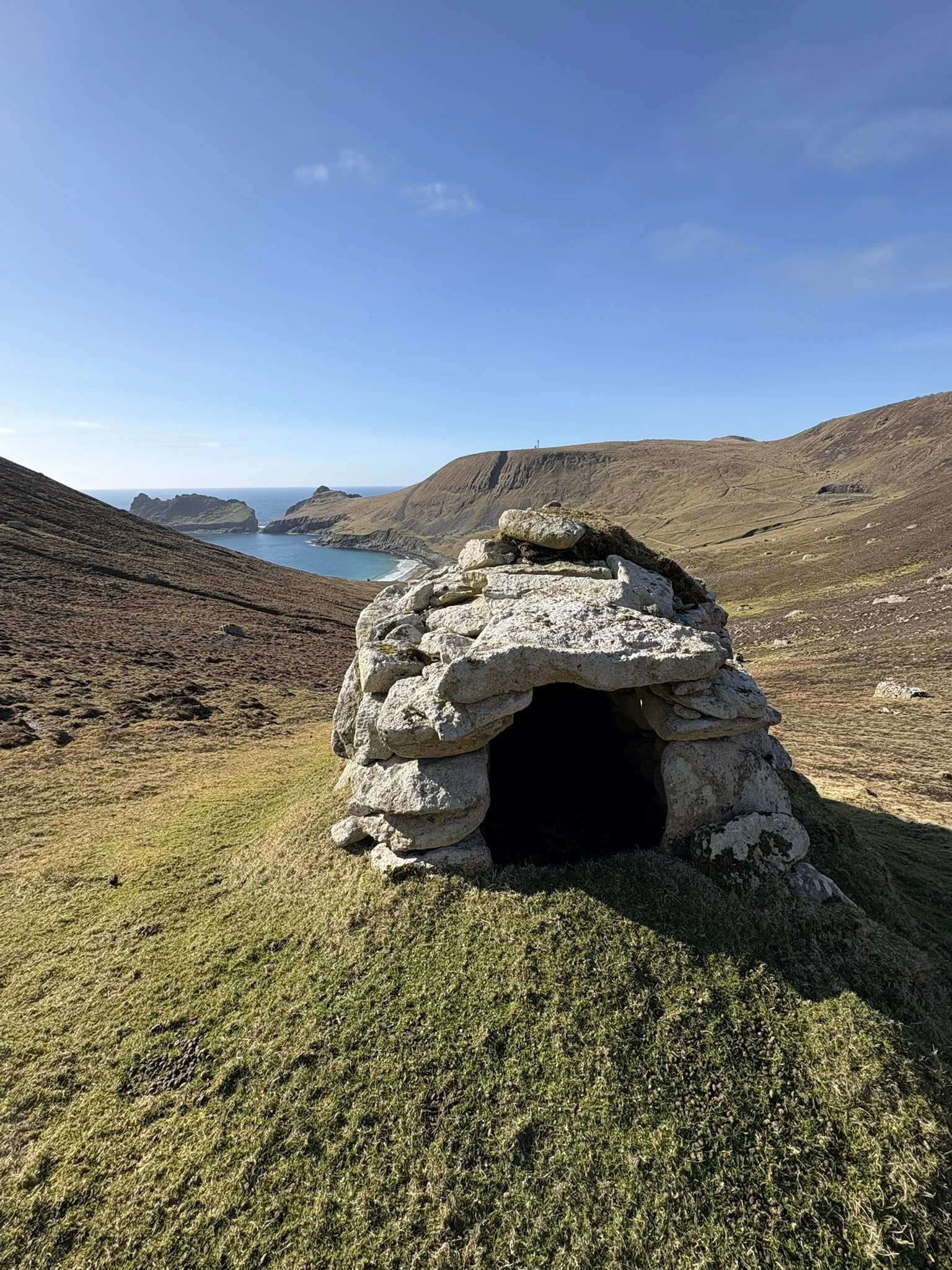
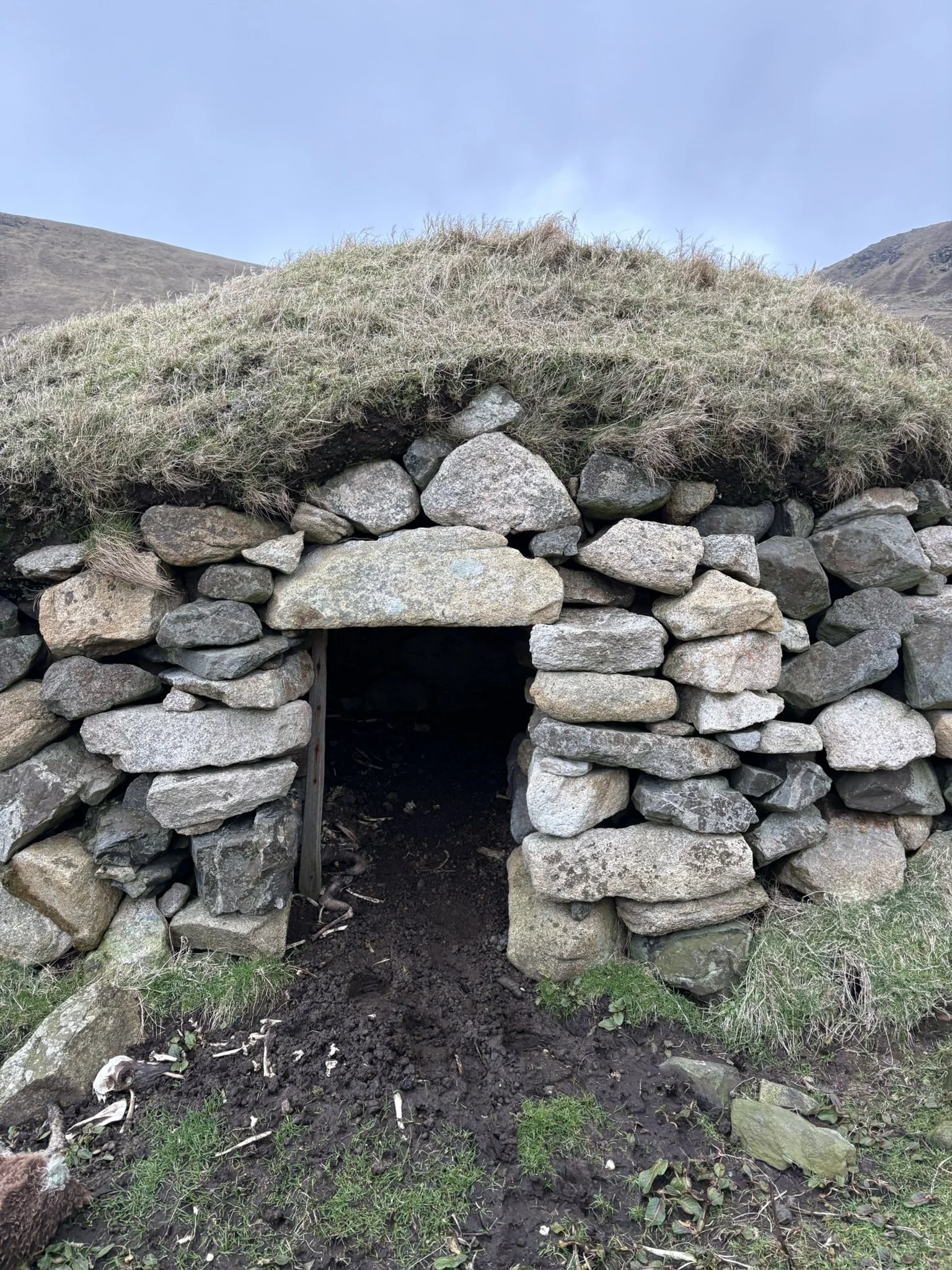
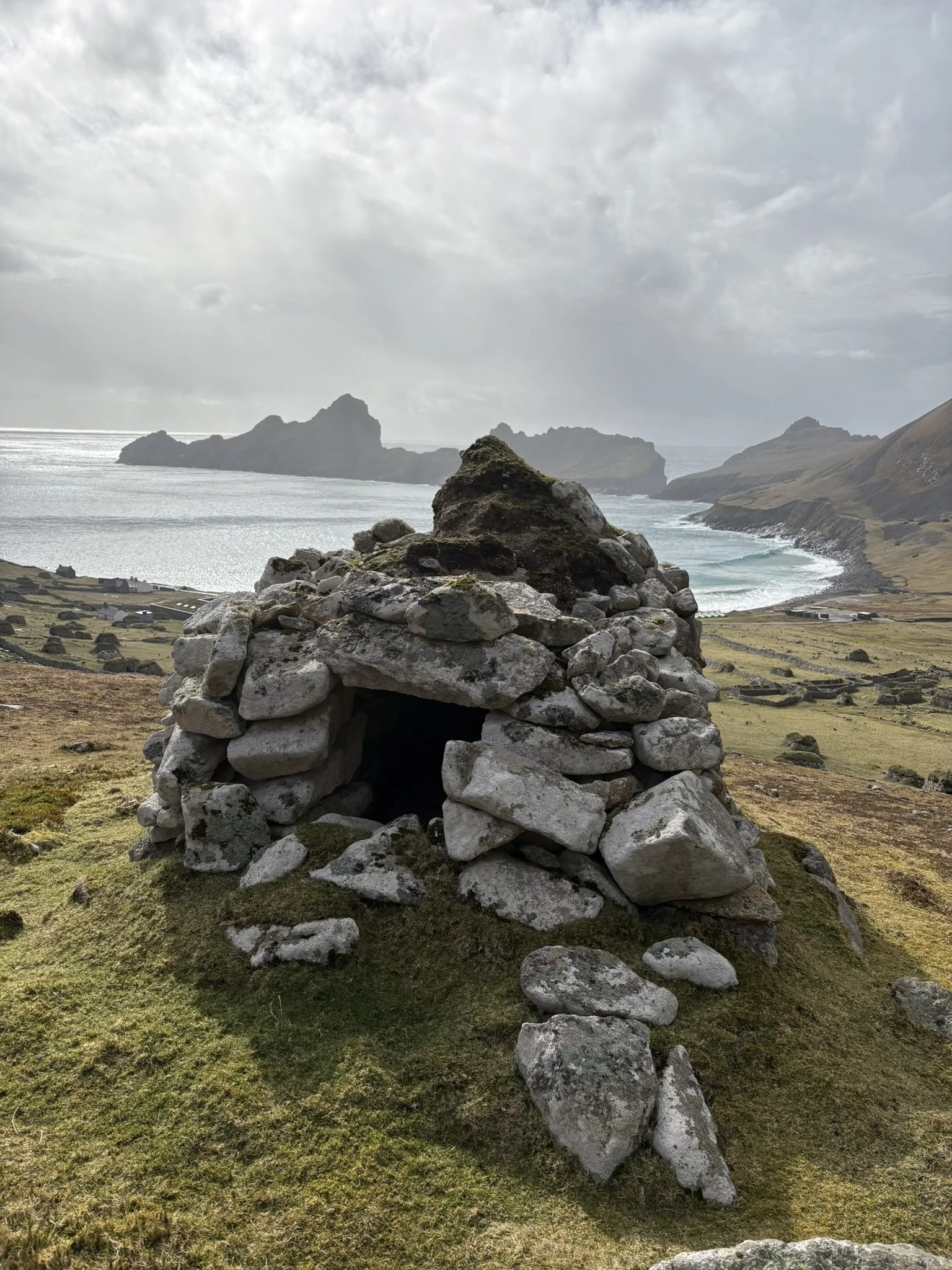
If you’ve seen any pictures of St. Kilda, you’ll likely have noticed small, round stone structures either in the meadows, along the hill sides, or by the cottages. These are called cleits (pronounced cleats). Some sources say they are of Neolithic origin. Large rocks balanced on top of one another, covered with a patch of grass, make it so these solid structures keep moisture out while allowing wind to pass through. These were clever structures for drying bird meat and storing food for the winter. They were also used to store equipment that could not get mouldy like ropes, which were used for fowling seabirds. St. Kildans winter diets consisted of porridge, cheese, and fulmar flesh…yum (W R Mitchell). But as the seasons changed, other seabirds were added to the menu, including puffins and gannets. The endless supply of seabirds was an invaluable resource that likely provided St. Kildans a relatively varied diet for the time and location. From the helicopter, I noticed hundreds of cleits dotting the island, becoming farther and fewer between as one climbed the steep hills.
(The lack of one resource, in particular, only dawned on me when coming across a sign in the schoolhouse that explains how a teacher experienced difficulties “in making the children realize what a tree was. He held up a drawing in hopes of it being identified.” I can’t help but imagine the children’s reactions not only to a tree but even to bustling city centres like Glasgow following the 1930 evacuation from this windswept place.)
A photo on the school room wall of a class…. A happy looking bunch!!
Sometimes you catch hungry sheep grazing on top of the cleits.
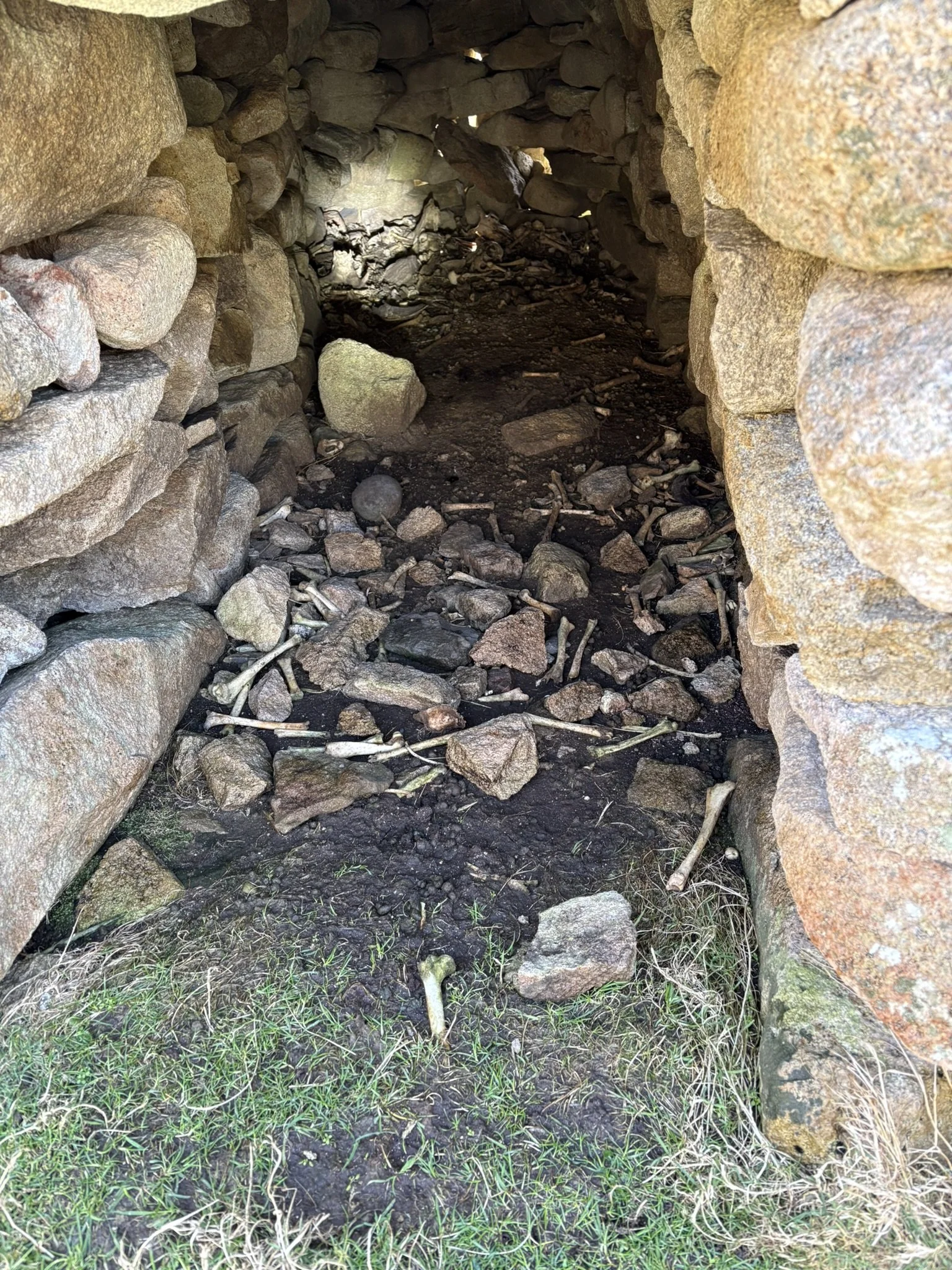
The whimsical appearance of cleits gives the impression of finding fairytale creatures inside sharing tea, or perhaps the entrance to a hobbit home. But nowadays, you often find sheep sheltering in them during storms or when they’ve become ill, you might expect to find their decaying bodies inside. In fact, this was my sole purpose for several hours this week, when the weather was nice enough to leave the cottage but not nice enough to do a census. I contorted my body to fit through the entrance of a cleit, hands and knees slowly sinking in the mud, or more likely sheep poo, surrounding me. It was impossible to avoid kneeling on bones. I clicked on my flashlight, doing a once-over of the dark structure. I noticed a few horns, smooth skulls that had probably been there for years, and many miscellaneous bones, but I was searching for fresh carcasses. I ended up finding about 15 dead sheep, some in cleits, others in open fields. This information allows us to confidently determine who hasn’t survived the winter, but also provides opportunities to collect more information about individuals. One cloudy afternoon, I set off with the field lead, Xavier, to return to where I’d spotted fresh carcasses. We do post-mortem examinations for a number of reasons.
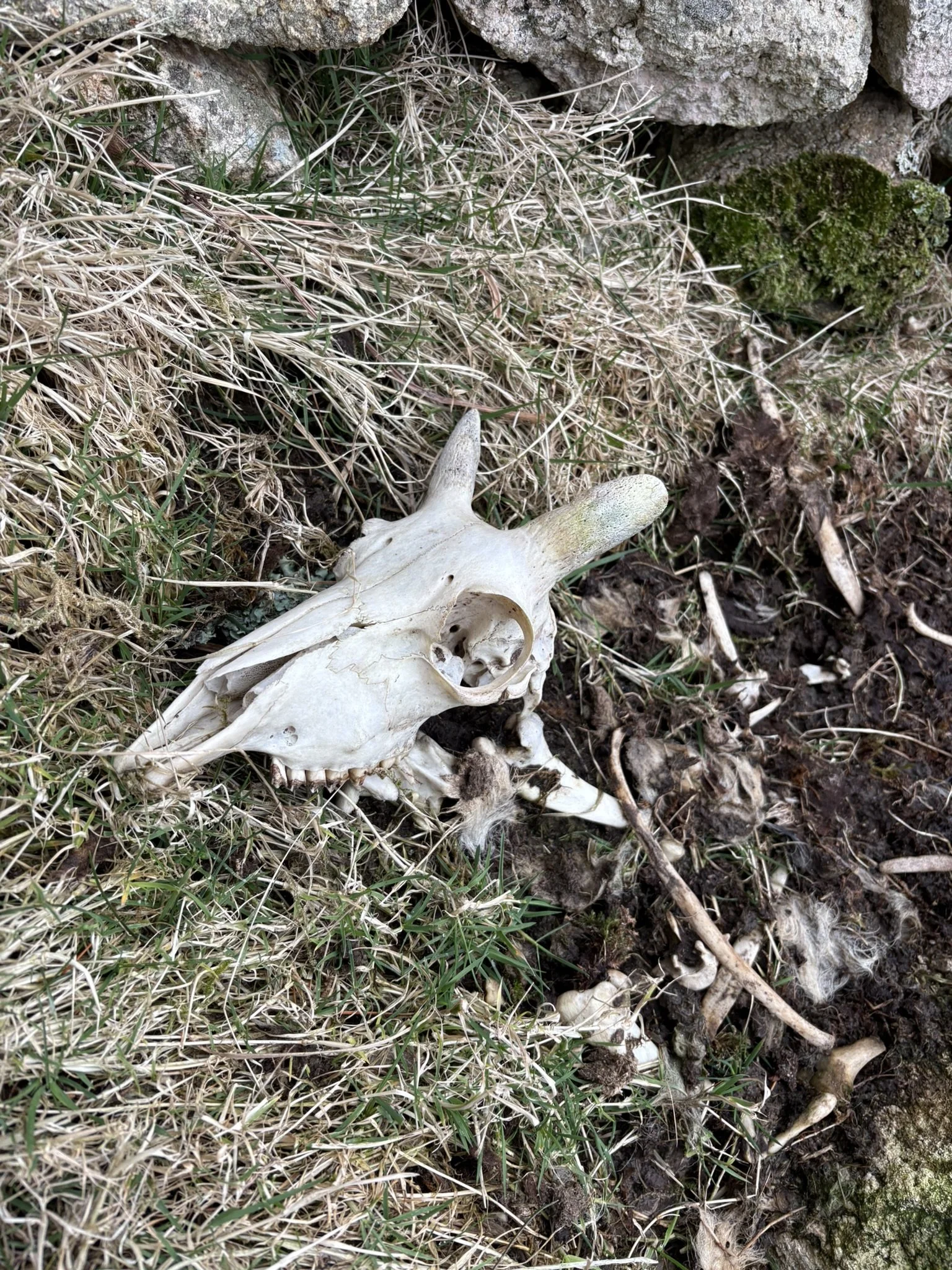
For one, they allow us to collect updated morphological (trait measurement) and genetic data (tissue samples) from individuals, which is useful if they haven’t been captured since they were lambs. Examinations also allow us to obtain data that can’t be collected when the sheep is alive, for example, we take the jaw and left foreleg to measure their length. These bones are later preserved at the National Museum of Scotland in Edinburgh. I recorded as Xavier rattled off measurements, and noted age, sex, weight, and other factors that might be interesting to consider when analyzing mortality data. Post-mortems also allow us to hypothesize about why a sheep died. Xavier pointed out the horns of one yearling male, which at first glance were large, rounded, and quite impressive for his age. Several horizontal indentations could be seen at the base of the horns. “These mark periods where horn growth stopped. Too much energy was going into growth, and he began to struggle,” Xavier noted thoughtfully. Later, he pointed out dark spots on the lungs of a female. “This colour is not normal”. He skillfully sliced into the lungs, revealing wiggling worms. “Lung parasites,” he stated. The parasites make it difficult for the sheep to breathe, and as you walk around the island, you can hear a precious coughing noise that sounds like a “baa” combined with a human cough.
“I’ve never seen the inside of a sheep before,” I accidentally said out loud. “Well, since we’re here…” Xavier began. He pulled out the internal organs, starting with the first of four stomachs where sheep ingest grass. Cutting it open, a green paste fell out. The stomachs each had different linings, one with many folds, one with a honeycomb pattern... The various linings help the digestion process. When he cut the fourth stomach open, green liquid spilled out. This stomach led into the intestines, with their many intricate folds. It's a wonder such large, complicated organs fit in such a small body. In the womb of an older female, we found a fetus from which we took measurements and tissue samples. There is always some tradeoff with the energy put into reproduction versus survival. “She has been in poor condition since the summer,” Xavier referred to the mother. “Reproduction took a lot of energy out of her; it's surprising she lasted this long”. Interestingly, yearlings tend to favour survival at the cost of reproduction, miscarrying babies more often but surviving better than adults.
An adult sheep with a yellow ear tag
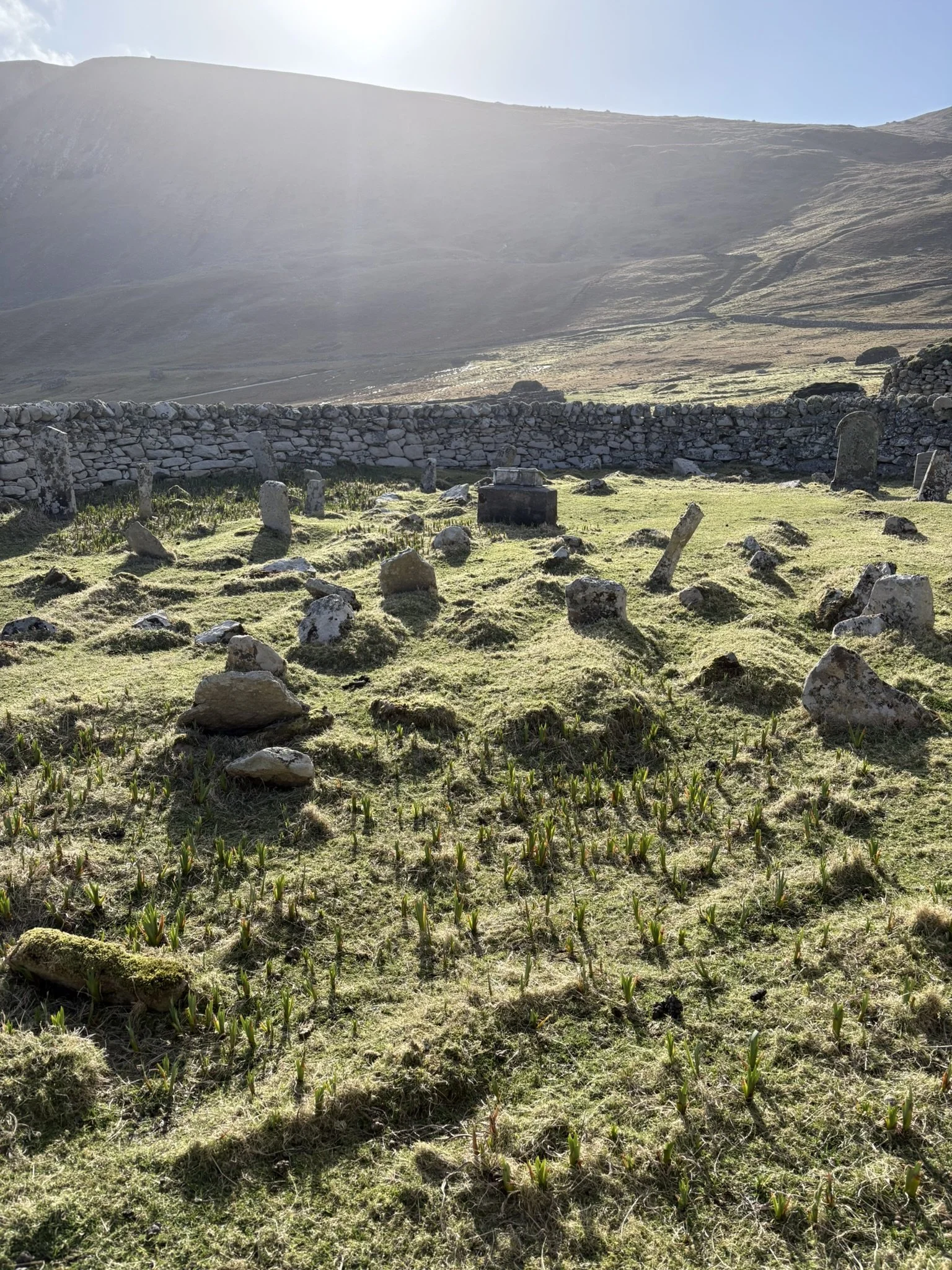
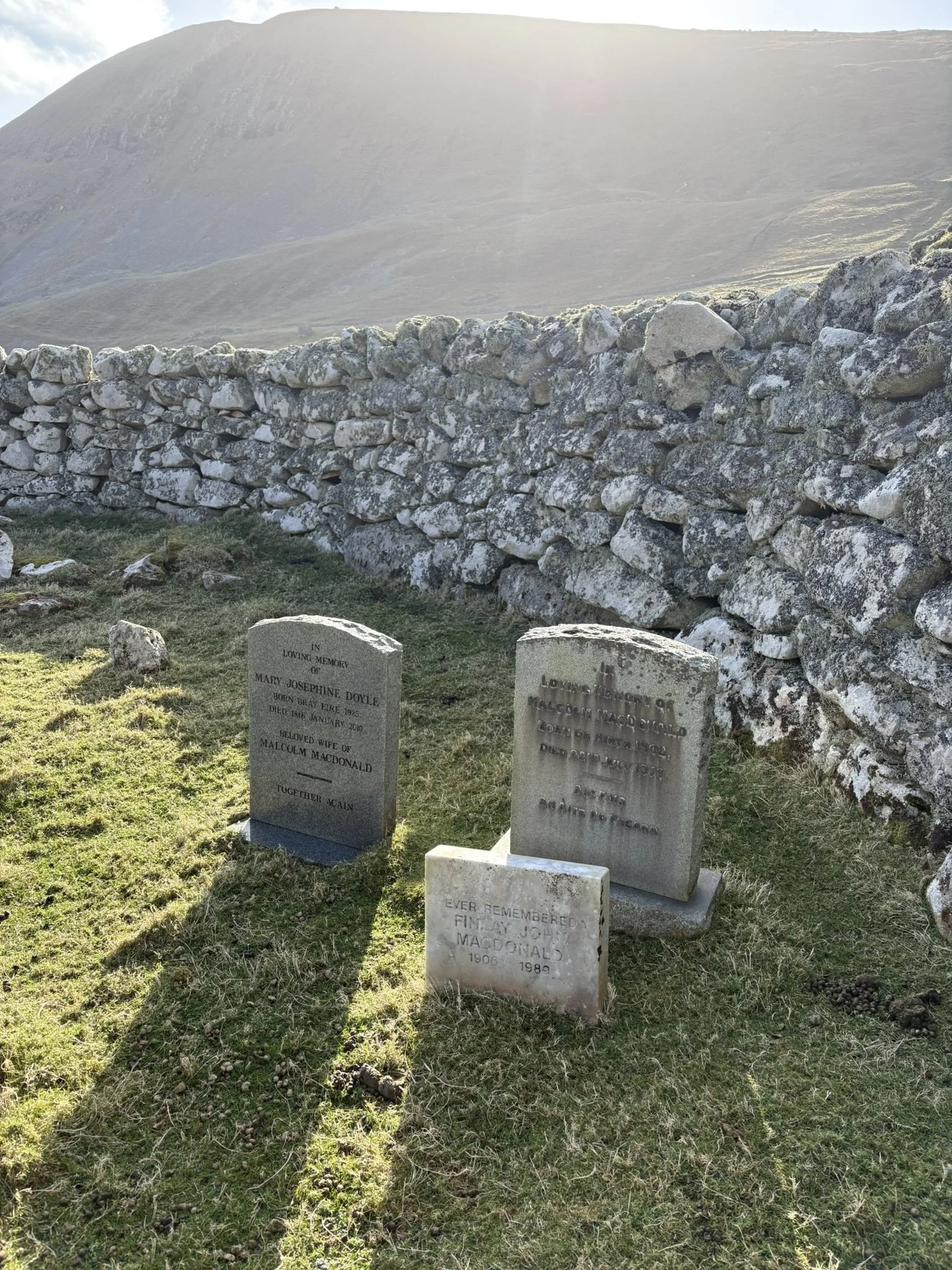
I guess where there is life, there is death. So it shouldn’t be surprising that Hirta has its own cemetery. (For humans, not sheep- though one could argue the cleits are a sheep cemetery of sorts). An assortment of lumpy rocks, no more than 50, are scattered throughout a small cemetery, surrounded by a 6-foot circular rock wall. There are only three stones that look like what I’m used to seeing in a cemetery. They haven’t faced the elements of Kilda for nearly as long as their neighbours. In the years after the evacuation to the mainland, many people, including archaeologists, naturalists, photographers, and former residents, often visited the island. A calendar left behind in the school room was permanently stuck in the year 1930. Today, there are no longer any former residents living. In their death, some requested to return to Kilda one final time, forever; a privilege only afforded to those who were born there.
Enough about death! Back to the reason we’re all here: sheep! Mostly, living sheep!As we’re racing against the clock, we decided to stick to our original plan of censusing this morning, despite the forecast looking increasingly wet. I put on my toque and fleece sweater for warmth, along with waterproof layers including my boots, overalls, puffer jacket, and gloves.
On a GOOD day, looking through a telescope at an untagged sheep!
A consistent mist fell from the sky, covering anything that dared to be unsheltered. The first two hours of the census were manageable. I looked down at my polyester-coated overalls and wondered what the St. Kildans had worn during winter storms. The slopes were a little wet, but not dangerous. The sheep continued to feed, though some took to lying down next to a cleit or wall. Others gave a little shake, like a dog after swimming, and continued feeding. The peak of Conachair disappeared into a heavy cloud. In the third hour, the rain began to penetrate my gloves and jacket. Despite my best efforts to shield it, the telescope became wet. Fat drops on the lens made it difficult to read tag numbers. Each time I pulled out my census phone to record an observation, the waterproof bag, which kept the phone dry, was splattered with drops, which affected the screen sensitivity. My wet fingers struggled to enter data. I jammed my cold, wet hand back into my sopping glove and carried on.
View of Conachair during my rainy census.
When it was finally complete, my jacket, gloves and pants seemed as though I had been fully submerged in water. I headed straight to the shower and peeled off my layers. The hot water stung my hands and slowly revived my shivering body. “When you’re out in the cold, the simplest thing makes you so happy…. A warm change of clothes makes all the difference,” Xavier smiled after we’d both recovered from the census. I feel the same way about a hot meal. We had leftover cottage pie, a hearty mashed potato, ground beef, and vegetable pie with gravy for lunch, followed by chocolate cake with cream that Erin whipped for a special occasion. Our table of four grew to a table of six today. Two new researchers arrived via helicopter: Robin, a plant biologist who has visited Kilda for 10 years, and Fahima, a new PhD student who will be collecting fecal samples from the sheep. “Finding the sheep you need to sample is the hardest part,” Xavier laughed, “otherwise, they poo and pee all the time. If you look at them the wrong way, they start peeing”.
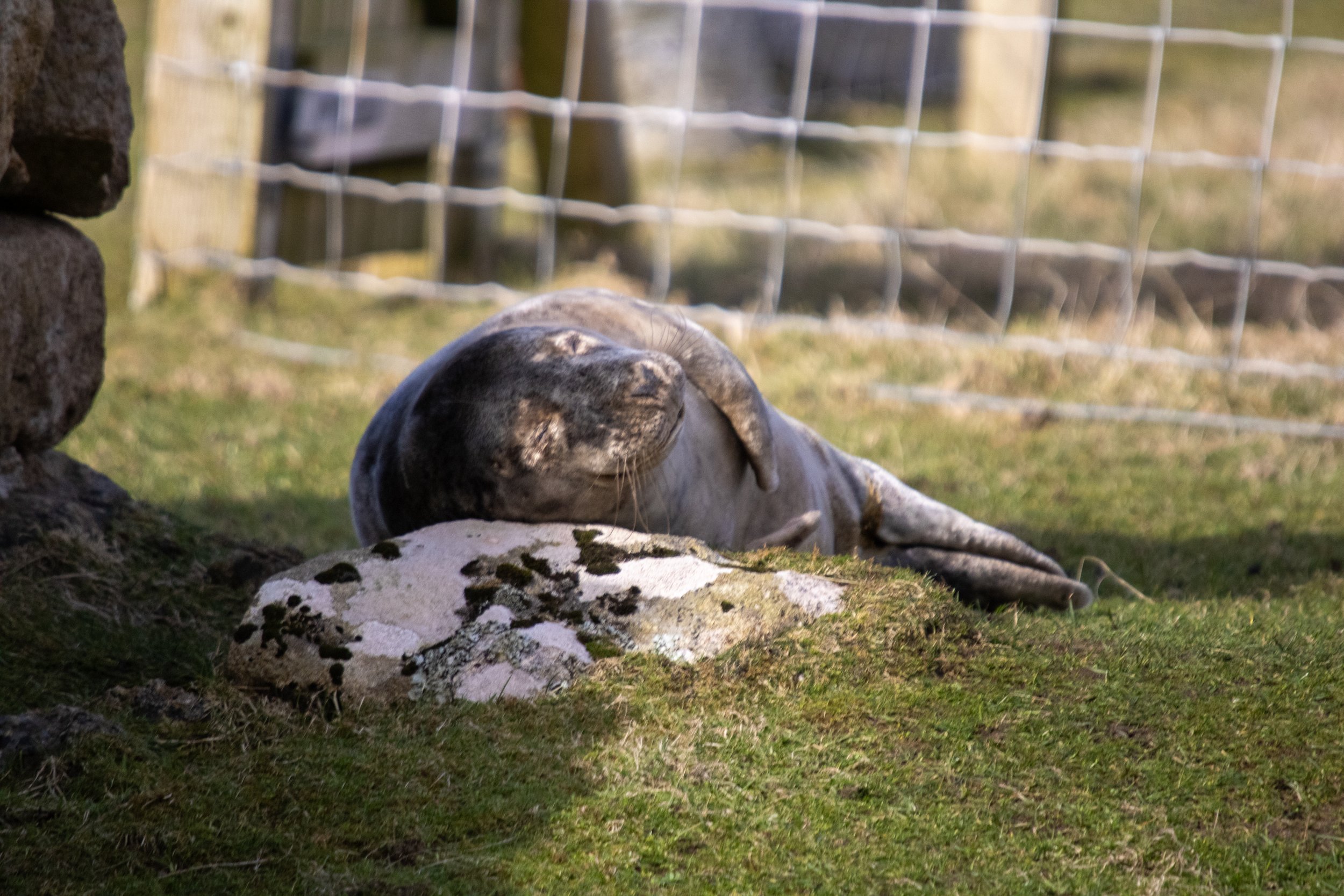
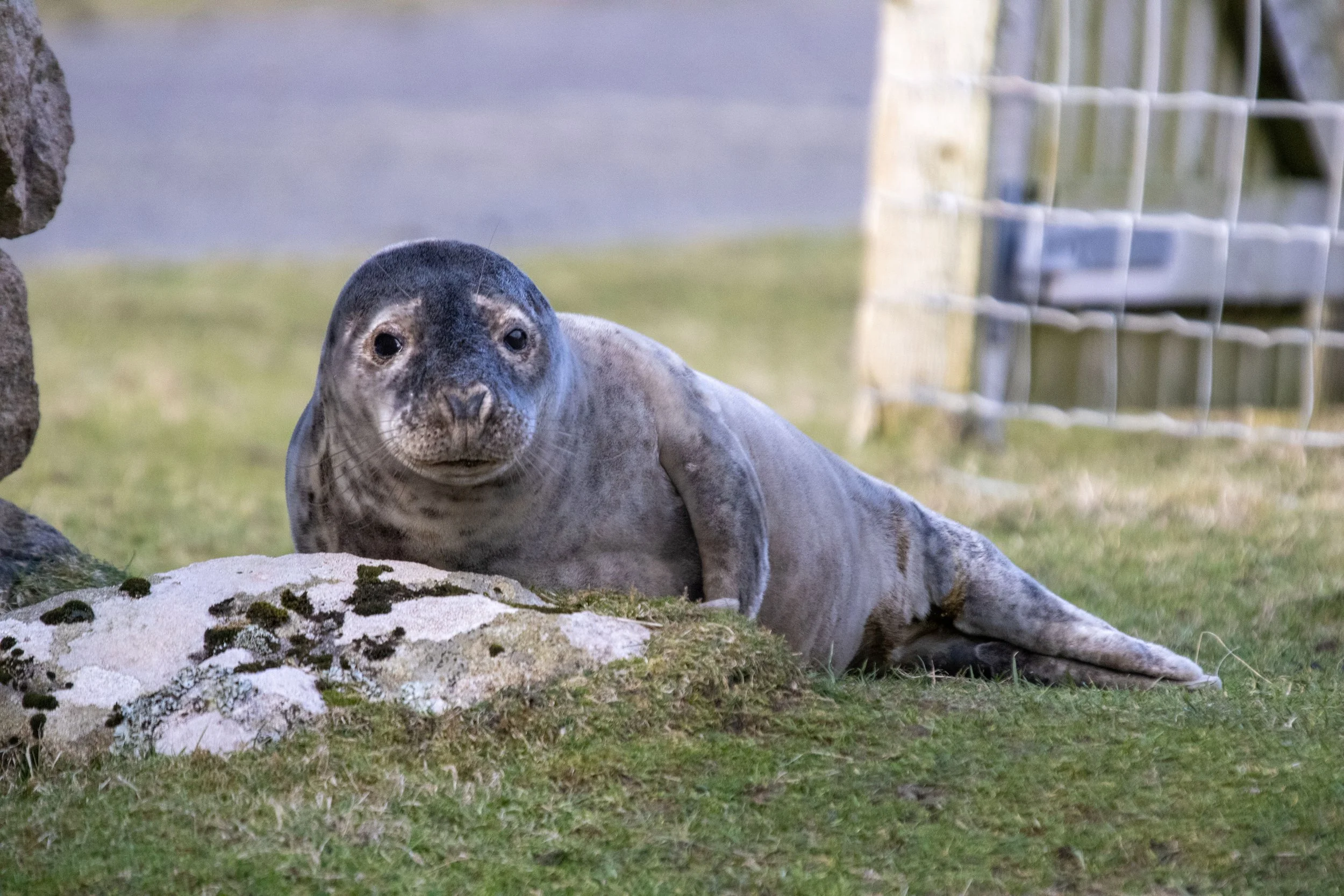
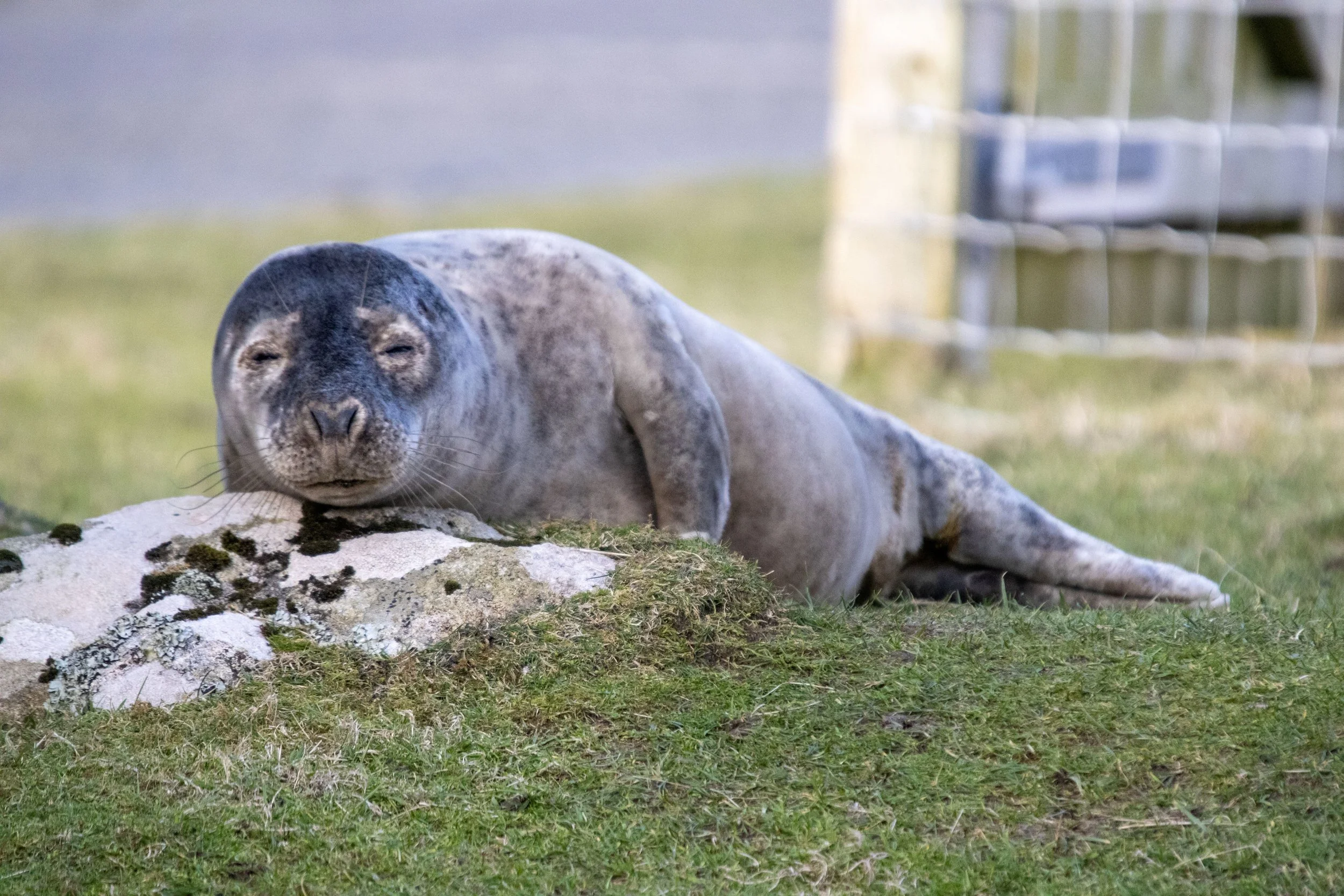
In great contrast to the usual 20k steps I get while censusing the sheep population, the past few days had been quite sedentary, only walking between the bathroom cabin, Wi-Fi cabin, kitchen cabin, and my own cabin, as I like to call them. I spent several peaceful hours listening to a podcast in the Wi-Fi cabin while sorting through identity tags we will use for the lambs when it comes time to tagging them. I put each set of tags in a bag with tubes for collecting DNA, pre-labelled with the lamb's identity number. Lambing season seems like it's hectic, non-stop work. We’re trying to prepare now so we don’t realize we’ve forgotten something while a baby sheep is in our arms. During one of these quiet work days, I came across a seal enjoying a rare bit of sun.
After a late night session of accessing Wi-Fi, I began the minute or so walk back to my cabin when the wind picked up. I leaned my whole body forward and continued walking. I never really believed that wind could be so strong as to knock you over, but I find myself constantly humbled here. A powerful gust forced me to stumble backwards. Had I been walking with the wind to my back with the same slippery mud below me, I probably would’ve ended up on my butt. I laughed in disbelief and hurried inside during a brief period of respite.
The forecast offers little hope of improvement. With lambing only two weeks away, the coming days will be a race against the clock and the elements, to prepare!!!
My view from a derelict cliet
