Counting sheep, falling asleep, and repeat
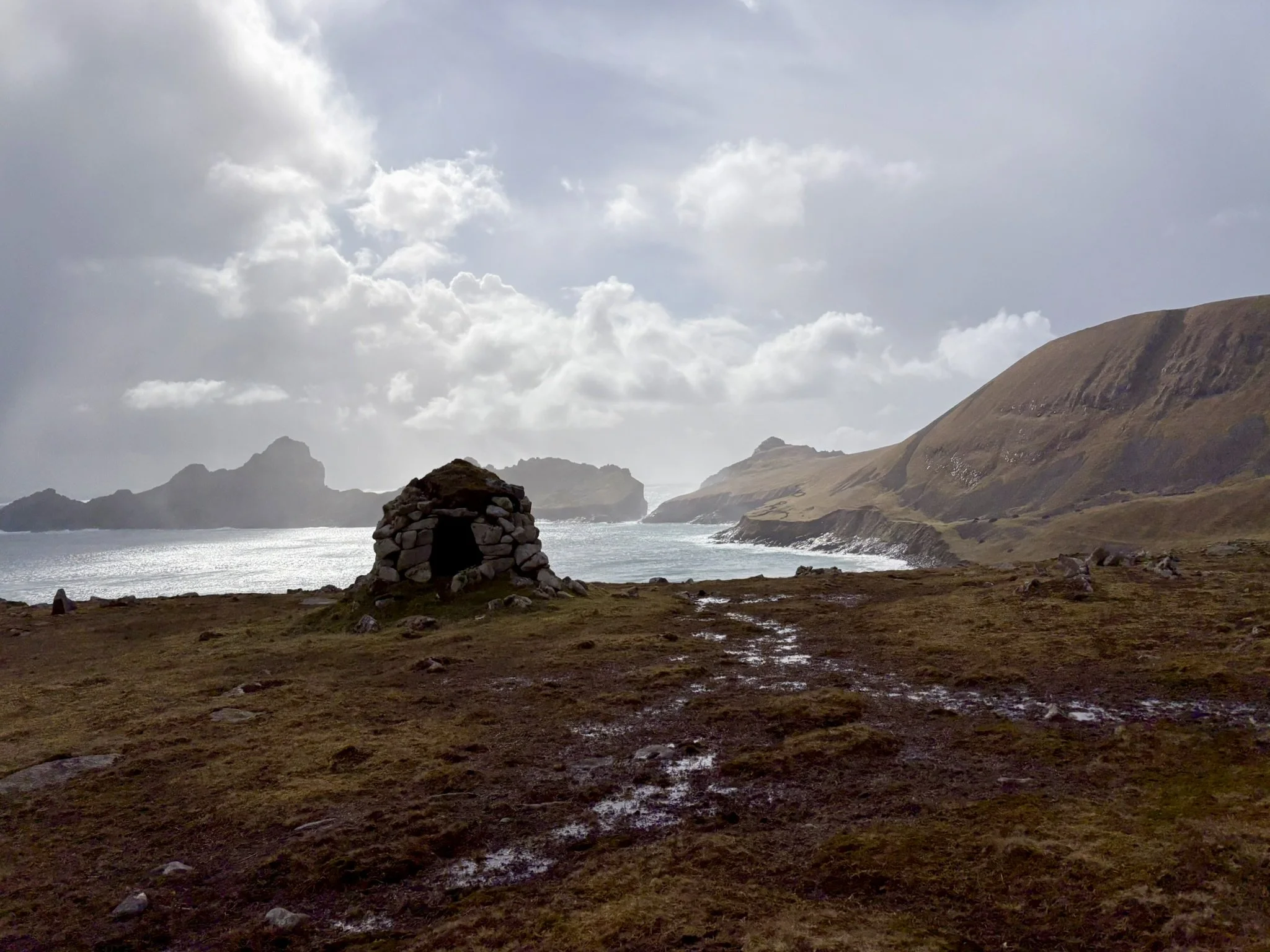
Kilda is a place that embodies hyperbole. The cliffs are dramatic, the weather is extreme, and our perception of life here, as reflected in historical accounts, is greatly varied. John Randall (yes, Outlander fans, that’s his name) postulates that Kilda is the “most written about place per square mile in the world,” but points out that very little information actually comes from former residents. One of the largest books written about the island was authored by a man who set foot on the island for only a few hours. If I had only experienced the wind and hail of the past week and had not arrived on the most sunny, glorious day, I too probably would have published a biased account of the island.
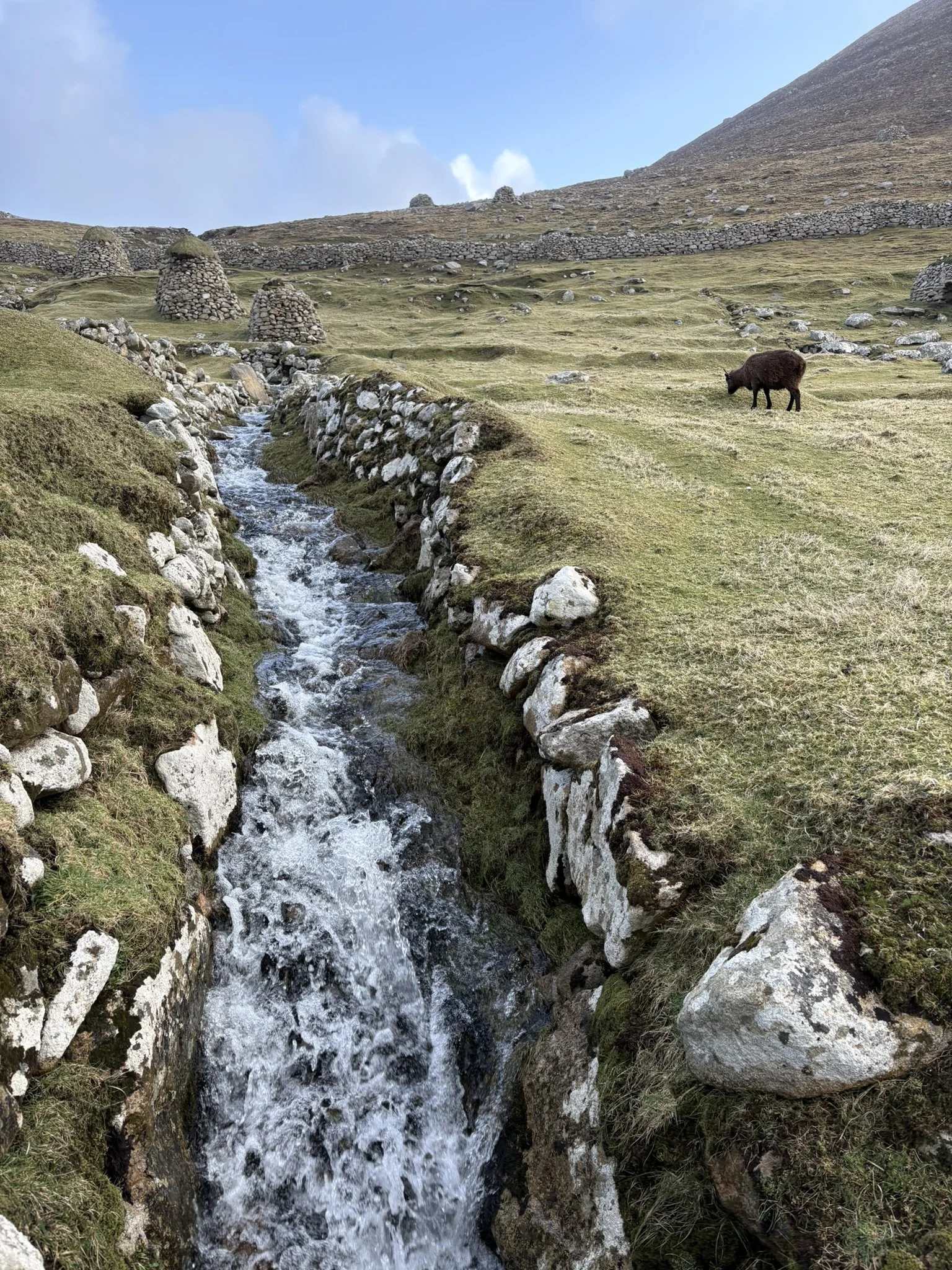
In the 1600s, a man named Martin Martin (I guess his parents couldn’t get enough of that name) published accounts of his experience on the island, telling Londoners that it was a “place of peace, an idyllic, harmonious community”. He claimed the residents were almost the only people in the world who felt the sweetness of true liberty. In contrast, Alexander Buchan, a schoolteacher who was stationed here, referred to the residents as “prisoners.” While there have been contradictory opinions shared about the island and its inhabitants over time, the community itself has also changed dramatically over the years, shaped in part by visitors. For example, in 1727, smallpox wiped out most families, and the island had to be resettled by residents of the Isle of Skye. Our knowledge of people who called St. Kilda home comes largely from people who arrived on an island they knew nothing about and published entire books. For this reason, I think the truth of the history and culture here will always be a bit of a mystery. But that’s not stopping me from reading some of these old publications and finding interesting anecdotes to share with you. Perhaps take them with a grain of salt. I did, however, spend one rainy afternoon in the museum cottage, which you’d think is a slightly more reliable source than someone with the same first and last name.
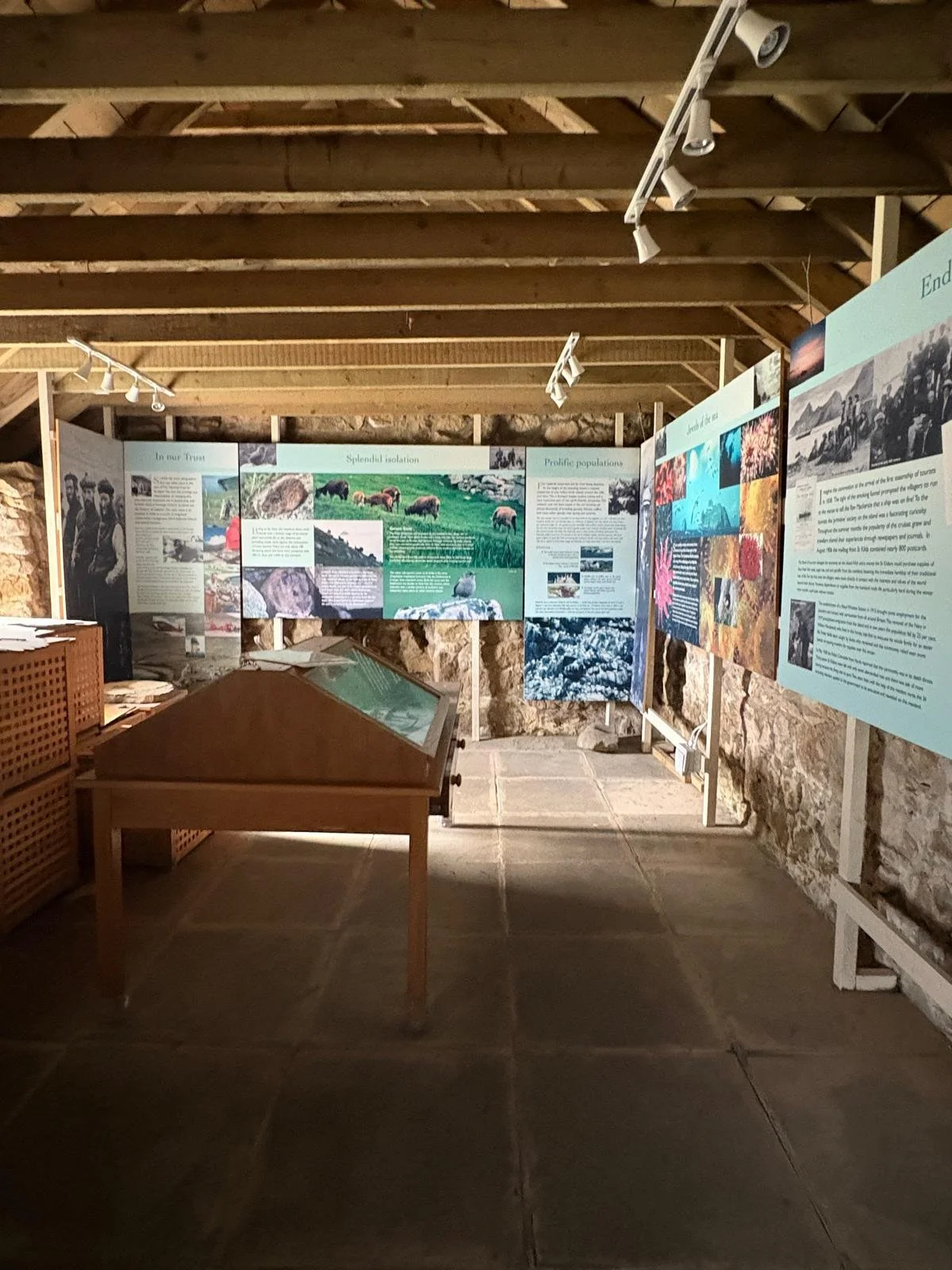
A cottage was converted to the museum
Fourteen days. I have only been on St. Kilda for 14 of the 48 total days I intended to be here. It feels like a lifetime has passed since my helicopter journey across the sea. I mentioned this timeline to Eva, and without missing a beat, she replied, “ten days of bad weather”. We began running out of indoor duties and instead searched the forecast for pockets of dry weather and lower wind speeds.
A tup’s horns help determine his age
To say I have cabin fever wouldn’t be fair. But the dreary weather has created a feeling of monotony. Days are spent walking along muddy paths, crawling through sheep poo in cleits while searching for dead sheep, trying to stay warm, sitting down to dinner, and doing it all over again the next day. Spells of hail interrupt grazing sheep, sending them sauntering over to stone walls for shelter. Like the sheep, with hail stones gathering in the wool on their back, we shake it off and keep going. During a mortality search, I learned that you can tell the age of a tup (male sheep) by the number of deep indents in it’s horns. (See the picture on the right. It’s hard to tell but I believe this male was 4).
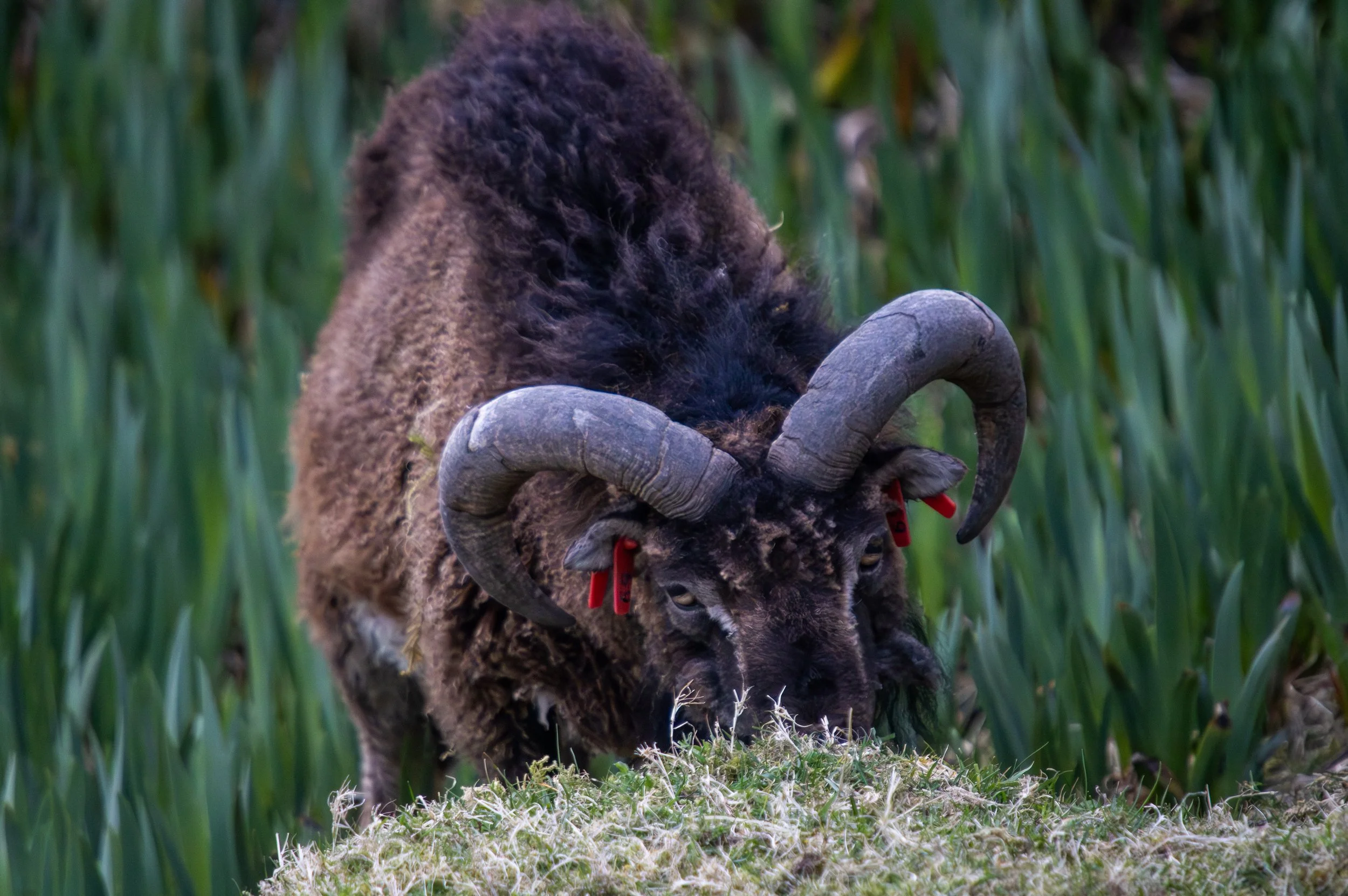
An older tup with large horns
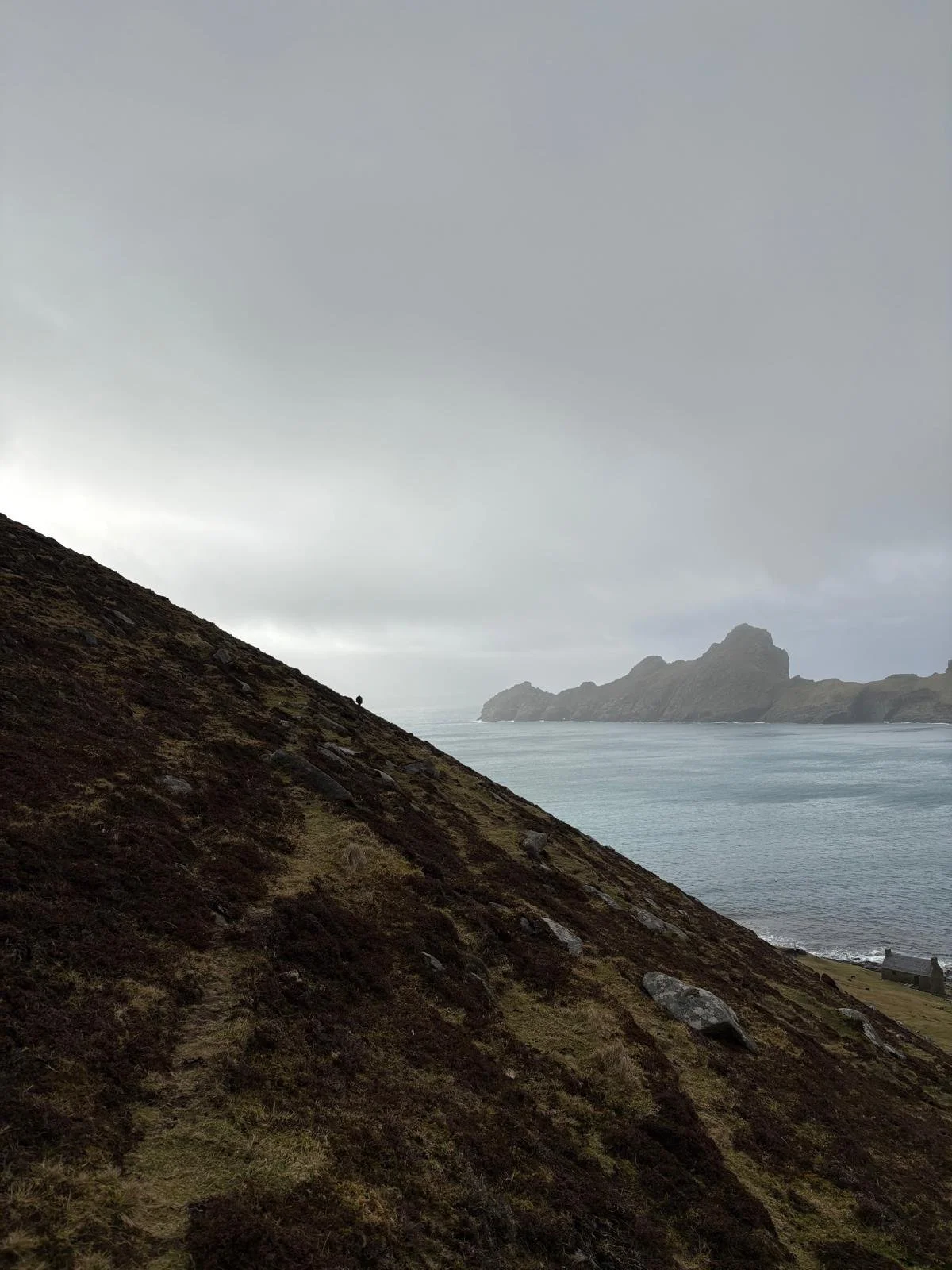
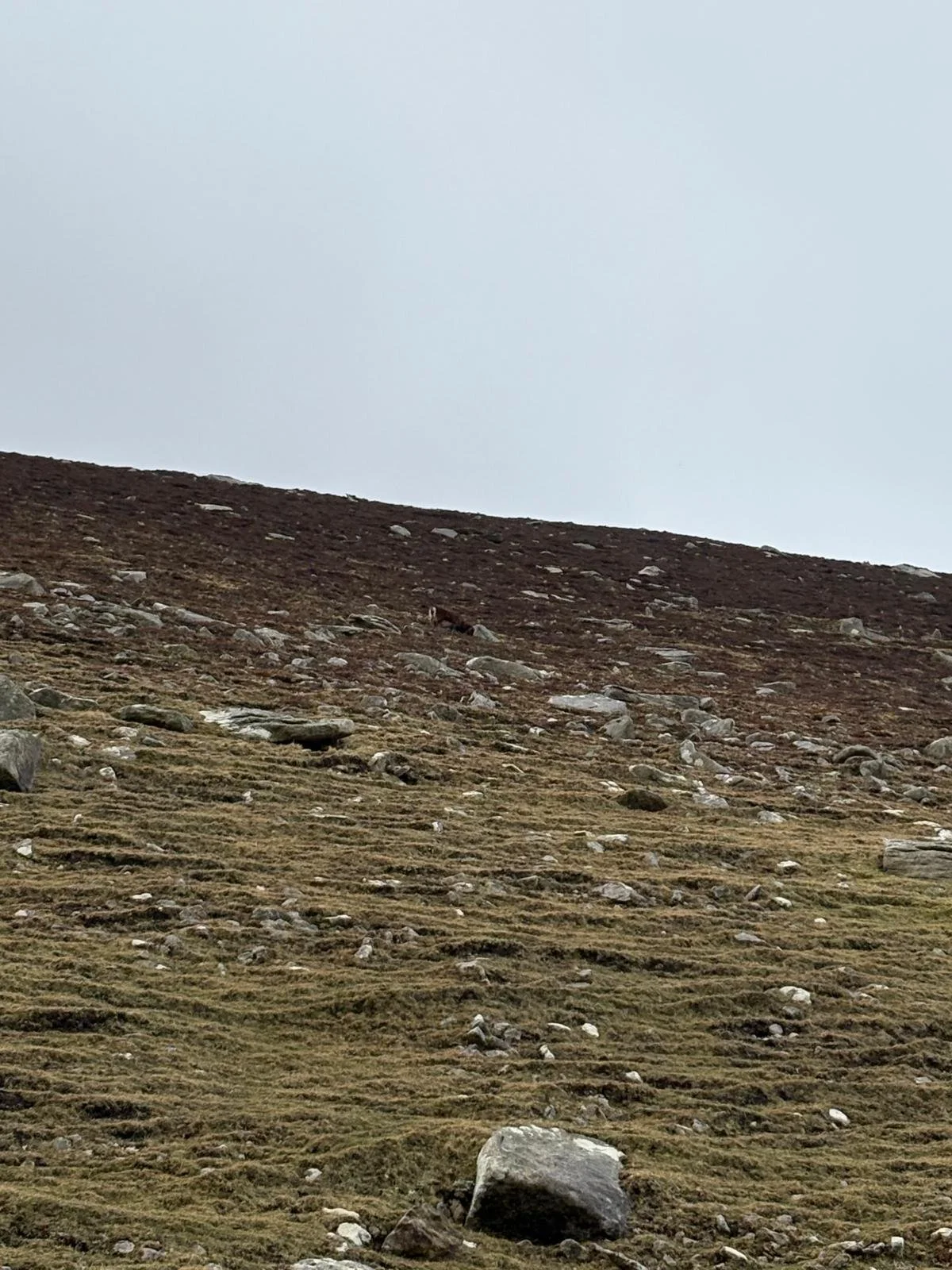
The past two days, we found the weather just bearable enough for censusing. I found I’d missed the exercise and having a purpose being outside with the sheep. Have I mentioned how difficult censusing can be??? In some cases the sheep really stand out but in others, they blend in completely to the background. In the photo on the left below you can just make out a sheep silhouette along the steep slope, but on the right I encourage you to search for the sheep amongst the rocks… (hint, it’s white bum is facing the camera near the centre of the photo).
Have you ever spent so much time in moving water, perhaps after a long day at the beach, that you feel as though you’re still in the water when you’re trying to fall asleep? After five hours of working in the unrelenting wind yesterday, I noticed a phantom breeze rocked my body to sleep. I guess perspective is important here. In the museum, I learned that the daughter of a missionary complained that one storm made everyone deaf for a week.
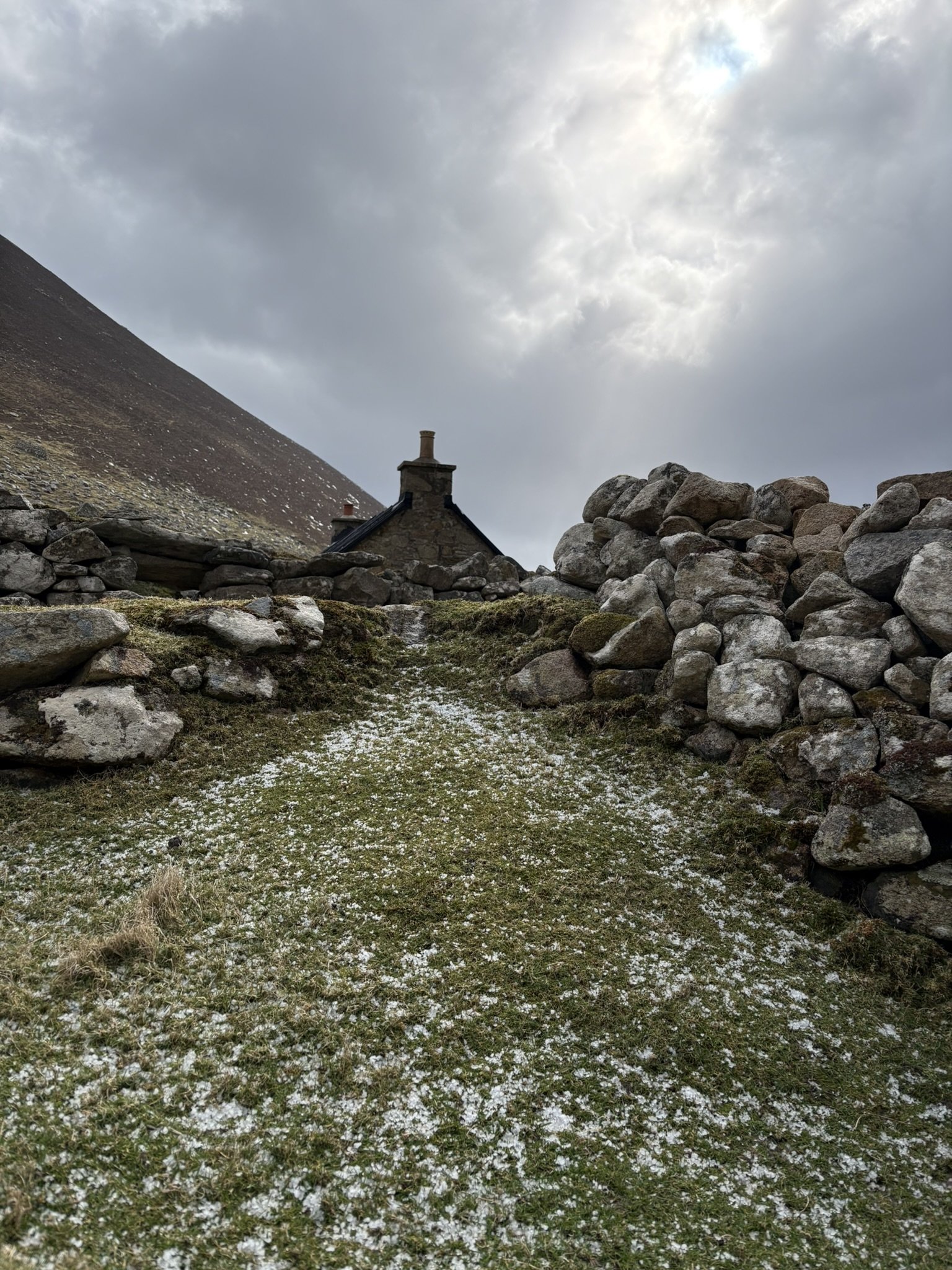
Hail accumulating outside a stone cottage
Throughout the Outer Hebrides, ‘parliament’ was historically held each morning, wherein residents gathered to discuss the work responsibilities for the day ahead. We carry on this tradition to this day, meeting at the Factor’s House at 9am to begin the day’s activities, depending on the weather. St. Kildans tended cattle, sheep, and crops of barley, vegetables, and oats. They paid the ‘laird of the Isle’ (landlord) rent in the form of tweed and wool from sheep, feathers from seabirds, and oil from fulmars.
As I’ve written before, the main island of St Kilda, Hirta, has a small beach that makes it more accessible than the surrounding islands, which are perched on high cliffs. One thing that is irrefutable about St Kildans is that they were not scared of heights. In the late 1800s, author John Sands witnessed “the men as frequently descend from the top of the cliffs in pursuit of birds and eggs as climb from the bottom”. He added, “the rope used is not thicker than an ordinary clothesline, and one man formerly on the summit holds on end of the cord whilst another, having the other end tied round his waist, goes down the most appalling heights”.
I am living in Europe’s largest seabird colony, home to around 1 million seabirds. A man named Macculloch reflected on his experience at St. Kilda, saying, “the air is full of feathered animals, the sea is covered with them, the houses are ornamented by them, the ground is speckled with them like a flowery meadow in May. The town is paved with feathers, the very dinghies are made of feathers, and inhabitants look as if they’ve been all tarred and feathered”.
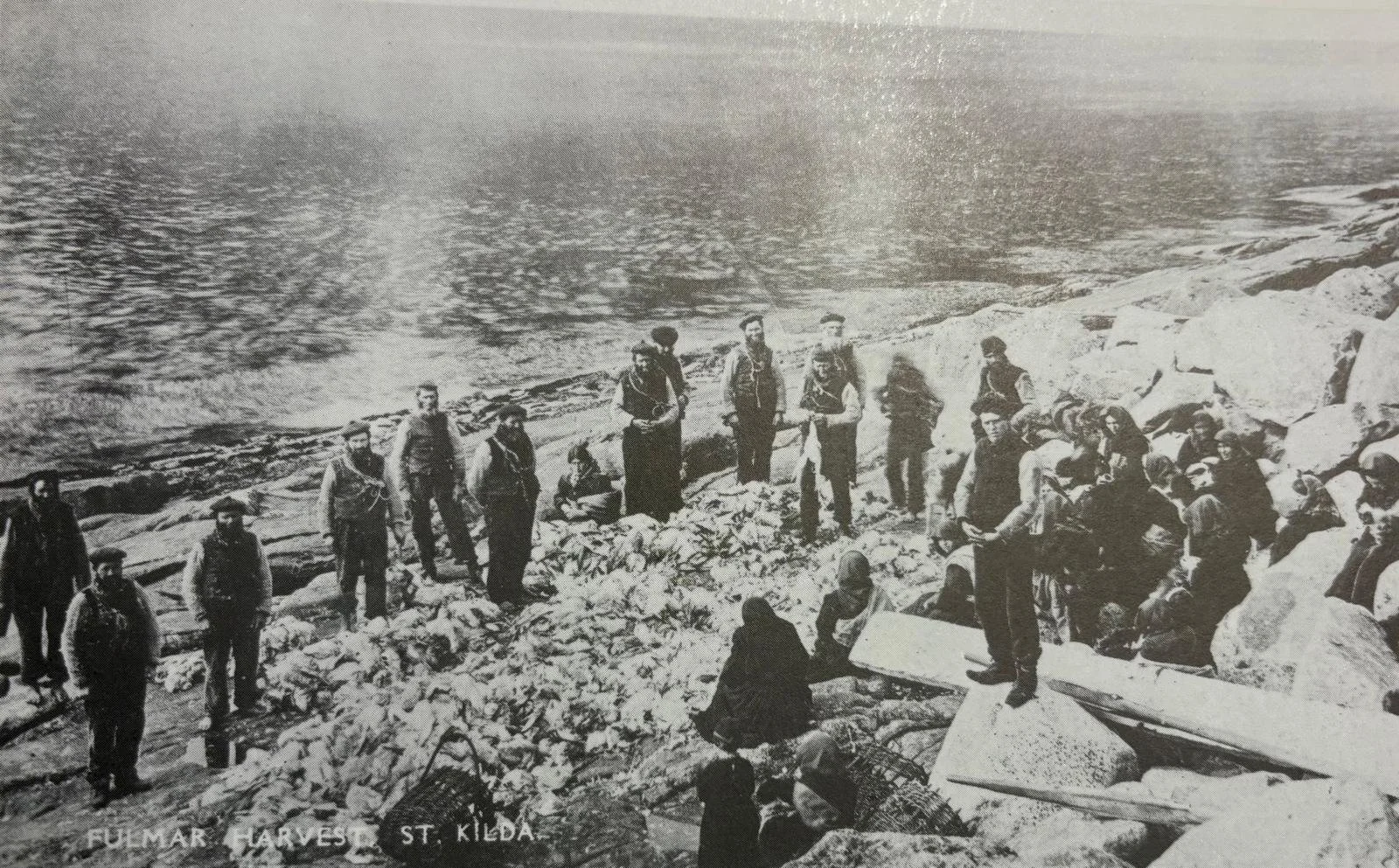
A postcard created from the Fulmar Harvest on St. Kilda. Source: St. Kilda Museum
The islands are an important home to more than just seabirds, though. For example, there is a species of mouse and wren which are endemic to St Kilda (meaning they can only be found in this one place). It’s incredible how well-adapted species are to surviving this remote island, which can be so unforgiving. “Walk by Ruvial and listen to the sound of your feet,” instructed Robin, the visiting plant biologist, one night at dinner. “Will they crunch?” I inquired. “They’ll squeak,” he raised his eyebrows with a smile. “The vegetation changes over there. It’s salt-tolerant”.
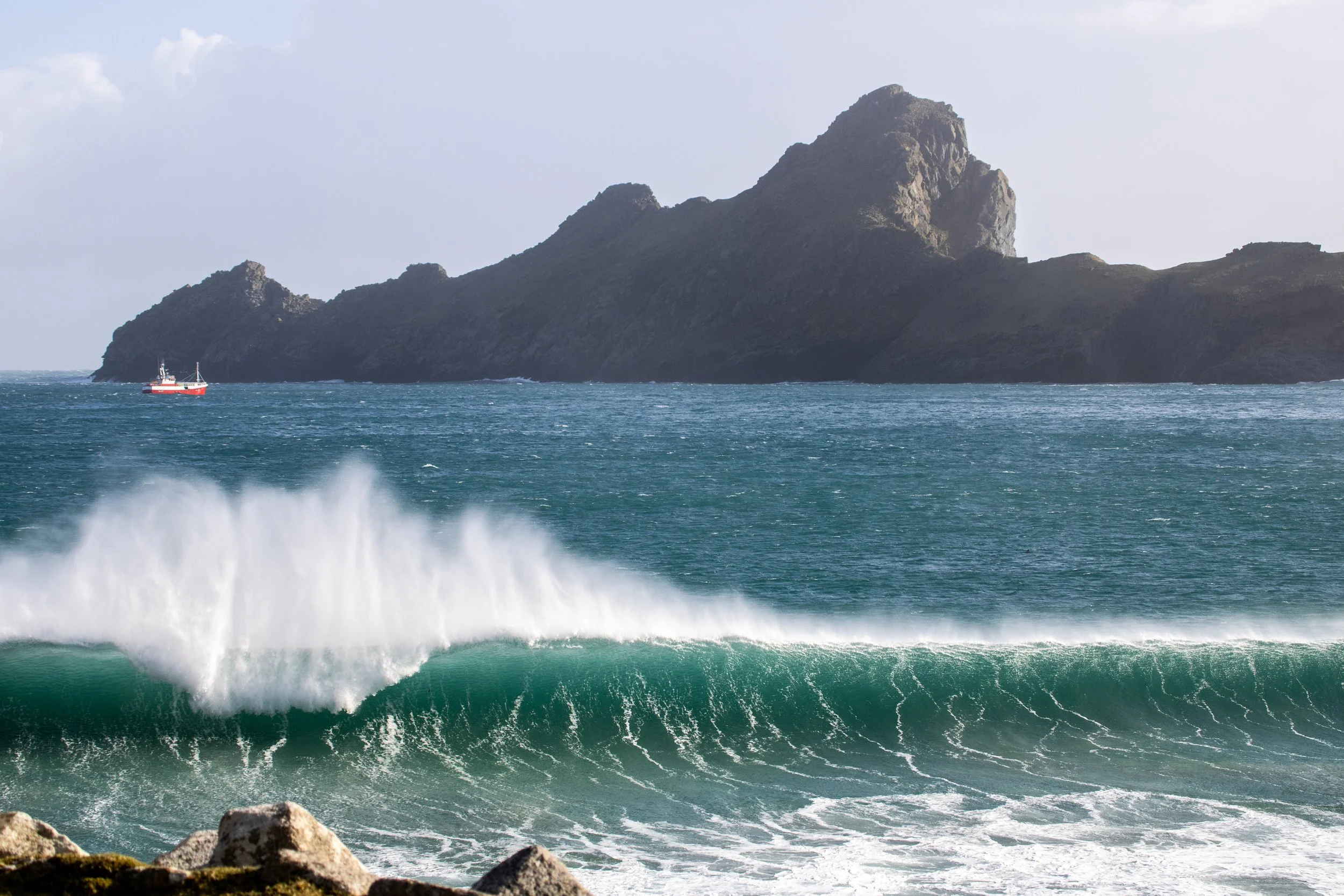
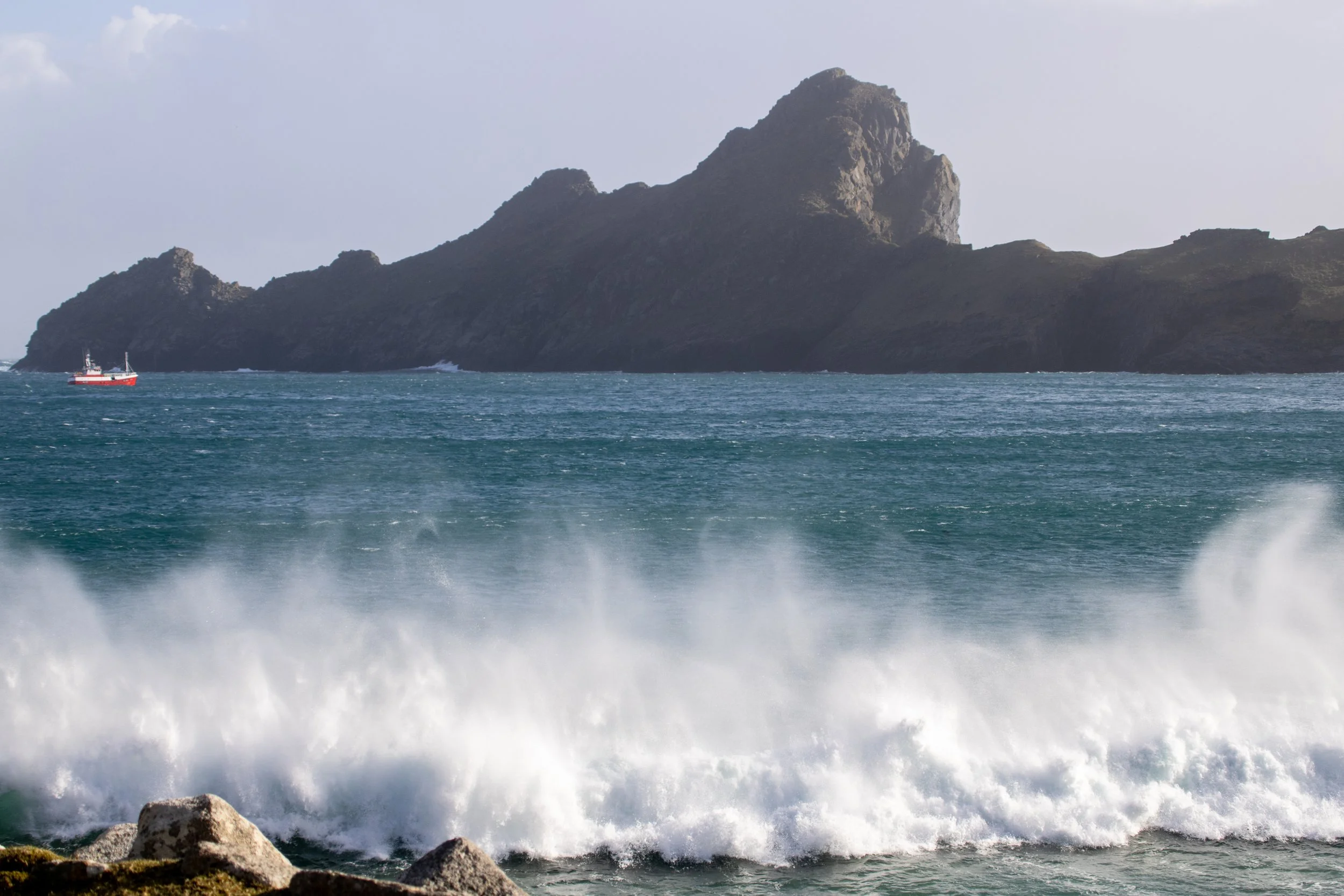
This knowledge came following my toast, a nightly ritual which allows the person who cooks to make a toast before inhaling our food. “To the waves,” I smiled, thinking about the endless videos I had taken earlier in the day of the waves crashing against the shoreline, devouring the sandy beach. Deep turquoise water sloshed in the channel between Dun and Hirta, sending white foam into the air and leaving an ever-present mist above the blowing sea throughout the day.
“The salt tolerance really makes sense on a day like today,” Xavier looked fondly at the waves still crashing against Ruival.
Yesterday, something happened to break up the monotony. I was on my search for dead sheep when I stopped mid-step. It took my eyes a few seconds to register what I was seeing. It was the first lambs of the season, unfortunately, stillborn. A set of twins, one still wrapped in fluid. About 15% of births are twins. It’s uncommon for twins to survive, even if they are born healthy. Our toast that evening was “to the lambs, dead or alive”. I eyed the hand-drawn histogram hanging on the wall, created by Eva and me one rainy morning. A bell-shaped curve was apparent; the predicted dates each ewe (female sheep) would give birth were written across the bottom of the sheet. The dates between April 17th and 25th stood out as having a particularly high number of individuals predicted to give birth on the same day.
Decades of research on St. Kilda have prepared us field techs for lambing season. Almost all ewes are expected to give birth, even those in their first year of life (or yearlings), although their success in birthing a healthy lamb is lower than that of adults. Their weight in late summer appears to determine this success. Females tend to give birth on steep slopes or sheltered sites, away from big groups. “It’s about to get busy and loud,” Xavier raised his eyebrows. “Soon, almost every ewe will have a lamb in tow”.
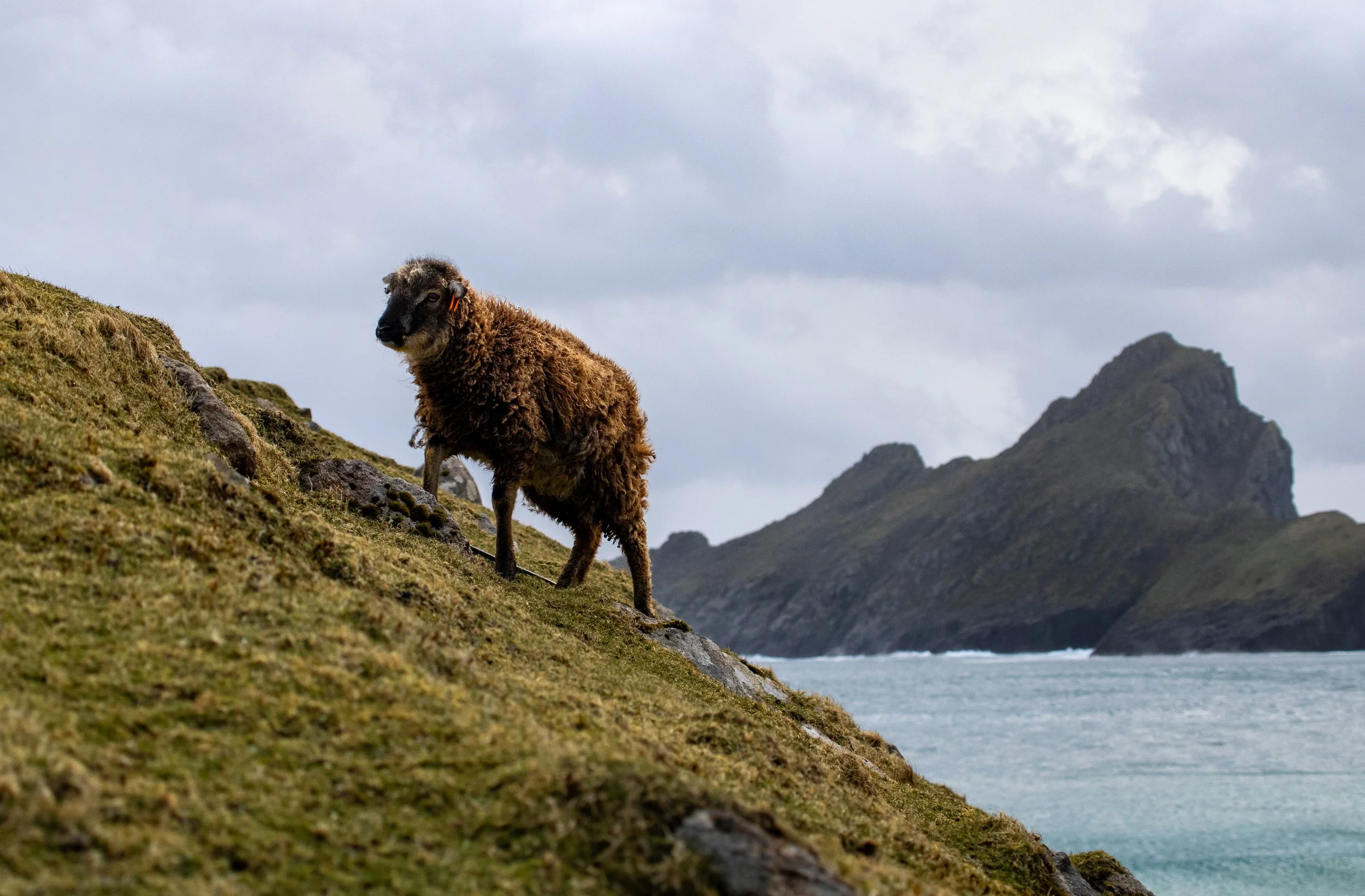
Yearling sheep eyeing me cautiously
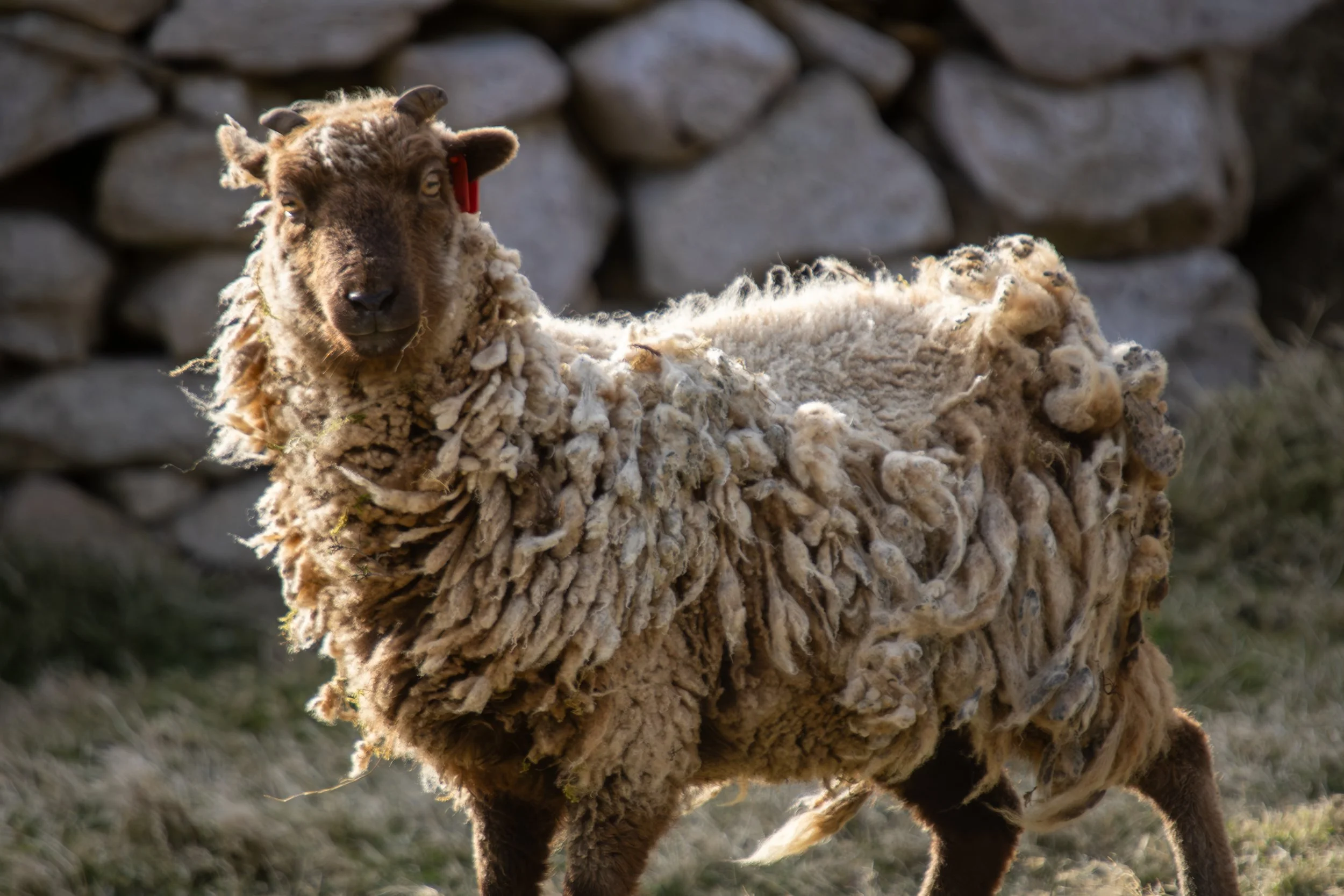
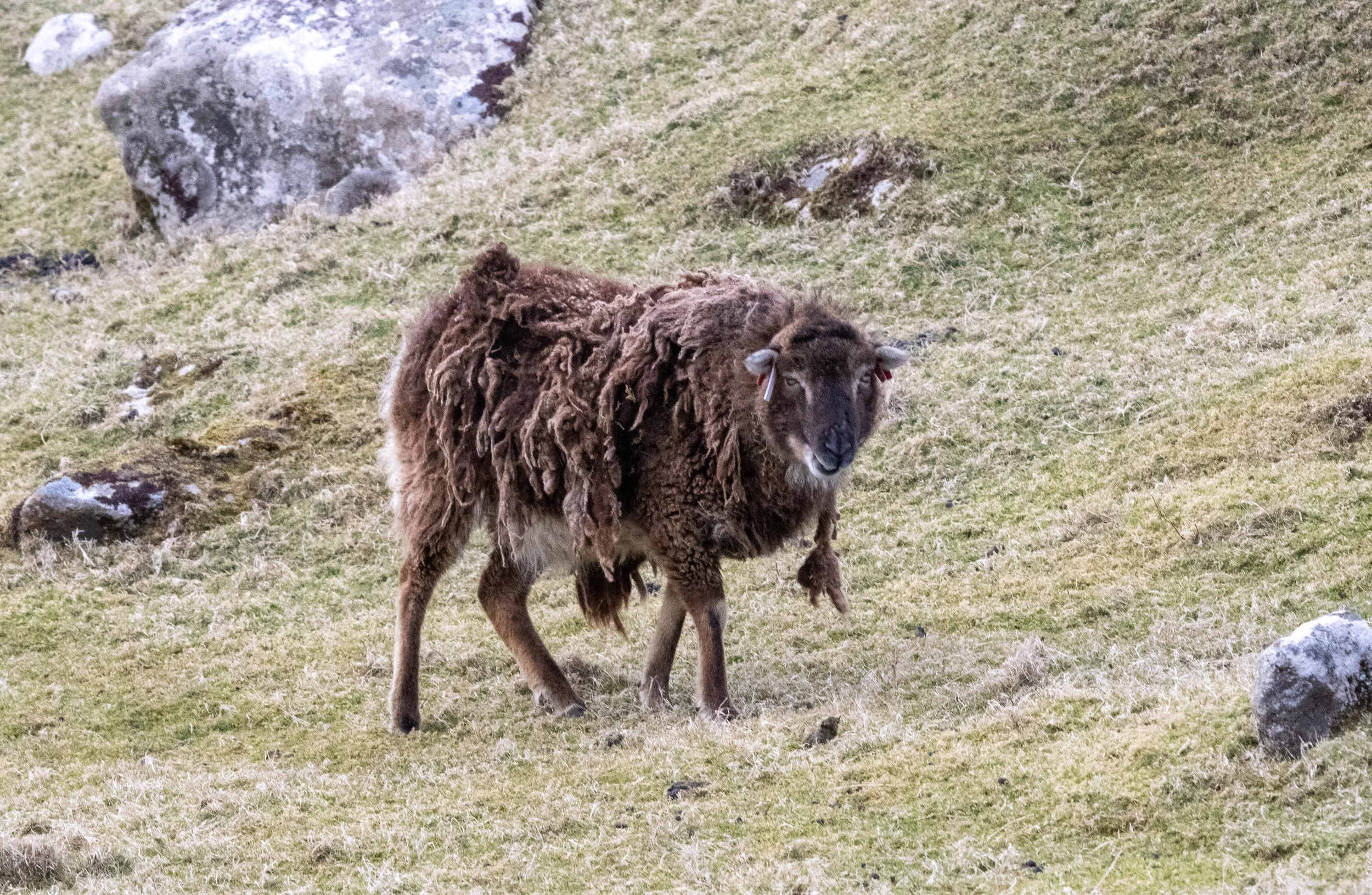
The St. Kildans had kept your classic domestic sheep on Hirta, but these were all removed during the evacuation. The sheep that I now watch through a telescope (see some shaggy looking sheep below), wandering about Hirta, descend from a population of sheep that freely roamed Soay for centuries. Many sheep were moved from Soay to Hirta following the 1930 evacuation, hence their name ‘Soay Sheep’. John Sands once again watched in horror as the women and men of St. Kilda leapt from the rowboat where he sat to slippery rocks. A rope was tied around each of their waists to connect them. They moved in a line, slowly ascending the cliff. The women were to stay on the near-barren Isle of Soay for three weeks to pluck wool from the wild sheep and snare puffins.
I really enjoy Sands remarks from this experience: “In a few minutes, some of the girls were walking with about a dozen birds dangling from their girdles. ‘Look,’ said a fair-haired damsel to me, as she took a live puffin from her dog and, giving its neck two gentle turns, as if it had been the stopper of a scent bottle, held it up for my inspection whilst a smile of health… sparkled in her Bonnie blue e’en. [She said in Gaelic] ‘The bird is dead. It’s not difficult,’ and thrusting the dislocated head under her belt, away she bounded for fresh game”.
In contrast, the 1764 perspective of Reverend Kenneth McAulay, known for ‘being fond of ladies’, made me laugh. “The women here are mostly handsome – there are some who, if properly dressed and genteely educated, would in my opinion be reckoned extraordinary beauties”. However, he wasn’t completely sold on them. “The smell of their houses, cloaths, and breaths is very offensive.” God forbid a woman who climbs cliffs and kills birds for a living doesn’t use mouthwash. He admitted, “they will tell you that your company for some time is as offensive to them, as theirs can be to you”.
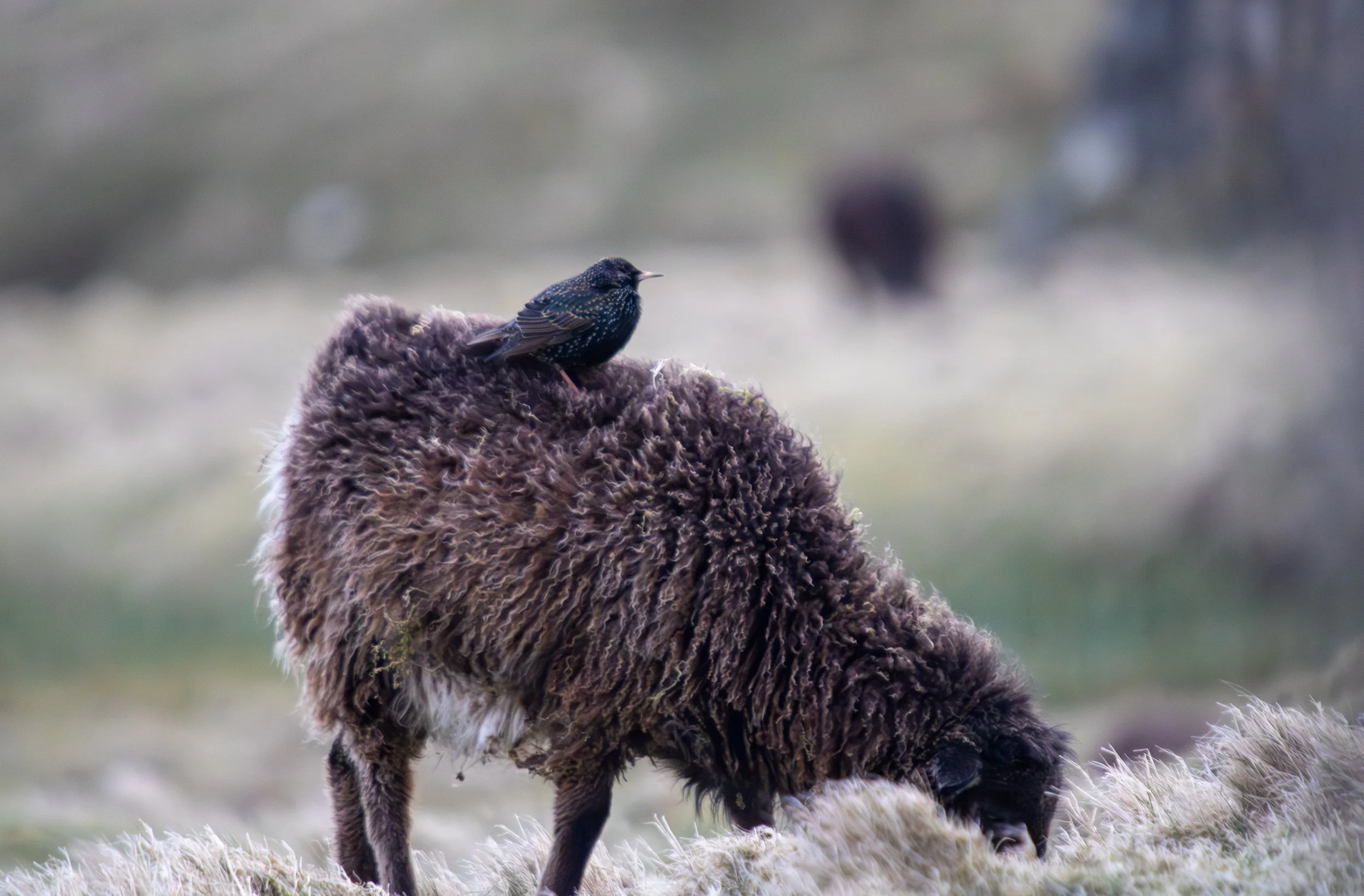
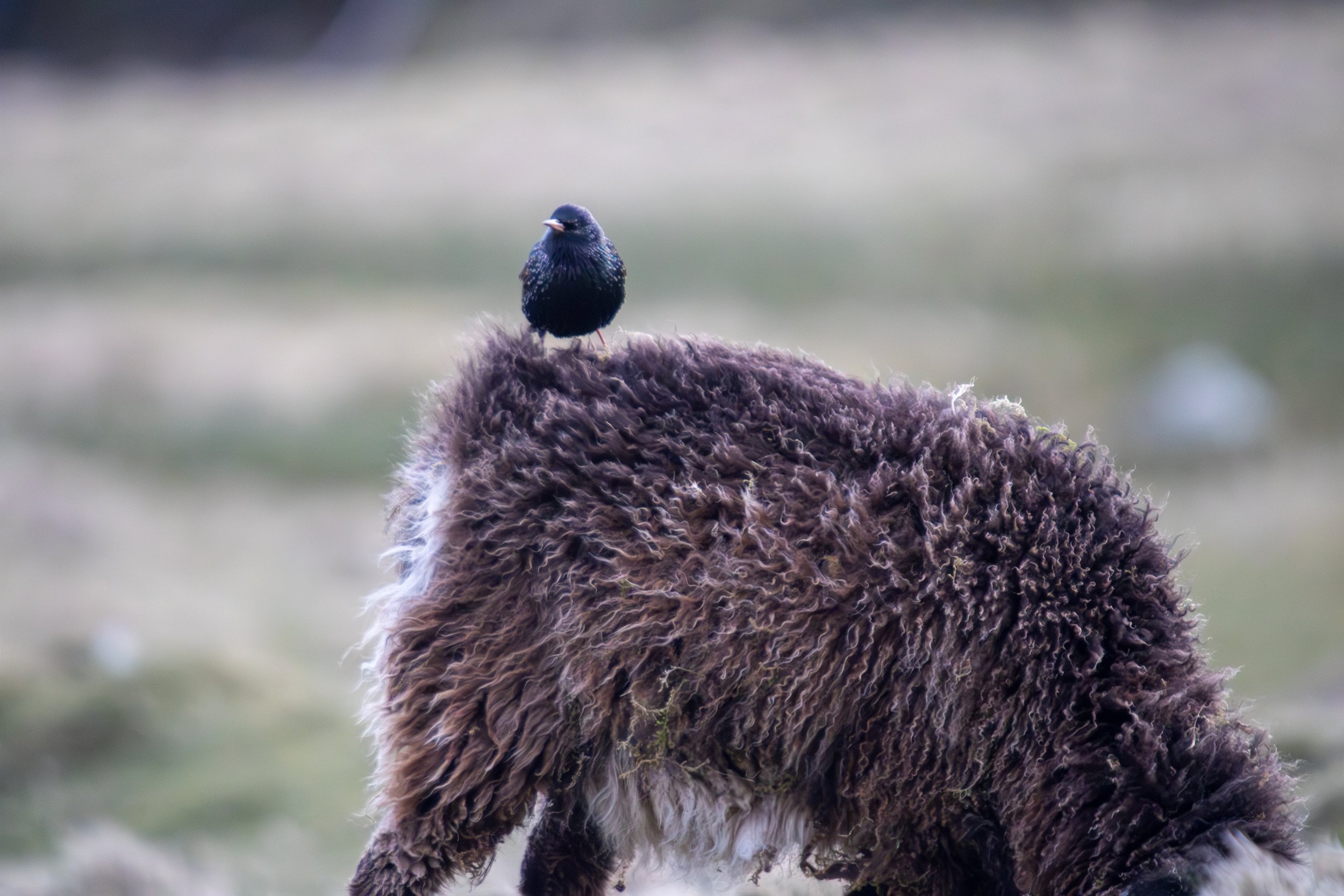
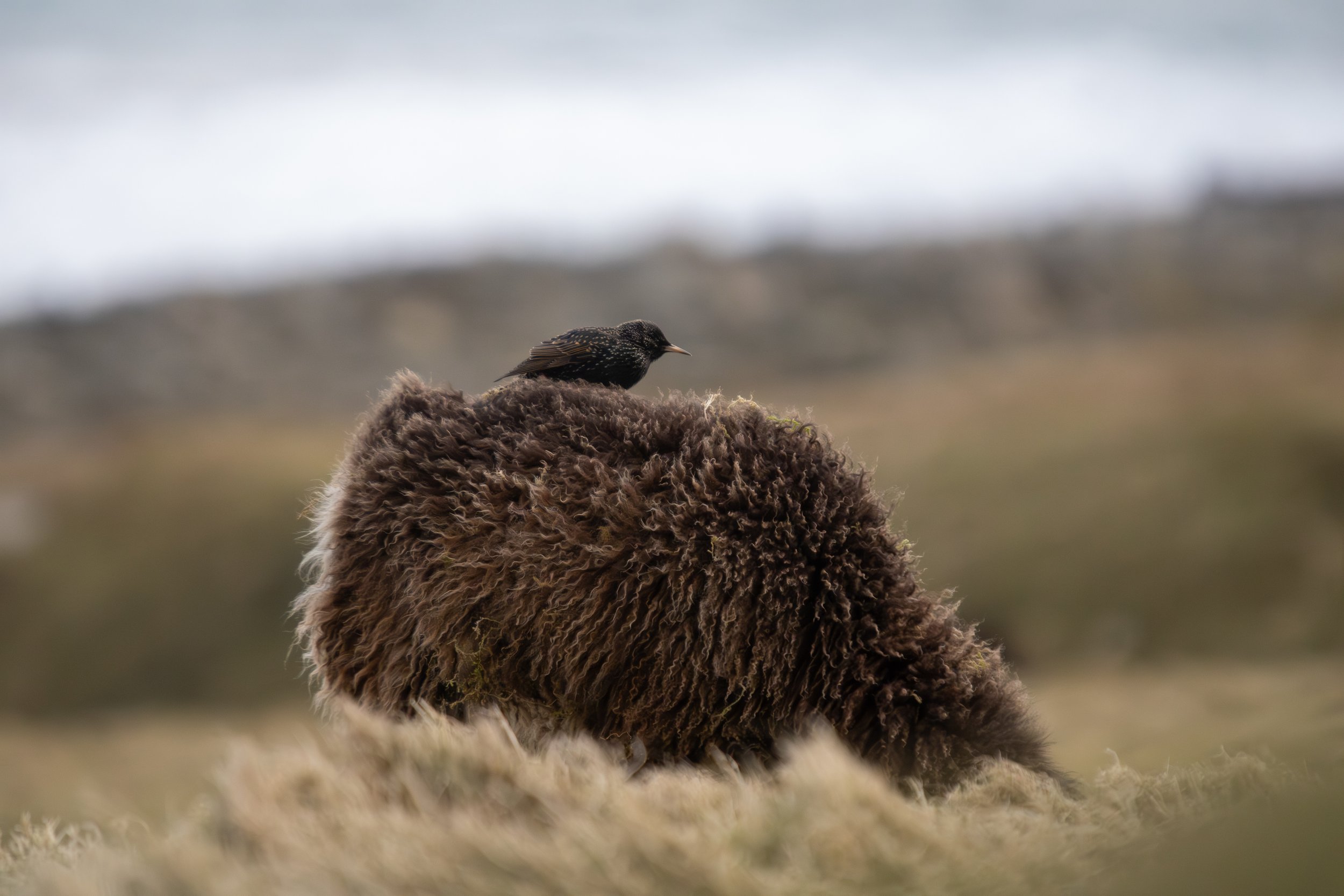
While this story has been littered with mentions of human death, sheep death, and bird death, I assure you, life is on the way. The food shortages that plague animals during the winter months are near an end. The puffins and lambs are both due to arrive any day. For now, let me leave you with this: A chorus of passionate cries from a starling caught my attention on my way to the bathroom. My eyes scanned around me to locate where the complicated song was coming from. I watched in pure delight as the bird perched comfortably, taking a very slow ride on the back of an unaware sheep.