Springing into lambing
Each year, nature is replenished by the return of spring, and life begins anew. On an island without trees, subject to the often merciless temper of weather rolling in from the Atlantic, this renewal can be difficult to perceive. Surviving to reach spring is hard-won, and individuals are rewarded by passing their genes on to future generations. Luckily for us humans, changing the clocks for Daylight Saving Time has made spring feel within reach. After exactly three weeks of living on this island, waiting and wondering when lambing season would begin, a new arrival finally kicked things off.
Brief sunny period between rain
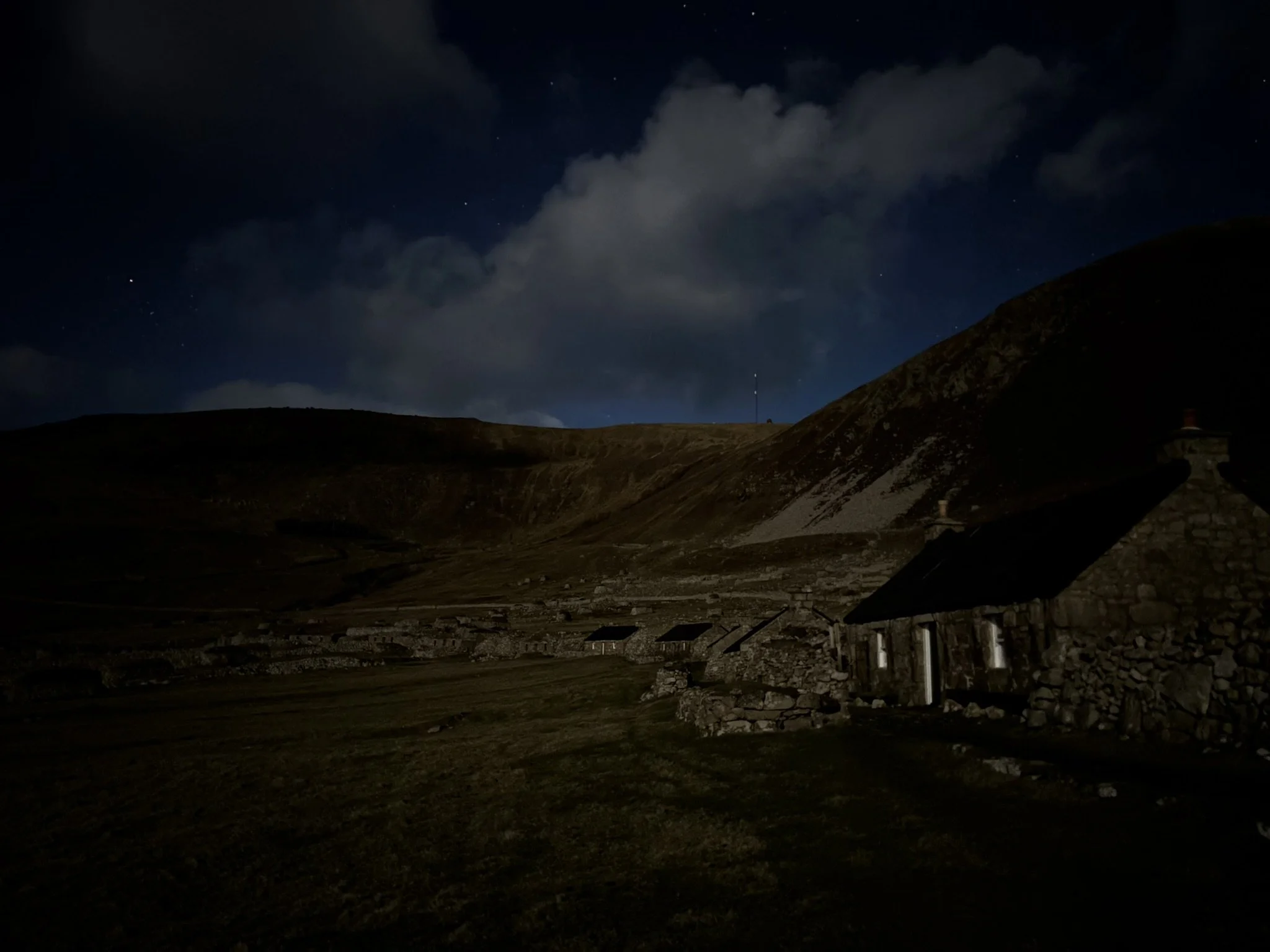
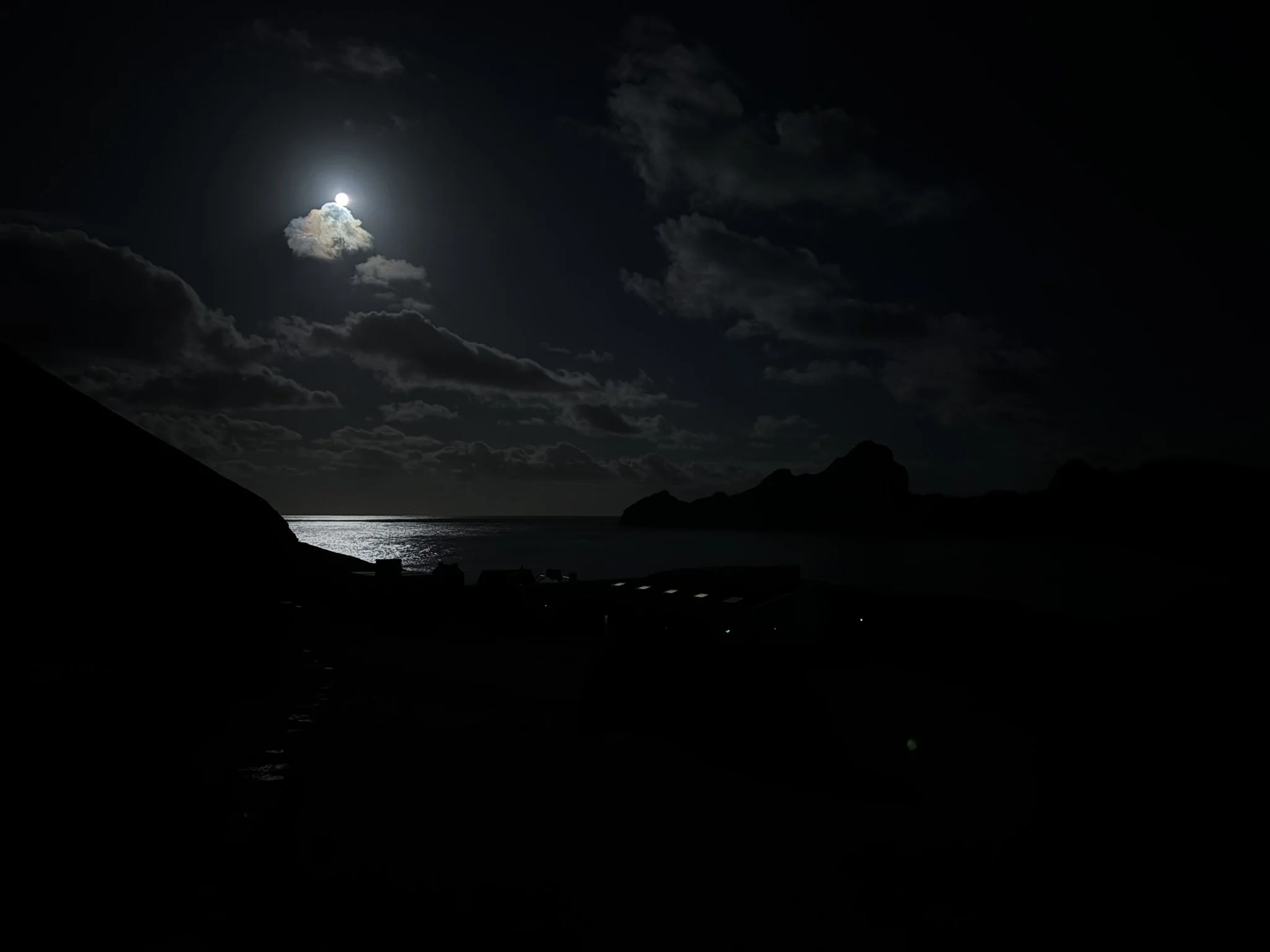
One evening, we changed up the routine by playing a board game after dinner. As we packed away the plastic trains of ‘Ticket to Ride’, Xavier exclaimed from the open door, “it’s so bright!” We hurried outside to see a full moon, or ‘pink moon’ as it had been called in the news, lighting up all of Village Bay. From the kitchen cabin, we could see the bathroom, about 150m away, as clear as day. On a normal evening, the blackness of the night swallows you whole until you’ve flicked on your headlamp, and even then, you can only see a few feet ahead of you. “It feels like it’s just a dark afternoon,” Erin looked quizzically at the horizon. Even the birds seemed confused. Snipes made mechanical, whirring noises in hopes of attracting mates. We stood in the cold without coats, marvelling at the inky sea, shimmering under the moon. It was the strangest night I’ve ever experienced, reminiscent of a mid-day solar eclipse. I can’t help but wonder, if I had instead been in Edinburgh that evening, would I have even noticed the moon?
While I’ve been writing and learning about the history of life on St. Kilda, it might be equally interesting to share a little I’ve learned about the not-so-distant past.
The most remote pub in the British Isles, probably in the entire United Kingdom, stood proudly on St. Kilda before the military base was renovated in 2017: the Puff-inn. When the base was first constructed during the Cold War, many places were jokingly assigned Russian names, such as ‘Red Square’ and the Kilda Generator Building (‘the KGB’). The pub seems to have escaped this naming convention.
“We didn’t have a license, so we closed whenever we felt like it,” reflected a Scot who’d just come from the base and had worked there since the 80s. He was stuck chatting with Iva and me when we were first waiting for the helicopter to St. Kilda and regaled us with several stories about the pub. “The sheep people were regulars,” he laughed. Xavier, who has been coming to Kilda since 2014, confirmed this: “yes, people used to drink all night, not go to bed, and when it was time for catching sheep in the morning… well, they were not very effective”. I’m sure the steep, wet slopes littered with rocks are not the easiest terrain to run on, even when your senses are not inhibited.
“You’d go for a quick pint after work, but the drinks were so cheap you’d get a round for everyone in the pub,” a man named Angus told me. “Except then you had to stay until everyone in the pub returned the favour and suddenly you’re walking home sideways,” he chuckled. Given that Kilda also boasts the highest sea cliffs in the British Isles, it's unsurprising that people were concerned that the subsidized alcohol might lead to accidents. A broken leg was just one of the more serious injuries I heard about. A series of restrictions on the type of alcohol that could be served and then the amount of rounds that could be purchased were put in place to try to mitigate accidents (and liability). Eventually, the pub’s doors closed and never reopened. “It’s a shame,” Angus admitted. “It’s gone a little too far the other way now. Even if you didn’t drink, the pub had table tennis, pool, and foosball. Everyone would get together and socialize, even tourists. Now the WiFi is so good, you don’t see anyone after work”. Angus isn’t the only one disappointed by the closing of the Puff-inn. I read that the sheep could often be seen scratching themselves against the pub’s walls, but they settle now for the stone walls and cliets. It’s quite cute seeing them rub their rears against them.
Memories from the pub, documented in a nice little book
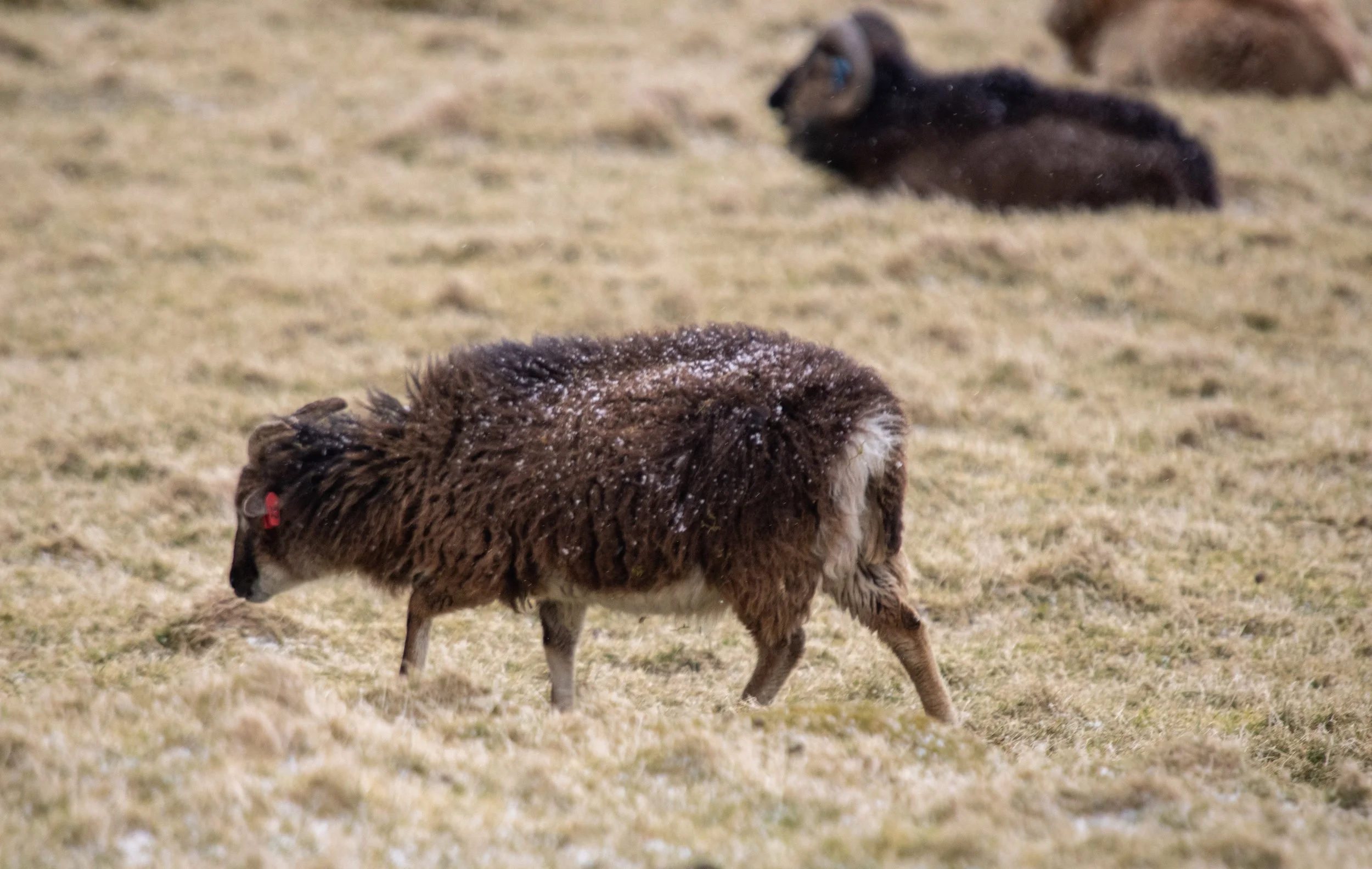
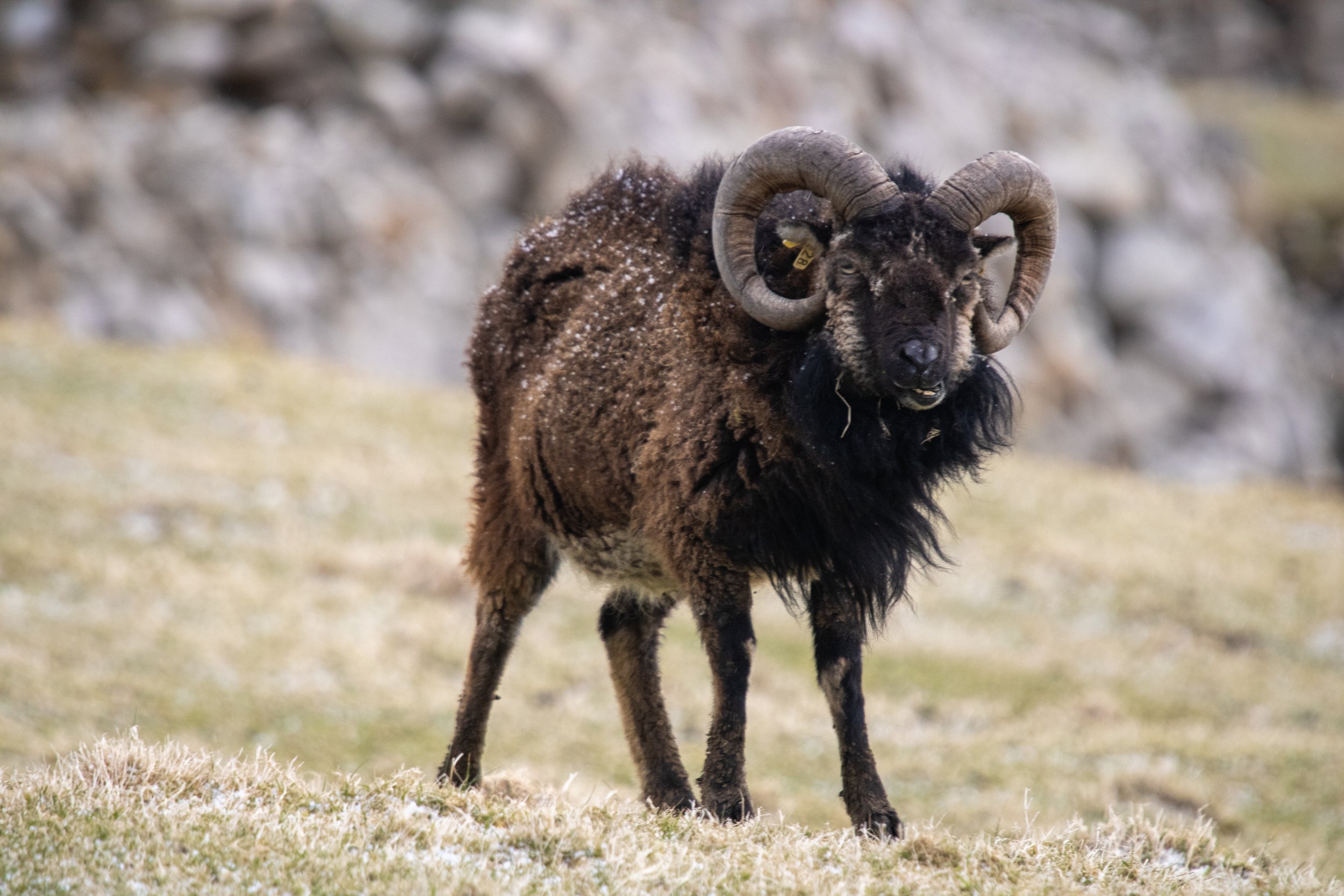
We’ve been working to census the entire population of sheep in Village Bay on 10 occasions. On our 9th attempt, we’d gathered in the Factor’s House, bundled in waterproof gear, telescopes in hand, waiting out another spell of hail. It had been on and off all morning. We mistakenly took one of the periods of respite as a sign that we could begin the census. The blue sky had returned, and the sun was shining. I scaled halfway up Osevial, using narrow sheep-trodden mud paths to walk sideways up the peak. The nice thing about Soay Sheep is that they don’t want to be out in bad weather any more than we do. When the hail started up again, the usually relatively sedentary sheep we’d all been systematically identifying scattered. They gathered together, taking shelter behind walls or inside cliets to avoid the hail that was pelting my face. “Let’s take cover for now and see if this passes quickly,” I heard over my radio. With no structures to take cover under on this steep hill, I simply slumped onto my rear and covered my face. When I was eventually able to lift my head, there was not a sheep in sight. It only took one more bout of hail for us to call off the census for the day.
Sheep sheltering from hail
An interesting side note… There are two researchers here interested in the social behaviour of these wild sheep. “In harsh winters, survival is higher in sheep with more individuals in their social network,” Iva explained to me. One of the best parts of fieldwork is gaining a deeper understanding of scientific concepts by watching the world around you. Iva’s statement made a lot of sense to me as I noticed groups forming along the stone wall at the bottom of the hill, likely keeping warm together. Erin published a paper about how, in better weather, the quality rather than quantity of social connections matters. Specifically, individuals tend to survive better when they associate with the same group consistently. The reason for this is not exactly known, but it could be a result of individuals spending less energy fighting and more time feeding.
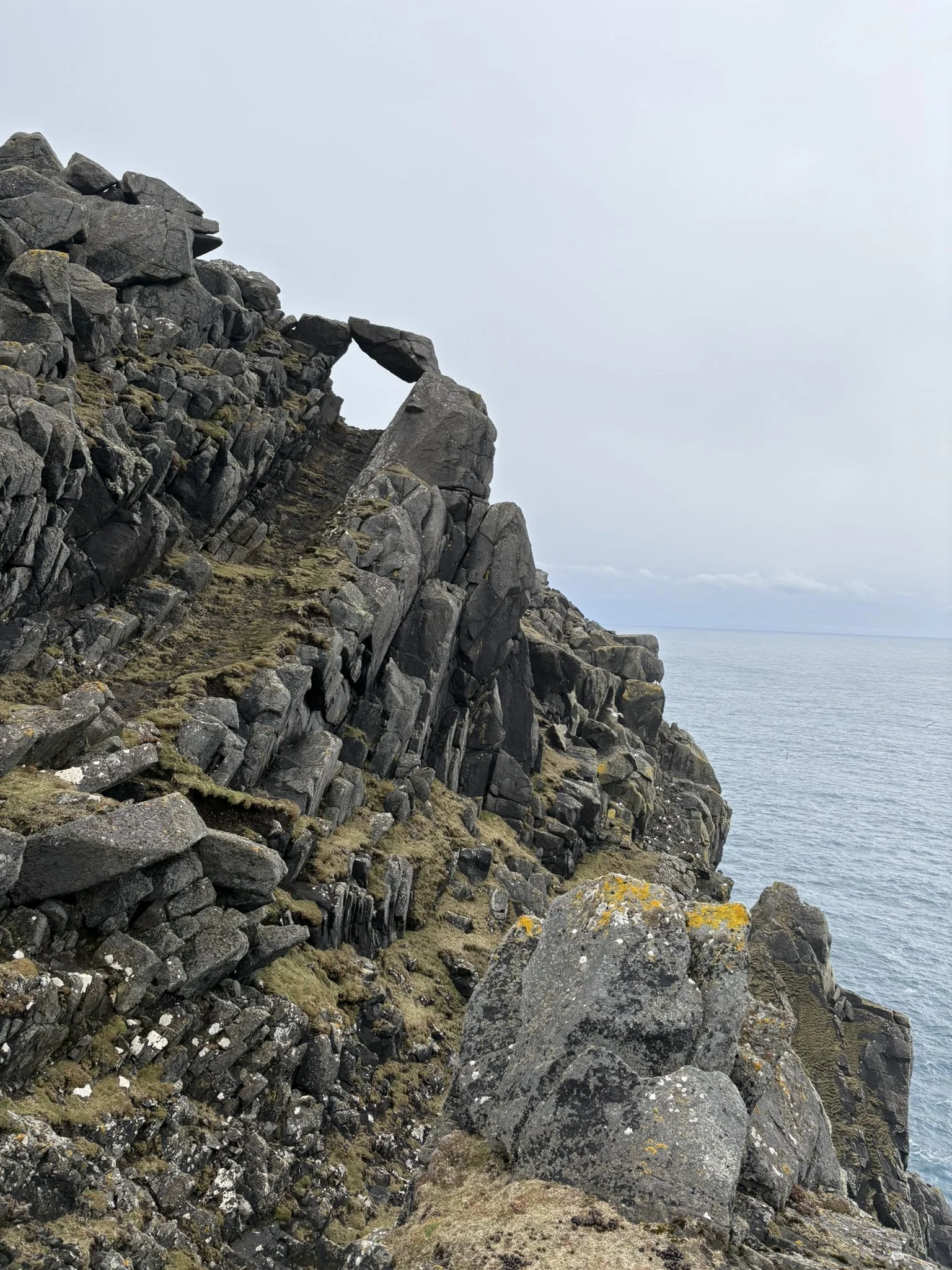
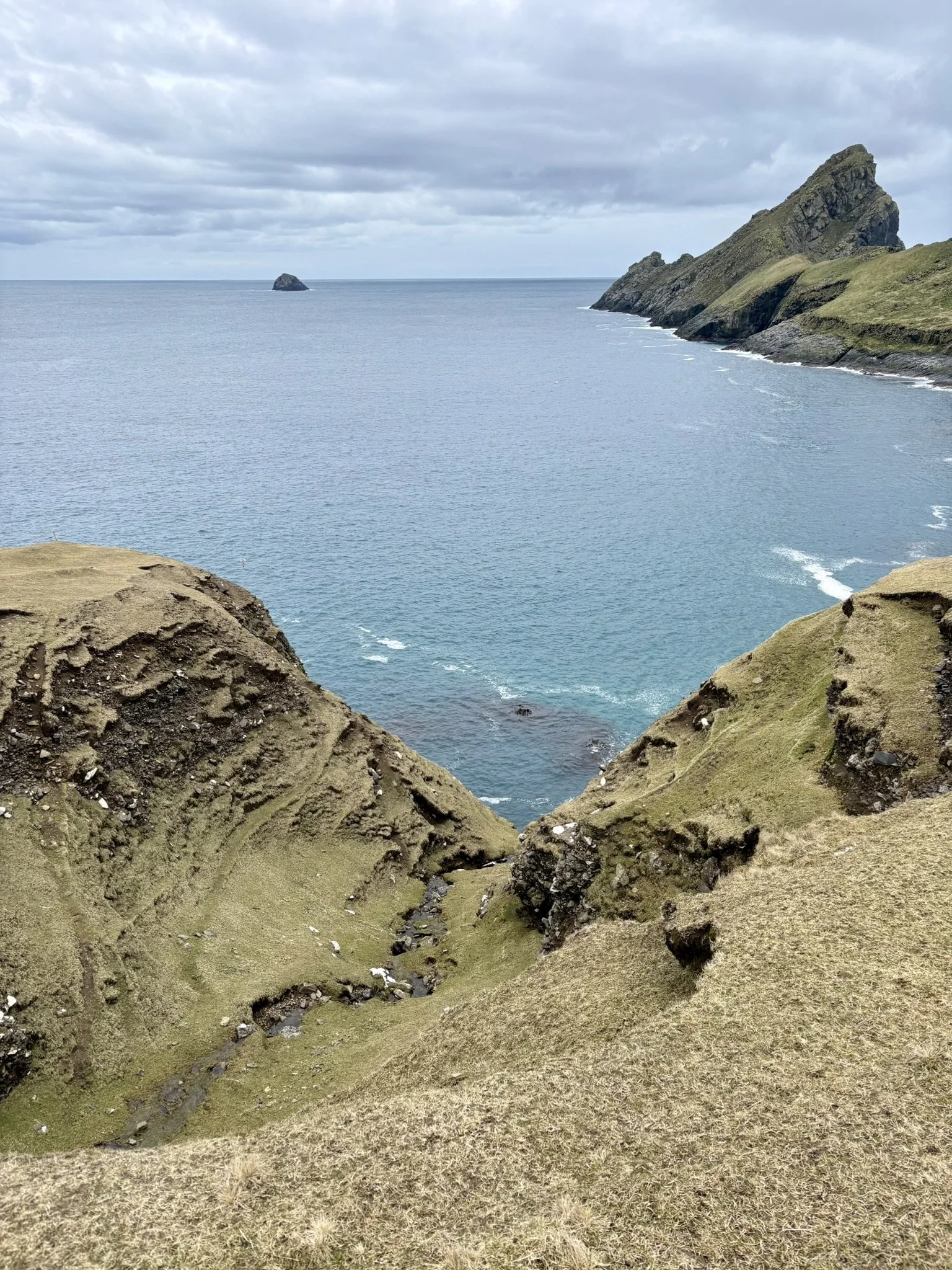
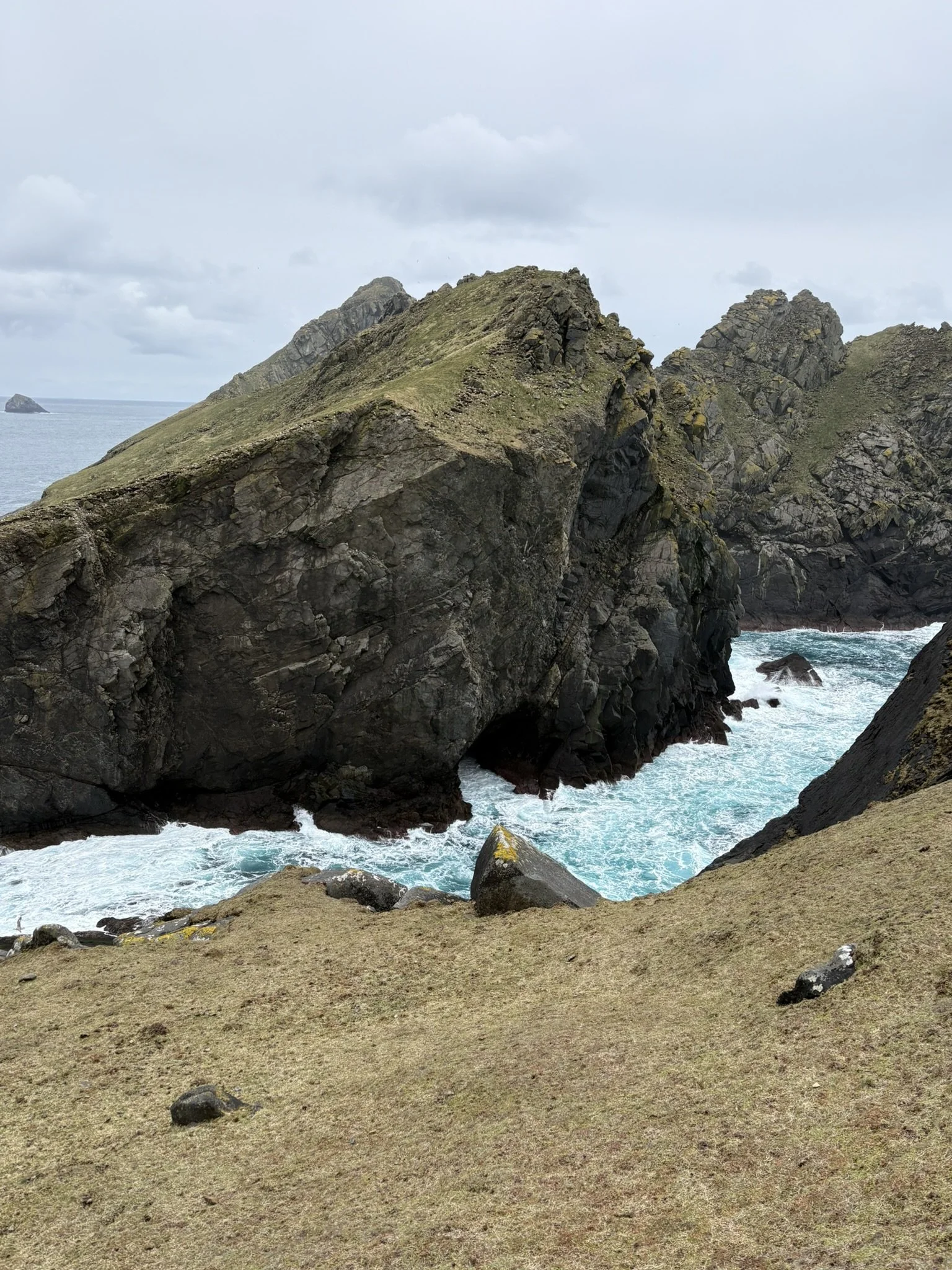
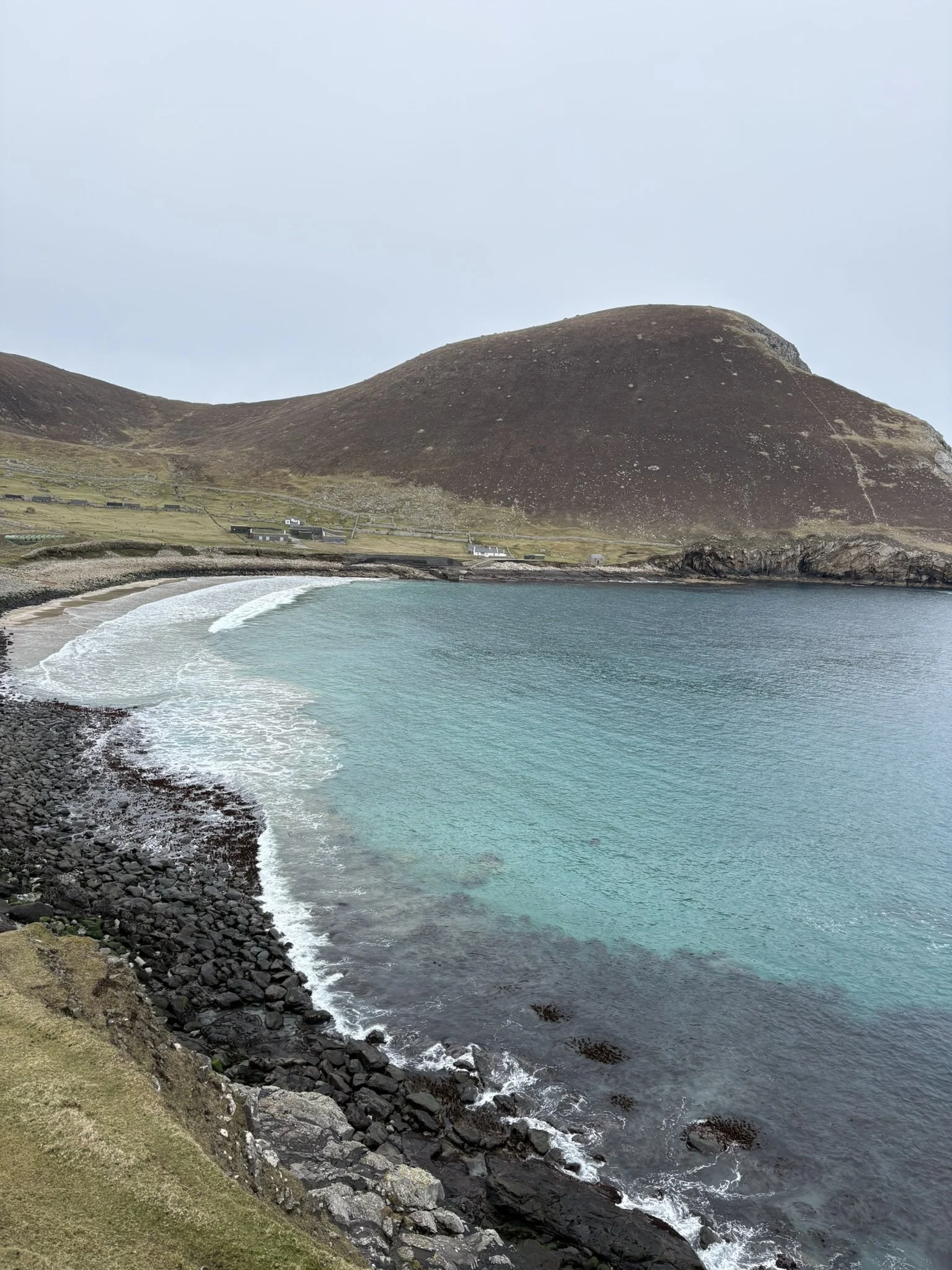
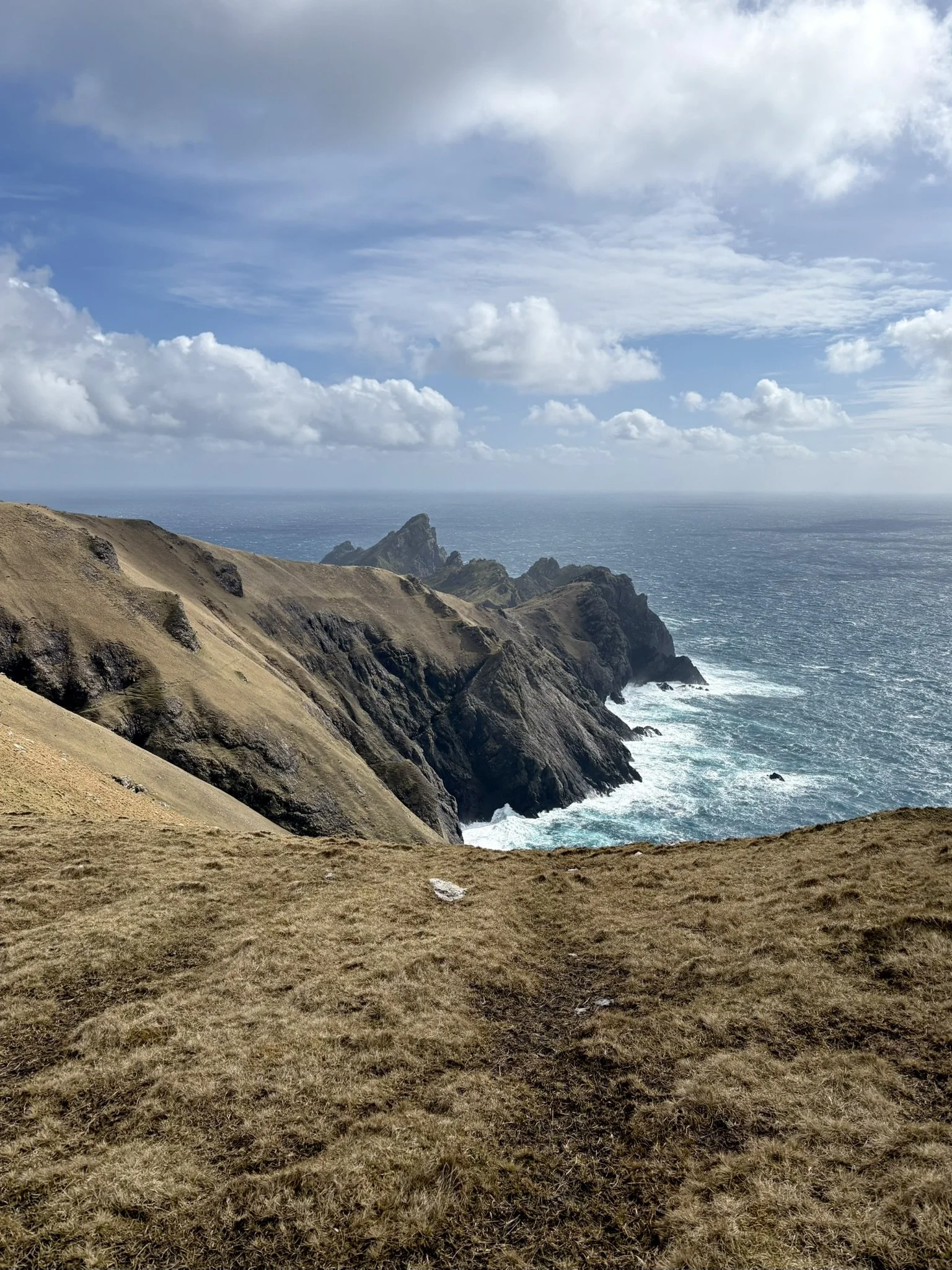
We celebrated finishing our 10th and final census yesterday with a bottle of champagne and some homemade pizza. After the census, we set off to explore the mysterious, less accessible ‘other side of the island’. I have no shame in saying that it was probably the least enjoyable hike I’ve ever done. By the end, my ears were ringing and burned from the wind. The sheep we came across outside Village Bay eyed us cautiously, breaking out into a sprint if we got anywhere remotely near them. A new perspective on the island was refreshing. Rounded bays lapped up the waves while cliffs seemed to carve their way through the ocean. Clusters of rocks, cliets, and rubble of an ancient civilization stood still in the windy meadows, steeped in mystery.
View from west side of the island
Our hike took us past Lover’s Rock. A famous spot where St. Kildan men had proven themselves worthy of marriage by climbing atop the rock and balancing on their left foot while their right dangled out over the sea. We decided we didn’t need to prove ourselves.
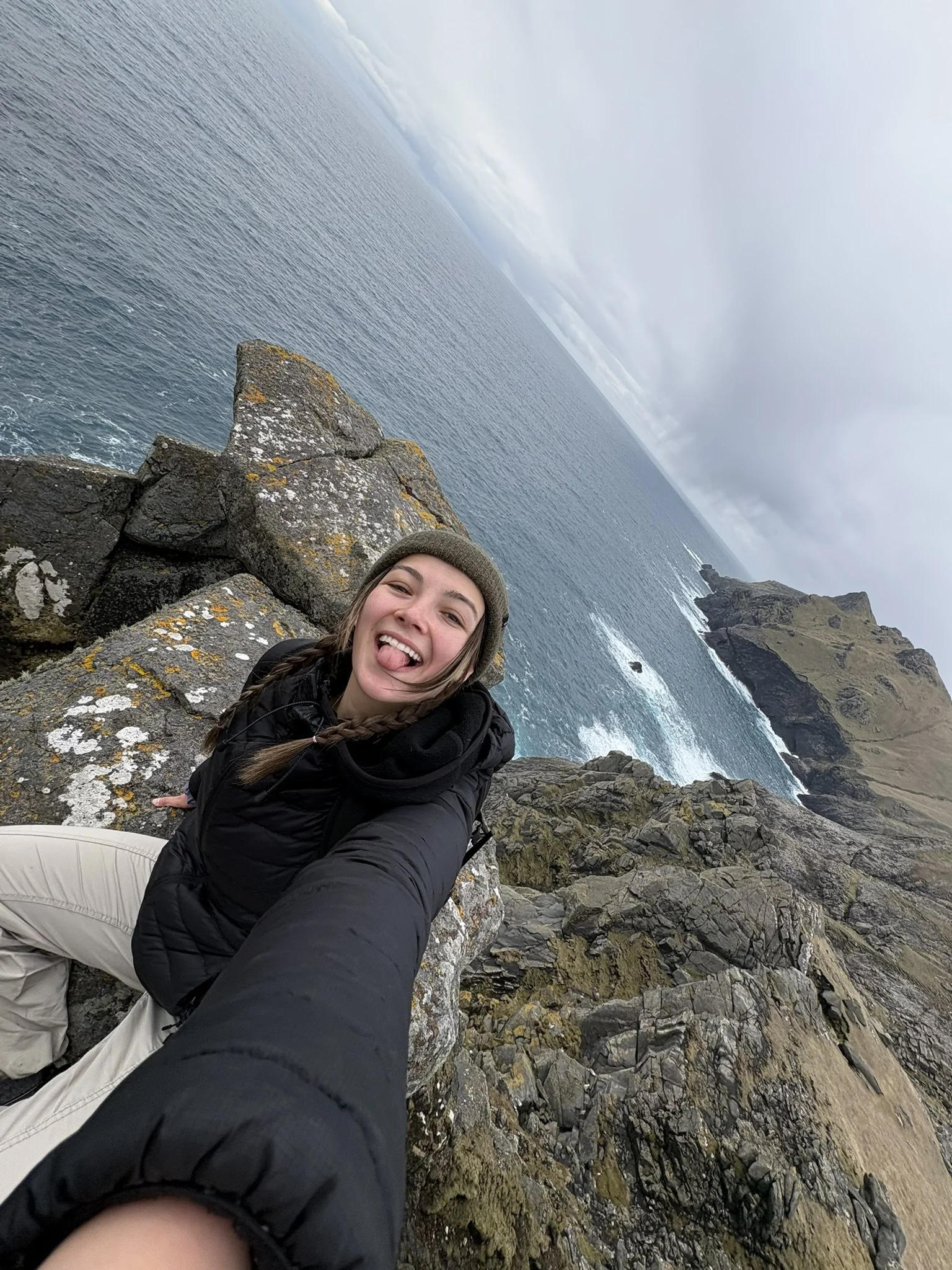
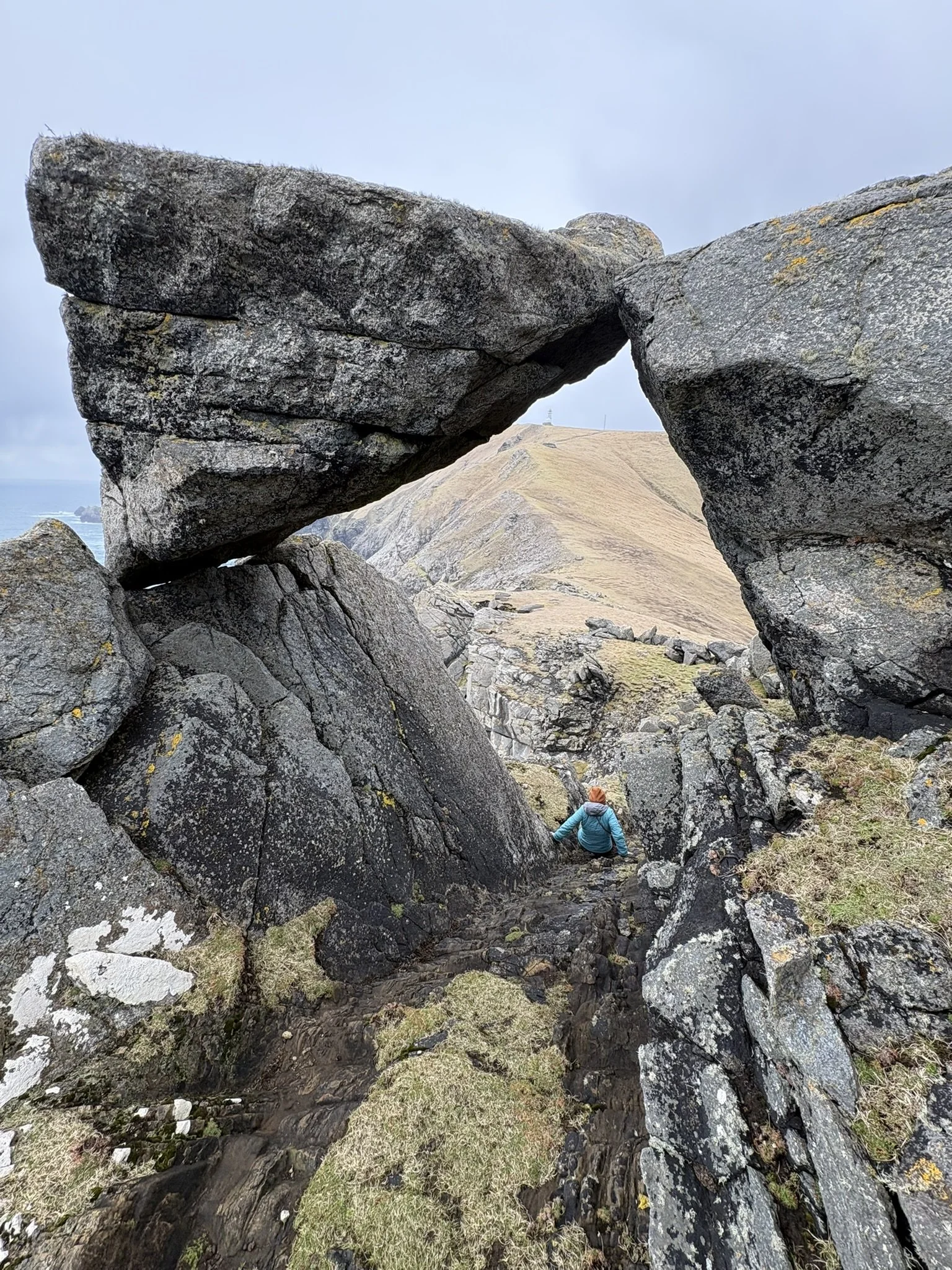
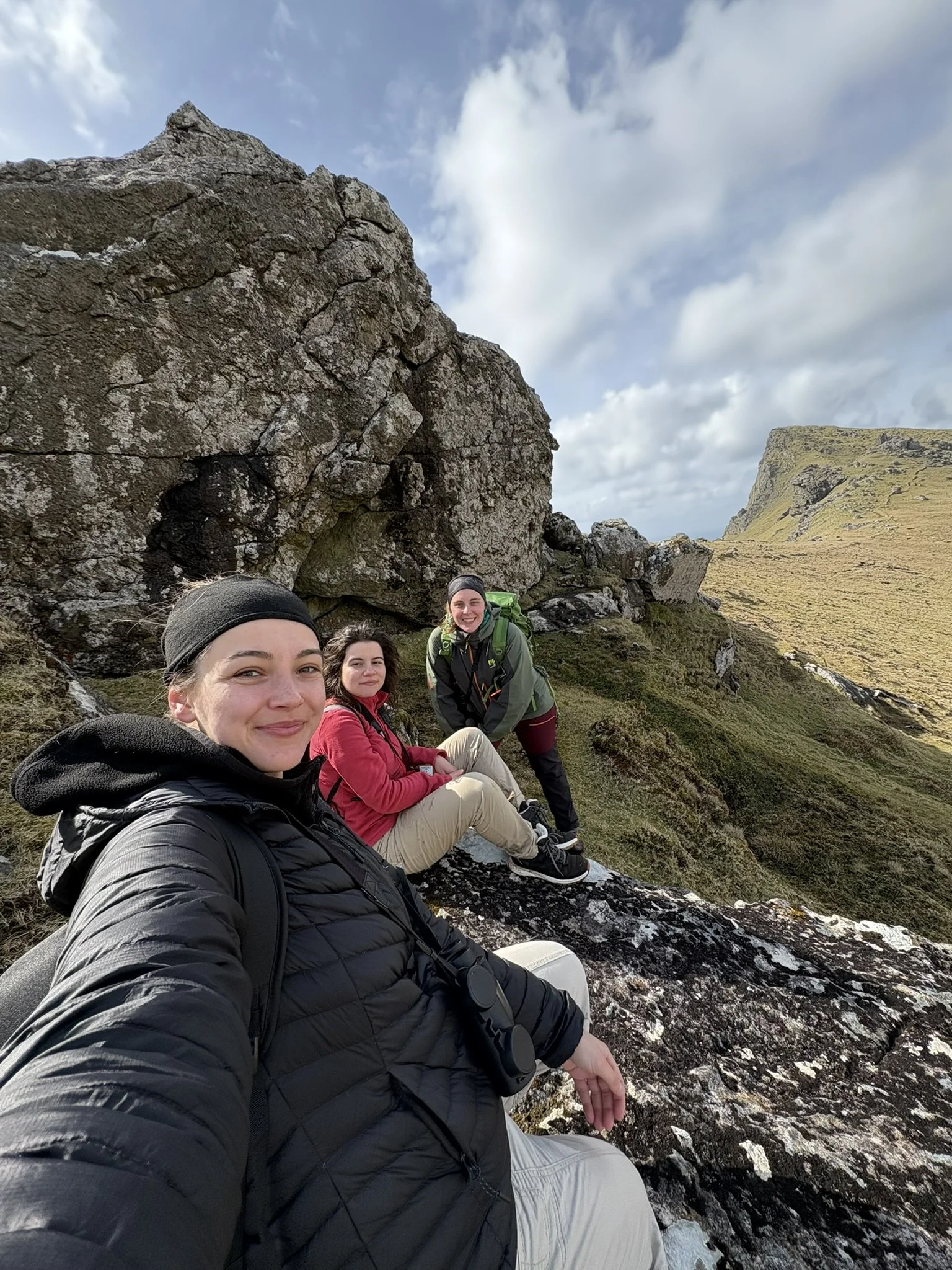
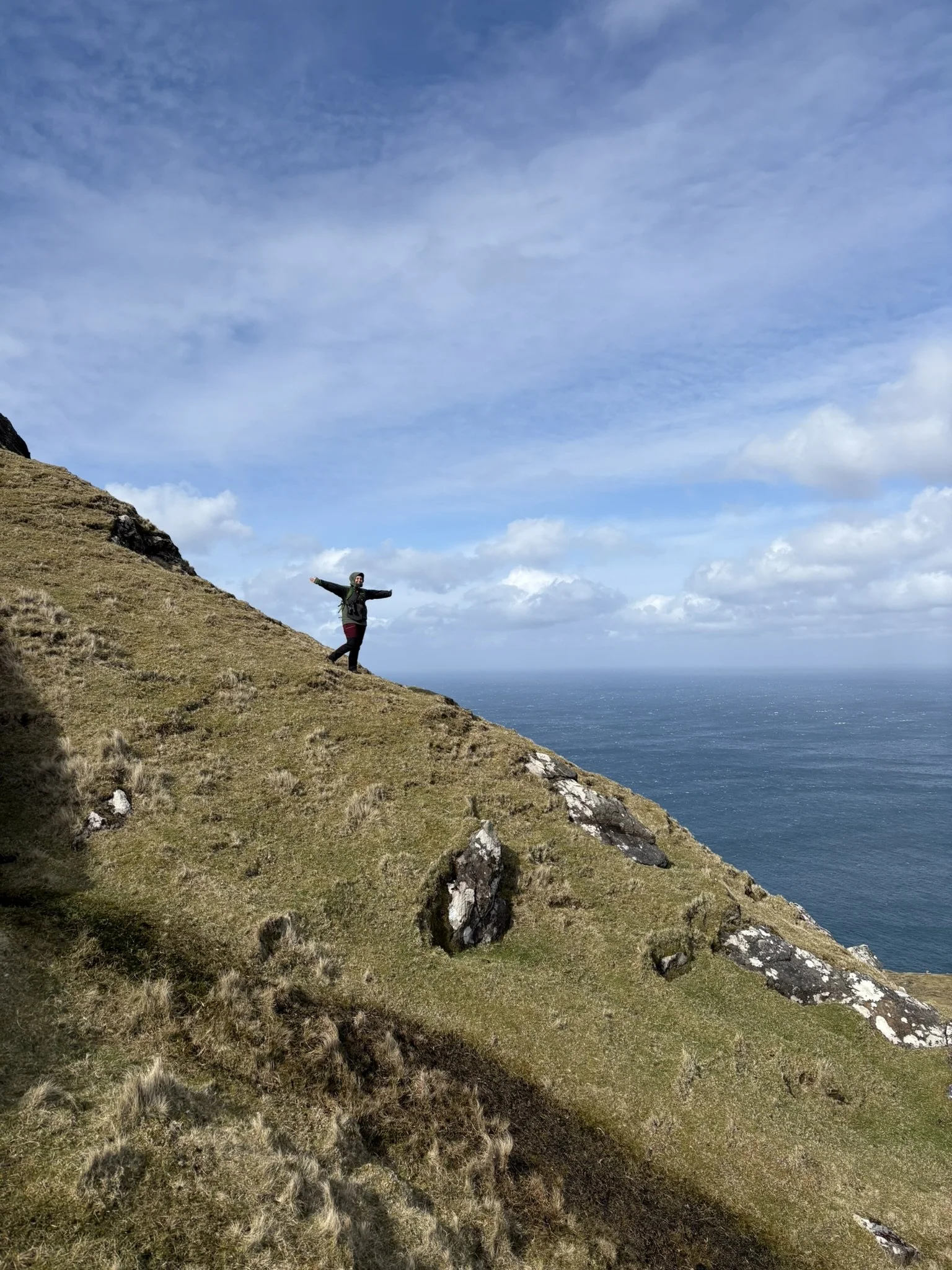
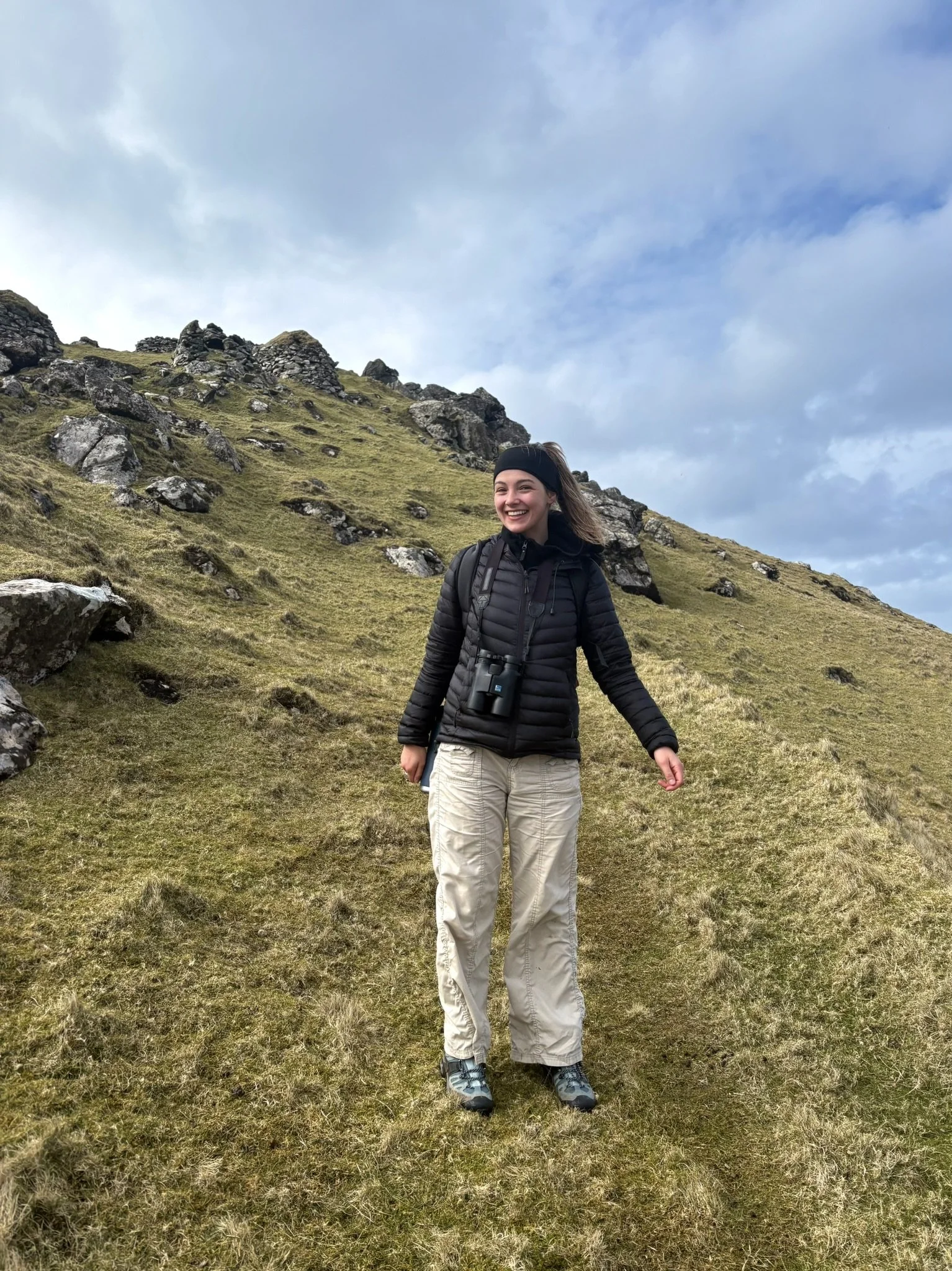
Despite the weather, Erin, Faheema, and Robin all found their way back to civilization, while two new researchers made the helicopter journey out here. Cameron and Eliza, along with Xavier, Iva, and myself, form the ‘lambing team’. As you might guess, our goal is to track the number of lambs born in the study area and mark as many as possible with unique identity tags.
Yesterday, Iva and Eliza found a ewe lying on the street, unmoving. As they got closer, they noticed an old but severe wound (a bone protruding from her leg). We thought for sure it was a death sentence. A few hours later, I made my way down the street to begin the aforementioned treacherous hike, but the ewe was nowhere in sight. These sheep constantly amaze me. Sometimes you’ll walk by them, and they get so startled they trip over their own feet, barely able to rise quickly enough to run away, but at the same time, their will to survive can be so strong they push through the pain of a broken leg to continue grazing.
Hiking across Ruival
We’ve almost all fallen, like dominoes, to a common cold. I’m secretly grateful for the bad weather because it has given me plenty of time to rest in bed, but given the long, often rainy and windy commute to the bathroom or the kitchen for a cup of tea, this is not a fun place to be sick. Lucky for us, our immune systems have been strengthened from a much greater exposure to pathogens than former residents ever experienced. A particularly ignorant author, John Sands, described the hotel he had been staying in while awaiting his first departure to St. Kilda in the late 1800s as one that “the public avoided like the plague due to the amount of ill tenants taking vacancy”. He remarked about stepping foot on the shore of St. Kilda: “a group of natives were clamouring and gesticulating in evident agitation about a hundred yards off… I had been told…. The St. Kildans have had, ever since the island was scourged by the smallpox in 1730, a mortal terror of infection”. Can you blame them?? When he managed to assure locals he was not carrying any diseases from his hotel, they welcomed him. While Sands and many other visitors marvelled at the overt dangers of the St. Kildans’ daily life (such as scaling seacliffs), they were completely unaware that the microorganisms they carried with them were likely a far greater threat to the community.
I wrote previously about the devastating impacts of Smallpox on the community of St. Kilda, but at the time of Sand’s arrival, another disease was ravaging the population. “Infants are peculiarly subject to an extraordinary kind of sickness. On the fourth, fifth, or sixth night after their birth, many of them give up sucking; on the seventh, their gums are so clenched together that it is impossible to get anything down their throats… they die generally on the eighth day.” Sands attended a baby’s funeral shortly after his arrival, after which the entire community stopped work to mourn for several days. The parents had lost 8 infants. At the time, of course, everyone was unaware that this was infant tetanus. It’s thought that it was caused by contaminated knives used to sever umbilical cords that became a prominent issue somehow in the 19th century. “This mysterious illness still prevails, and if the cause is not speedily discovered, this interesting community will soon become extinct”.
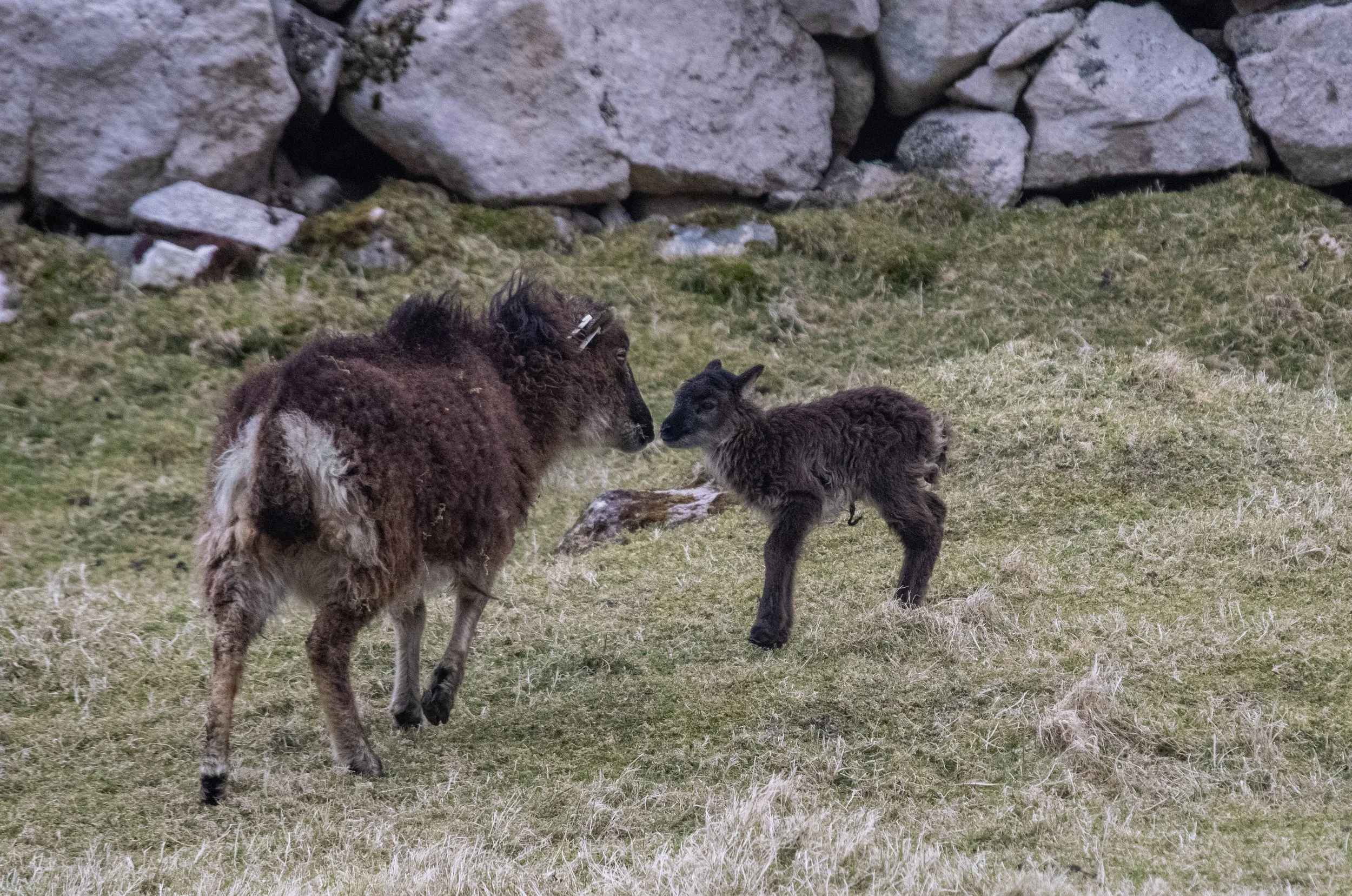
The small proportion of children on St. Kilda stood out to Sands in the 1800s, but this week the island gained five children as we experienced the joys of catching our first lamb. Eliza broke up the monotony of our routines a few days ago when she ran inside exclaiming, “I think I see a lamb”. We hurried outside after her, squinting through binoculars. It took my eyes a while to make out the small dark shape, mostly legs, wobbling behind her mother, perhaps only half a day old. The bond between a mother and lamb needs to be strong before we attempt to briefly separate them. It sounds cruel, but the multi-generational genetic and morphological data collected during lambing make this study so valuable. Not to mention, the process can be quite quick. I knelt to the ground and began smearing mud on my hands, looking around at my colleagues doing the same. This simple act was so freeing and joyous that I wasn’t able to stifle a giggle. “The mother might not like it if she can smell sunscreen or other scents we could leave on the lamb,” Xavier explained while muddying his own hands.
Sheep sheltering together in the rain
We were each handed a crook. (In case you’re like me and have never heard this word before, imagine when bad performers get pulled off the stage with a wooden hook.) We were instructed on how to actually catch the lamb and discussed the various strategies of approaching the mother and lamb without arousing suspicion. Yesterday morning was sunny, and our lamb, which had been well cared for, was lying in the meadow next to her mom. We so rarely move about the island as a group of 5, it was difficult not to attract attention from the sheep. “Walk normally. If you act suspicious, they will know we are up to something,” Xavier instructed. We slowly parted ways, spreading out behind various stone structures to sneakily encircle the pair. “We’re like really shitty spies,” Cameron whispered to me as we crawled behind a cleit, awaiting further instruction. When we got the signal, we all began walking in our assigned directions to close in on them. They bolted. I couldn’t help but laugh as we all broke out in a run. The mother was quick, but the lamb was not quick enough. Xavier effortlessly scooped her up in his arms, no crook needed.
This part happened quickly and according to plan. Cameron’s job was to sit with her in his arms. Xavier took blood samples and handed me the samples to label and keep safe. She was adorned with her very own set of ear tags and put into a little sling, held up by a scale to measure her weight. The whole time, I could hear the ‘bleating’ noises made by baby sheep. Iva and Eliza were tasked with keeping a close eye on her mom and making baby sheep noises to keep her close by. How many jobs are there where you can intentionally muddy your hands and baa like a sheep? When we were finished, Iva and Eliza pointed Cameron towards the mom so he could make ‘the return’.
The five of us knelt in the wet grass and held our breath. The lamb made a break towards a group of sheep, which would normally be dispersed randomly throughout the meadow, but were gathered together following the chaos of our covert operation. Although the lamb headed straight towards her, the mother took off like a bullet in the opposite direction. My heart broke just a little as I watched the lamb running after her mother, calling to her. Sometimes mothers stay nearby while we process the lamb and immediately allow the baby to suckle when it's returned. Other times, mothers take a while to accept the lamb back. We call this rejection. In the past, we’ve tried painting the tags to make them less obvious to the mothers, but the tags don’t seem to be the reason some mothers reject lambs. It’s hard for me to get my head around how a mother who has carried this lamb with her for so long can abandon it so quickly and go back to grazing as if the giving birth and nursing her baby was all a fever dream. Rejection isn’t common, and by funnelling the mother and baby into a stone structure together, we can ensure the mother eventually picks up on her child’s scent and accepts her lamb back. Fortunately, we didn’t have to do that today. The lamb (and us) just needed a bit of patience.
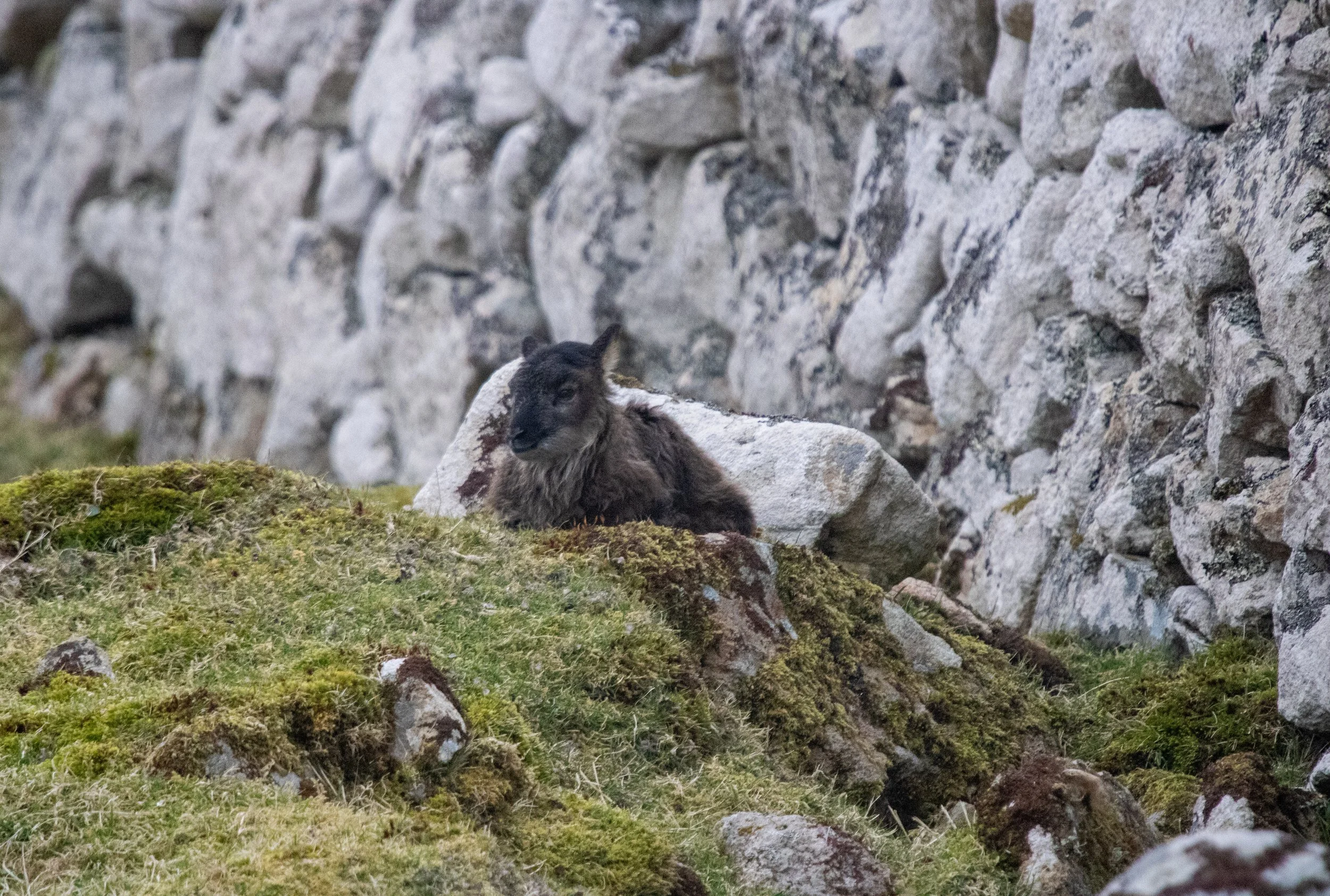
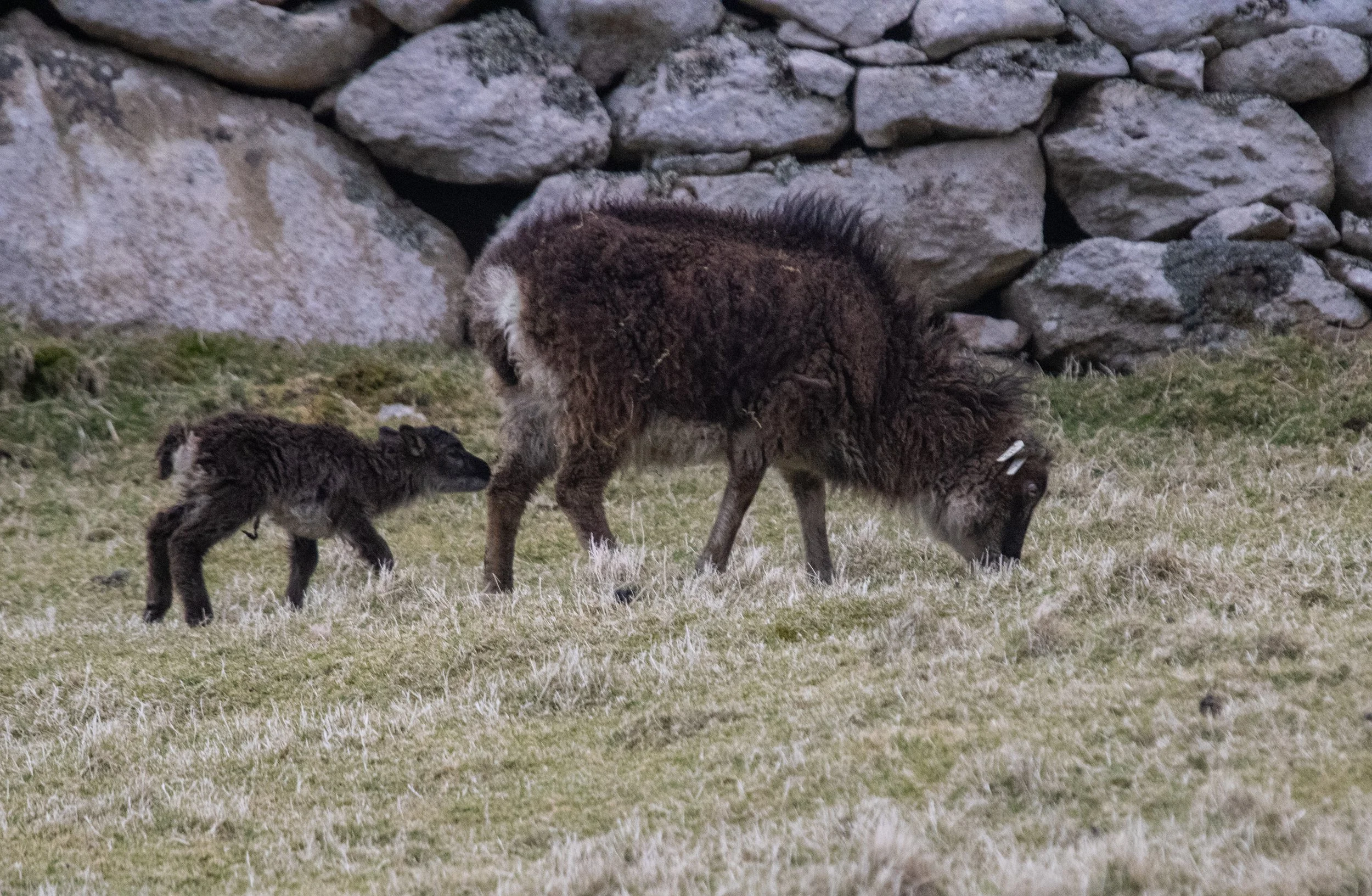
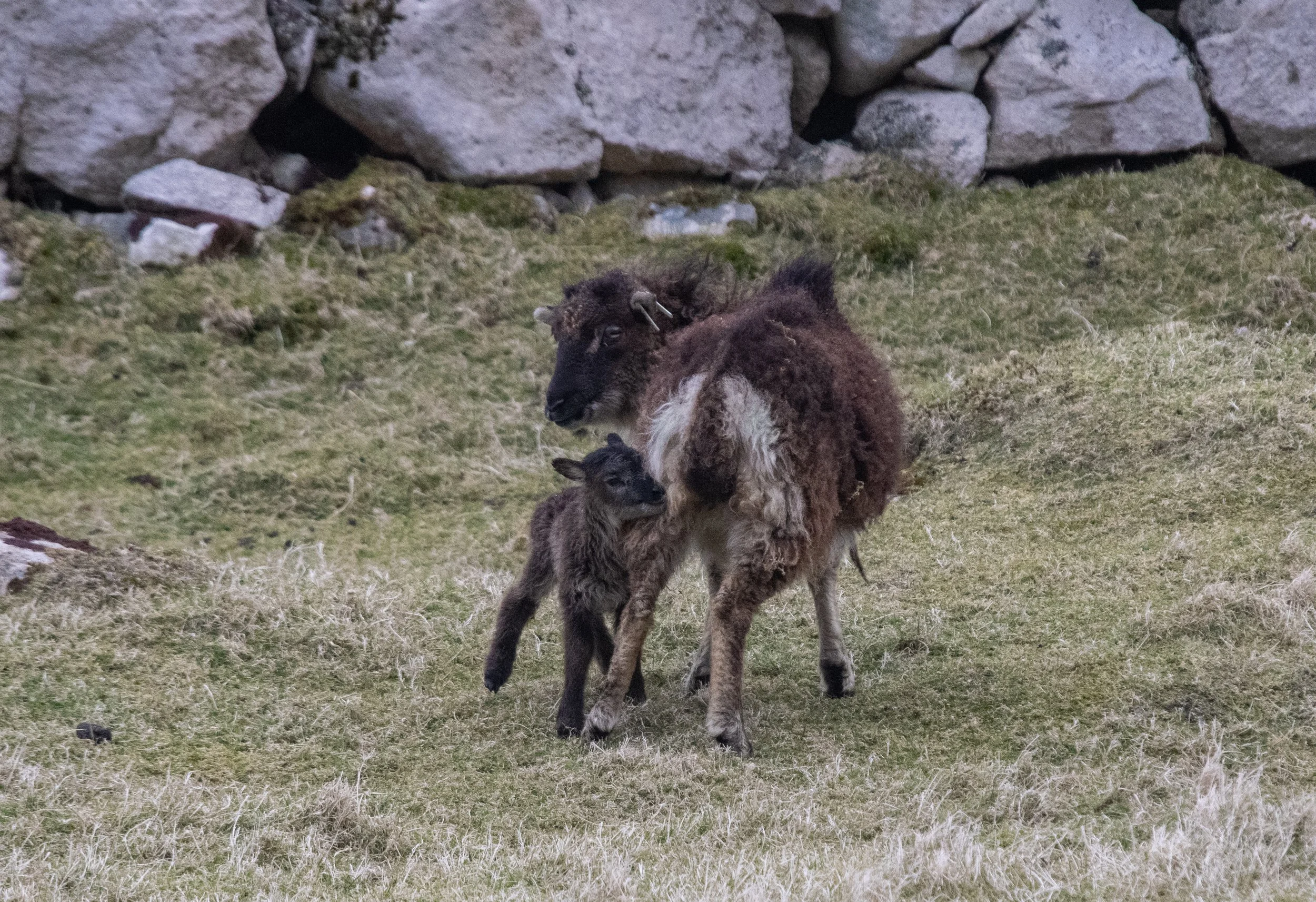
This is the only lamb in Village Bay, and it seemed all the sheep were interested in the drama. Some came up and sniffed the bleating baby, while others joined the mother running. Eventually, the mother came to inspect. “She’s quite smart,” Xavier smiled, looking at the lamb. “She’s not lunging to suckle, she is letting her mom pick up her scent”. We moved away to give them more space. After lots of sniffing, the mother finally allowed the lamb to suckle, and they were reunited once again.
With the arrival of the first lamb, it’s clear that spring is underway on St. Kilda. I had a few people ask me if we had any plans for Easter. Time isn’t real here. Weekends, holidays, they don’t have any meaning— except when they delay supply deliveries. So of course, I said no. But I was ultimately surprised when we had a late visit from the Easter Bunny! One chocolate egg was found in the egg carton. Another was found accidentally when we opened up the box encasing our precious Scottish whiskey!
Hail collects on the backs of sheep. This face says it all… they’re over it.